
National Vaccination Day represents a key event that brings together all health stakeholders around a common goal: strengthening vaccination coverage and protecting the population against infectious diseases. This day amplifies awareness, promotes mass vaccination, and acts as a powerful lever for disease prevention. In 2026, facing growing health challenges, this collective mobilization contributes more than ever to the elimination of epidemics and the health security of populations, especially the most vulnerable.
🕒 Article in brief
An essential focus on National Vaccination Day to understand its key role in public health and collective immunization.
- ✅ Strategic organization planned: Optimal coordination to maximize vaccination coverage
- ✅ Adapted educational approach: Human and empathetic awareness to better convince
- ✅ Rigorous logistics: Controlled cold chain management guaranteeing health security
- ✅ Engaged professionals: Continuous training and communication to build trust
📌 This day is an indispensable pillar to build solid and lasting community protection.
A key strategic organization to strengthen national vaccination coverage
The success of a National Vaccination Day primarily relies on a strategic and meticulously coordinated organization involving all actors of the health system. In 2026, health authorities rely on precise and updated data to identify the most vulnerable populations or areas where vaccination coverage remains insufficient, notably in remote rural areas or certain sensitive urban neighborhoods. This precise analysis allows effectively targeting efforts.
For example, Santé publique France continuously uses databases such as the Datamart DCIR to monitor vaccine consumption and detect pockets of undercoverage. This epidemiological monitoring feeds dose planning, which is adapted to the needs of different age groups according to the latest recommendations. Special efforts are focused on children under 5 years old, with the mass distribution of pentavalent vaccines, while campaigns against seasonal flu mainly target seniors over 65 years.
| 🎯 Target group | 💉 Vaccine offered | 🏭 Manufacturer | 📦 Planned quantity |
|---|---|---|---|
| 0-5 years | Pentavalent vaccine | Sanofi | 150,000 doses |
| 6-17 years | MMR (Measles-Mumps-Rubella) | GSK | 100,000 doses |
| 18-65 years | Anti-Covid mRNA | Moderna, Pfizer | 200,000 doses |
| 65 years and over | Seasonal flu | Sanofi, Seqirus | 120,000 doses |
This planning concretely translates into the organization of temporary centers and mobile setups, such as in Lyon with the GEM Le Passage initiative, which facilitates access to vaccination in unusual places such as gyms or via itinerant buses to reach isolated populations. The synergy between suppliers, local authorities, and health professionals is thus reinforced for increased vaccination coverage.
Thanks to weekly monitoring of vaccine stocks and needs on the field, adjustments are possible in real time, thus avoiding any risk of shortage or waste. This exemplary logistics guarantees a responsive answer to the populations’ needs, supporting the crucial mission of National Vaccination Day within the overall public health strategy.
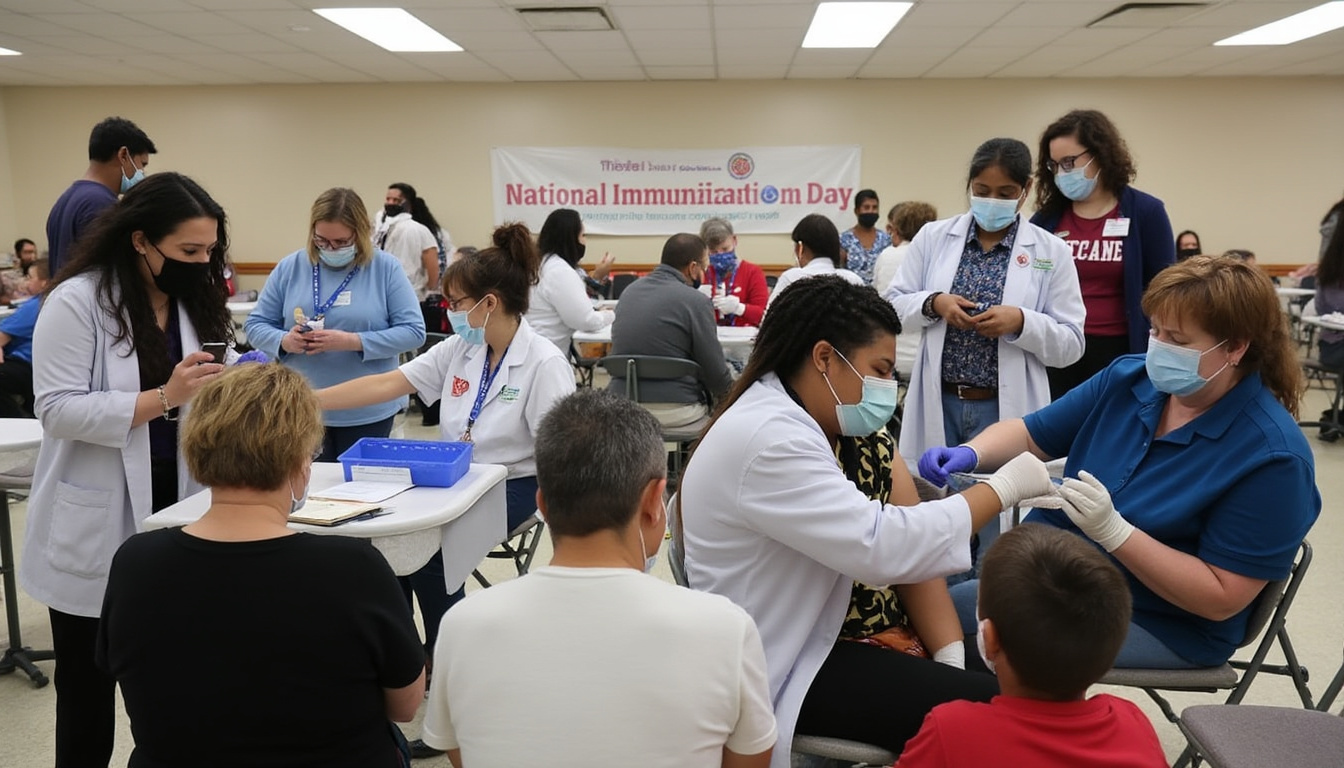
Awareness actions for enhanced vaccination adherence
Beyond simply administering vaccines, National Vaccination Day focuses on kind and educational communication. The goal is to establish an open dialogue with the public, address concerns, and reduce zones of uncertainty or mistrust, often sources of reluctance towards vaccination. This approach humanizes the vaccination campaign and optimizes its acceptability.
Various educational tools are used to reach every population segment with an adapted message. Webinars aimed at health professionals deepen techniques and updates linked to vaccines, while participatory workshops and exchange sessions, such as those at GEM Le Passage, invite the general public to engage in dialogue and express their questions or concerns in a listening space. Podcasts sharing testimonies from vaccinated patients also strengthen the emotional connection and trust.
| 🎙 Medium | 👥 Target audience | 🎯 Objective | ⏱ Approximate duration |
|---|---|---|---|
| Interactive webinars | Health professionals | Deepen vaccination technique | 1 hour |
| Gym workshops | General public | Dispel myths and reassure | 2 hours |
| Thematic podcasts | 18-35 years | Sharing vivid testimonies | 30 minutes |
| Social media infographics | General public | Visual and concise presentation | Adaptive |
The multiplication of these formats responds to various modes of information access and individual preferences. By placing empathy and listening at the heart of the meeting, the campaign aims to transform vaccination into an act of positive prevention, addressing both individuals and their surroundings, to strengthen community protection.
This approach reinforces confidence in health security, notably by clarifying key notions and demystifying possible side effects. Transparent exchange and adapted education are indispensable to overcome psychological barriers and foster lasting adherence.
Precise logistics to guarantee vaccine health security
Health security is a major issue during National Vaccination Day, particularly concerning logistics related to the cold chain. Vaccines, especially mRNA vaccines against Covid-19, require very strict storage conditions to maintain their effectiveness, sometimes down to -70 °C. A break in this chain can compromise their quality and thus the protection they provide.
Each vaccine type imposes specific requirements, whether for live attenuated, inactivated, or vectorized vaccines. These technical constraints demand rigorous organization and the use of innovative technologies, such as connected insulated containers or geolocated refrigerated trucks which allow real-time monitoring and automatic alerts in case of anomaly.
| 💉 Vaccine type | 🌡 Recommended temperature | ⚠ Cold chain break risk | 🏭 Major manufacturers |
|---|---|---|---|
| Anti-Covid mRNA | -70 °C to -20 °C | Very high | Moderna, Pfizer |
| Inactivated vaccines (flu, polio) | +2 °C to +8 °C | Moderate | Sanofi, GSK |
| Live attenuated vaccines (MMR, chickenpox) | -20 °C | Low | Merck, Bayer |
| Vector vaccines (Ebola) | +2 °C to +8 °C | Moderate | Johnson & Johnson |
The training of personnel responsible for transport and storage is thus crucial, to prevent any incidents that could harm the vaccination campaign. In the Auvergne-Rhône-Alpes region, for example, innovative partnerships enable the equipping of more and more centers and vehicles with monitoring devices to guarantee optimal preservation and strengthen public trust in health security.
The irreplaceable role of health professionals in the national vaccination campaign
Health professionals play a fundamental role in the vaccination dynamic. They are the direct actors of immunization but also the essential relays of awareness and information to the public. Their ability to master injection techniques, explain the benefits of vaccination, and adopt an empathetic listening posture is essential to ensure an effective and humane campaign.
Ongoing training is regularly offered, combining technical aspects — such as safe injection management or a deep understanding of vaccines — and relational skills, notably to address patients’ worries or fears. These trainings rely on feedback from previous campaigns and promote a climate of trust necessary to combat vaccine hesitancy.
| 📚 Module | ⏰ Duration | 🎯 Objective | 👨🏫 Instructor |
|---|---|---|---|
| Injection techniques | 4 hours | Patient safety and comfort | Trainer nurses |
| Empathetic listening and posture | 3 hours | Reduce anxiety related to vaccination | Specialized psychologists |
| Cold chain mastery | 2 hours | Ensure optimal preservation | Logistics technicians |
| Incident management | 2 hours | Rapid response in case of adverse effects | Quality managers |
By establishing a real therapeutic bond, these professionals transform vaccination into a moment of trust and respect, essential for social cohesion and collective protection. Their commitment on this national day thus strengthens the efficiency of the campaign while ensuring a positive experience for all.
National Vaccination Day: Why this day is essential for public health
National Vaccination Day is crucial to raise population awareness of issues related to vaccination coverage, cold chain logistics, the work of health professionals, and vaccine safety.
Measuring impact and refining strategies of National Immunization Day
Rigorous evaluation of vaccination campaigns is essential to adjust and optimize future actions. Vaccination coverage is the major indicator monitored by institutions through various sources, including the Datamart DCIR, children’s health certificates, and targeted surveys. Authorities can thus measure the evolution of rates by age, region, or vaccine type, and quickly identify areas where coverage remains insufficient.
This detailed analysis is complemented by a pharmacovigilance system attentive to reporting of possible adverse effects, ensuring health security and public trust. Moreover, feedback in the form of satisfaction questionnaires helps better understand barriers to vaccination, notably among young adults, and adapt communication accordingly.
| 📊 Indicator | 🎯 Target goal | 📈 Observed result | 🔧 Corrective action planned |
|---|---|---|---|
| Vaccination coverage 0-5 years | ≥ 95 % | 97 % | Maintain pediatric relays |
| Adherence 18-35 years | ≥ 90 % | 89 % | Strengthen media campaigns |
| Report of adverse effects | ≤ 1 / 10,000 doses | 0.7 / 10,000 doses | Continue pharmacovigilance |
| Cost avoided linked to vaccination | – 20 % | – 23 % | Extend and optimize the program |
From this valuable data, national vaccination programs benefit from a dynamic of continuous improvement. Strategy adaptation takes into account social and territorial realities, so that National Vaccination Day remains an effective prevention vector and a driver of collective protection.
To deepen reflection on health and vaccine protection, it is advised to consult reliable resources such as specialized studies in public health, providing rigorous and accessible scientific insight.
What is National Vaccination Day?
It is an annual mobilization aimed at strengthening vaccination coverage and raising public awareness of the importance of vaccination for public health and disease prevention.
Why is the cold chain so crucial?
The cold chain guarantees optimal vaccine preservation: any break can alter their efficacy and compromise immune protection.
What are the main barriers to vaccination?
Barriers include mistrust, lack of clear information, difficult access in certain areas, and fear of side effects.
How do health professionals contribute to the campaign?
They ensure safe vaccine administration, inform patients, and create a climate of trust essential to vaccination success.
Where can one find reliable information on vaccination?
Official sites like Santé publique France or the WHO, as well as local vaccination centers, offer reliable and updated data.


