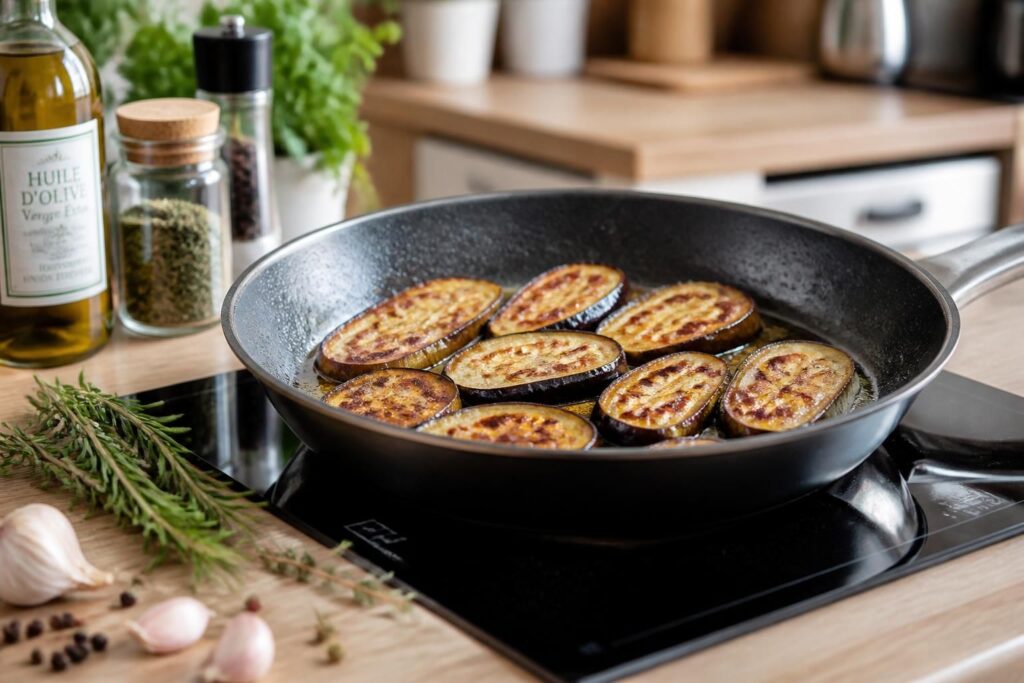
Pan-fried eggplant is a tasty and quick way to showcase this Mediterranean vegetable. Its melting texture and ability to absorb flavors make this cooking method an ideal option for healthy and delicious meals. However, pan-frying can be tricky: the vegetable easily absorbs oil, which can affect the lightness of the dish. By mastering a few simple tips, it is possible to get eggplants golden on the outside, tender on the inside, while limiting the use of olive oil. This guide presents the techniques and tips that turn this traditional recipe into a modern culinary success.
The article in brief
Learn how to cook eggplant in a pan for a dish that is quick, light, and delicious. Practical tips and simple recipes guarantee a successful cooking.
- Key preparation: Salting and draining to reduce bitterness and oil
- Controlled cooking: Medium heat, hot pan, and small batches for perfect searing
- Enhanced flavors: Garlic, herbs, and spices to add at the end of cooking
- Delicious variations: Cheese, soy sauce, and vegetables to customize
These tips guarantee a tender and flavorful pan-fried eggplant, ideal for incorporating vegetables into a balanced diet.
Pan-fried eggplant: the foundation of tasty and quick cooking
Enhancing eggplant starts with perfectly controlled pan-cooking. Thanks to its spongy flesh, this vegetable absorbs flavors while offering an incomparable tender texture when well prepared. The key lies in a suitable preparation, especially draining, and a controlled cooking technique to prevent it from becoming oily or too dry. This method combines speed and simplicity, ideal for busy cooks who want to balance flavors and nutritional benefits.

Essentials for preparing eggplants before pan cooking
For a successful result, start by choosing firm, blemish-free eggplants. Cut them into regular slices about 0.5 cm thick to ensure even cooking. Salting is essential: lightly sprinkle with salt and let rest for fifteen minutes. This process removes some bitterness and especially drains water. As a result, the eggplant will absorb less oil during cooking. Then carefully pat dry with absorbent paper to remove any residual moisture that would prevent the Maillard reaction, responsible for the nice browning.
Pan cooking: mastering heat and olive oil for perfect texture
Cooking eggplants in a pan requires particular attention to temperature and the amount of oil used. Ideally, heat the pan over medium heat before adding a drizzle of extra virgin olive oil, whose fruity sweetness enhances flavors. Avoid overcrowding the pan to preserve its heat and allow a clear sear, with about 4 to 5 minutes per side to get a golden and crispy exterior without excess oil. Using a brush to coat the slices also limits oil absorption, enhancing the lightness of the dish.
List: tips for successful pan-fried eggplant
- Prefer firm and local eggplants for more flavor
- Cut the slices evenly for uniform cooking
- Salt and let drip to reduce bitterness and oil
- Pat dry well before cooking for better browning
- Heat the pan without overcrowding
- Use a brush to apply oil and control its amount
- Add garlic and herbs towards the end to preserve their aromas
Quick recipe: garlic and olive oil sautéed eggplants
After preparing your eggplants following the above advice, heat three tablespoons of olive oil in a large pan. Sauté the slices in a single layer, 5 minutes per side, without moving them prematurely. Add two cloves of finely chopped garlic and a teaspoon of Herbes de Provence towards the end of cooking. Finish with a turn of the pepper mill and place the slices on absorbent paper to remove excess oil. This recipe highlights the lightness and natural flavor of the eggplant.
| Cooking method | Approximate time | Texture obtained | Advantages | Disadvantages |
|---|---|---|---|---|
| Pan | 8-10 min | Golden on the outside, tender on the inside | Fast, precise cooking control | Requires monitoring to avoid excessive oil |
| Oven | 25-30 min | Tender and caramelized | Even cooking, little oil | Longer, less crispy |
| Grill/Barbecue | 6-8 min | Smoky, pronounced flavor | Authentic and strong taste | Requires specific equipment |
Vary the pleasures: flavors and accompaniments for pan-fried eggplant
Pan-fried eggplant lends itself to a multitude of aromatic combinations. Spices such as paprika, cumin, or ginger bring an oriental and spicy touch. For a Mediterranean taste, pairing with thyme, rosemary, or Herbes de Provence is ideal. Feel free to include complementary vegetables like peppers or tomatoes to enrich the recipe. For those who want an extra sweetness, a drizzle of soy sauce sprinkled with garlic and ginger subtly enhances the flavors, adding an original touch.
For healthy everyday cooking, mastering this simple and quick cooking method gives vegetables a place of honor on the plate. With a balanced control between olive oil, spices, and adapted cooking, pan-fried eggplant offers a dish that is both convivial and light. To go further in balanced eating, also find our easy and diabetes-friendly recipe, perfect for varying menus.
Why salt eggplants before cooking?
Salting allows the eggplant to drain, which reduces its natural bitterness and limits excessive oil absorption during pan cooking.
Which oil to prefer for pan cooking?
Extra virgin olive oil is ideal for its mild flavor and nutritional properties, notably its anti-inflammatory and cardio-protective effects.
How to prevent eggplants from becoming too greasy?
Use a brush to spread the oil, avoid overcrowding the pan, and thoroughly drain the eggplants before cooking to limit oil absorption.
Can spices be varied with pan-fried eggplant?
Yes, paprika, cumin, Mediterranean herbs, or even soy sauce and ginger can be added to diversify flavors.
What is the best thickness to cook eggplant?
A thickness of about 0.5 cm is ideal to ensure quick and even cooking while maintaining good firmness.


