
Creating a home spa is no longer a luxury reserved for large spaces or comfortable budgets. With some smart choices, a bit of method, and real attention to ambiance, a simple corner of a room can become a relaxation space capable of soothing the body and mind after a busy day. The secret often lies in three very concrete levers: location, comfort, and sensory coherence. Soft lighting, natural materials, a well-thought-out relaxing bath, and you already have a surprisingly effective home wellness break, without turning the home into a thermal center.
The article in brief
A well-designed spa corner can transform everyday life without excessive expenses. The challenge is not to multiply everything but to compose a simple, coherent, and soothing universe.
- An accessible sensory refuge: a few targeted choices are enough to calm the pace
- A well-thought-out location: light, silence, and airflow make all the difference
- Smart equipment: comfort, home massage, and aromatherapy enhance the cocooning effect
- A sustainable routine: simple maintenance, safety, and economic relaxation every day
Well arranged, a home spa becomes a real recovery ritual, easy to live with and lasting.
To illustrate the idea, let’s imagine Lina, who comes home late, turns off her phone, switches on a dim light, and plunges into warm water lightly scented. Nothing extravagant, but a precise sequence of gestures that reactivates the body differently than a screen or a sofa. This type of diy spa works because it simplifies relaxation instead of complicating it, a principle often more effective than a large piece of equipment poorly used. The most successful approaches are inspired by small domestic rituals: soft textiles, calm background sound, a few plants, and that clear impression that the house finally breathes.
A widely cited study by well-being professionals also reminds us that regularity counts more than decor. In other words, a practical and pleasant corner is better than an overly ambitious decor quickly abandoned. This precisely makes the subject so current in 2026: households are looking for simple, useful recovery solutions compatible with very varied budgets. True luxury today often looks like a tidy room, well-renewed air, and a zen atmosphere that invites slowing down.
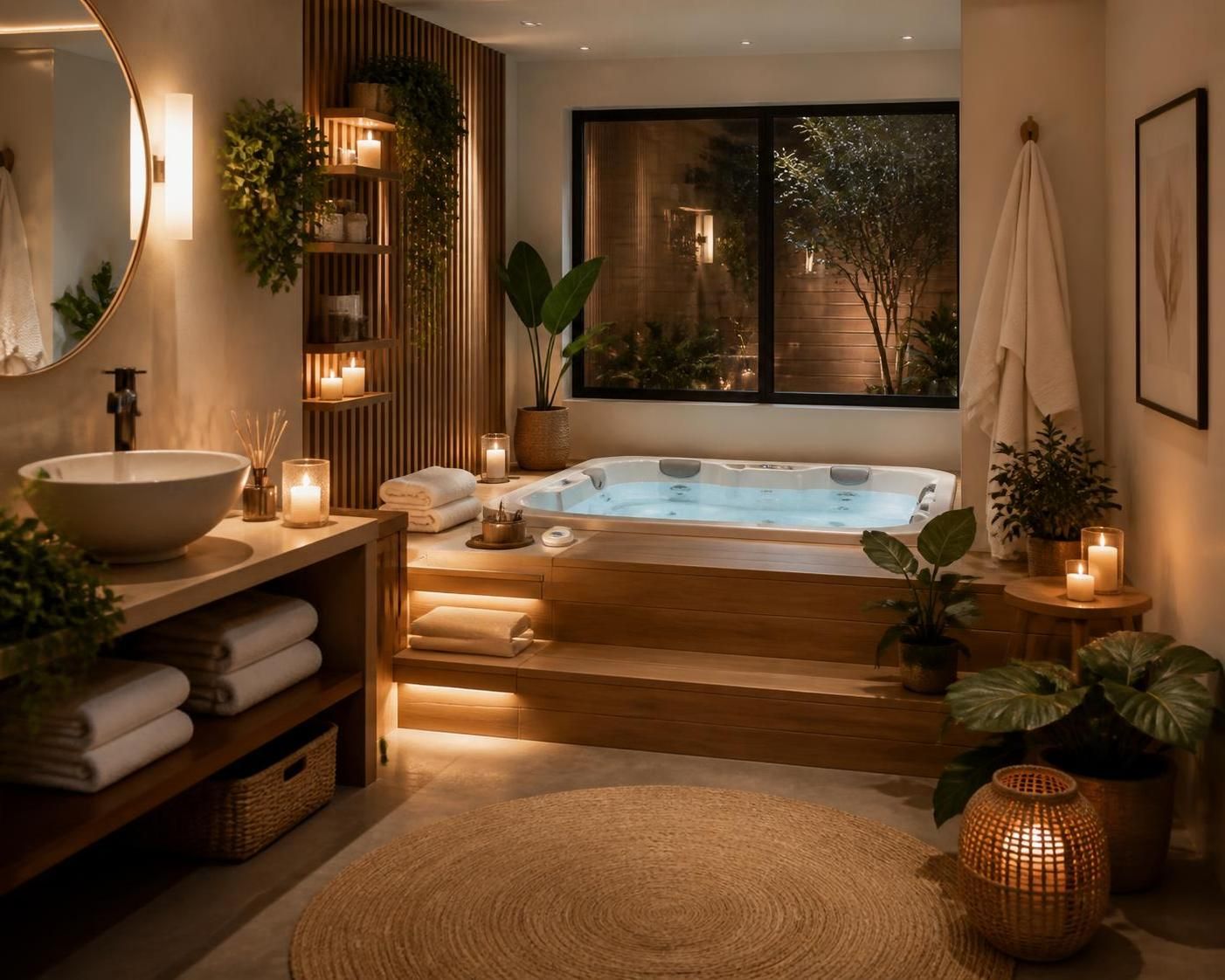
Creating a home spa without blowing your budget
The good news is that a home spa project can start small. An inflatable model, a comfortable seat, a few well-chosen accessories, and coherent decoration are often enough to create a convincing base. The idea is not to imitate a palace but to build a place where the body immediately understands it can release pressure. This is where the notion of economic relaxation makes perfect sense: fewer objects, more real use.
The budget mainly depends on the desired level of equipment. An inflatable spa allows for an initial low-cost approach, while a portable or built-in spa changes the perception of space and user experience more. For some households, the good option is to start with a temporary solution, then gradually improve the relaxation corner. This step-by-step logic avoids regrets and allows testing family habits before investing more. To deepen the decoration and perceived dimension, a detour through the influence of colors on mood helps understand why chosen shades matter as much as furniture.
Choosing the right model according to real use
A solo or duo spa does not have the same needs as a space designed to accommodate others. In practice, a compact model is suitable for daily use focused on rest, whereas a larger version becomes interesting for shared moments. The key point remains frequency: equipment used often is better than an impressive but neglected model. It’s a simple, almost obvious rule, but often forgotten when buying on impulse.
For a well-defined project, the best method is to compare the number of seats, useful functions, and hidden costs. Installation, electricity, and maintenance sometimes weigh as much as the initial purchase. On this point, solutions designed to last, with good insulation and solid after-sales service, make a real difference over several years. Uses evolve, but the logic remains the same: comfort must remain easy to live with.
The table that helps compare without mistakes
| Type of spa | Starting budget | Ideal use | Main advantage |
|---|---|---|---|
| Inflatable spa | From €400 | Discovery and occasional use | Simple installation and low cost |
| Portable spa | €3,000 to €8,000 | Regular indoor or terrace use | Good balance between comfort and practicality |
| Built-in or swimming spa | From €10,000 | Durable and more ambitious project | Immersive experience and customization |
This comparison clearly shows there isn’t a single good choice, but a right choice for each lifestyle. The most important remains to align desire, available space, and accepted maintenance level. A well-adjusted decision today avoids many disappointments tomorrow.
Setting up a coherent relaxation space around the spa
A spa without ambiance is like a good dish served without seasoning: the essential is there, but the experience lacks depth. To create a true atmosphere, it’s necessary to work on materials, volumes, and perceptions. Wood warms, stone visually stabilizes, textiles absorb noise, and soft lighting satisfies everyone. At this level, every detail acts like a note in the same score, making the whole more soothing.
A simple guiding thread works very well: a rest area, a water point, then a corner to dress or settle after the bath. The layout then becomes intuitive, almost natural. To give character without weighing down the decor, a few plants, indirect light sources, and a discreet scent are often enough. Those who like sensory gestures can also add a touch of aromatherapy or a home massage with suitable oils, to extend the relaxation effect after the bath.
The most convincing decorative inspirations rely on readable universes: Scandinavian, Japanese, or Bohemian. Each conveys a different feeling, but all share the same idea of restraint. If the goal is to create a zen atmosphere, it’s better to avoid clutter and prefer clear visual markers. To nurture this reflection, an article on a DIY cocooning atmosphere workshop can help imagine accessories easy to make at home.
The elements that really change the atmosphere
Some details have a disproportionate effect on the feeling of calm. Low lighting, a soft towel, discreet background sound, or a well-chosen chair can transform the use of the place. This is especially true when the space is small: comfort is more about the precision of choices than the quantity of present elements. Good arrangement does not seek to impress, it seeks to reassure.
Indoor plants also bring a welcome visual breath. Combined with natural materials, they give the feeling of a place better anchored in daily life, less cold, more enveloping. This alliance works all the better when keeping a simple palette and readable lines. In the end, the relaxation space becomes a room that soothes even before stepping into the water.
Properly using and maintaining your home spa for longevity
A home spa reveals its full interest when it remains easy to maintain. Regular water monitoring, filter checking, and a suitable cover prevent many disappointments. The goal is clear: keep the water healthy, preserve equipment, and maintain pleasant use over time. Without this light but constant discipline, the pleasure of the relaxing bath can quickly give way to useless constraints.
The ideal routine involves a few regular gestures. Weekly pH and disinfectant control, filter cleaning every two to four weeks, water replacement every three to four months: these benchmarks are enough to protect the installation. With children present, safety must remain non-negotiable, with careful monitoring of temperature and access. In a body care logic, the spa then becomes a recovery tool, not just a comfort object.
- Check the water every week to maintain healthy and pleasant use
- Clean the filter regularly to preserve filtration quality
- Protect the basin with a cover to limit heat loss and dirt
- Adjust the temperature according to users and time of day
- Provide a secure space if the spa is accessible to children
This rigor takes nothing away from pleasure; on the contrary, it makes it more reliable. Well-maintained equipment lasts longer and offers a more serene experience, which changes everything when integrating the ritual into the weekly rhythm. The spa then becomes a discreet but wonderfully effective ally for better recovery.
When the spa fits into a truly calm lifestyle
The most interesting aspect of a successful project is not the object itself but the habit it establishes. A break after sports, a quiet end of the day, a two-person pause on weekends: as many micro-rituals that add depth to the home. This also explains the lasting appeal of these refreshment spaces, halfway between comfort, autonomy, and simple pleasure. In this logic, a spa is not a whim but a very concrete way to organize rest.
For those wishing to deepen the reflection, content dedicated to essential oils and well-being can enrich an already well-established ritual. The essential thing remains to build a use that reflects one’s image, without overload or pressure. When the home knows how to offer this type of break, it becomes much more than a passing place.
What space should be planned for a home spa?
A compact spa can integrate into a spacious bathroom, a veranda, or a well-prepared terrace. The essential is to provide good circulation around the basin and easy access to water and electricity.
Can you create a spa ambiance with a small budget?
Yes, by relying on soft lighting, comfortable textiles, a few plants, and targeted accessories. An inflatable model or a well-decorated area is often enough to get a convincing relaxing effect.
How to keep spa water clean longer?
Regular pH control, filter cleaning, and use of an insulating cover are the basics. Simple but frequent maintenance avoids inconveniences and prolongs the installation’s lifespan.
Which touches improve the relaxation experience the most?
The most effective elements are often the most discreet: indirect lighting, natural materials, light fragrance, calm music, and well-regulated temperature. Together, they create a durable zen atmosphere easy to live with.


