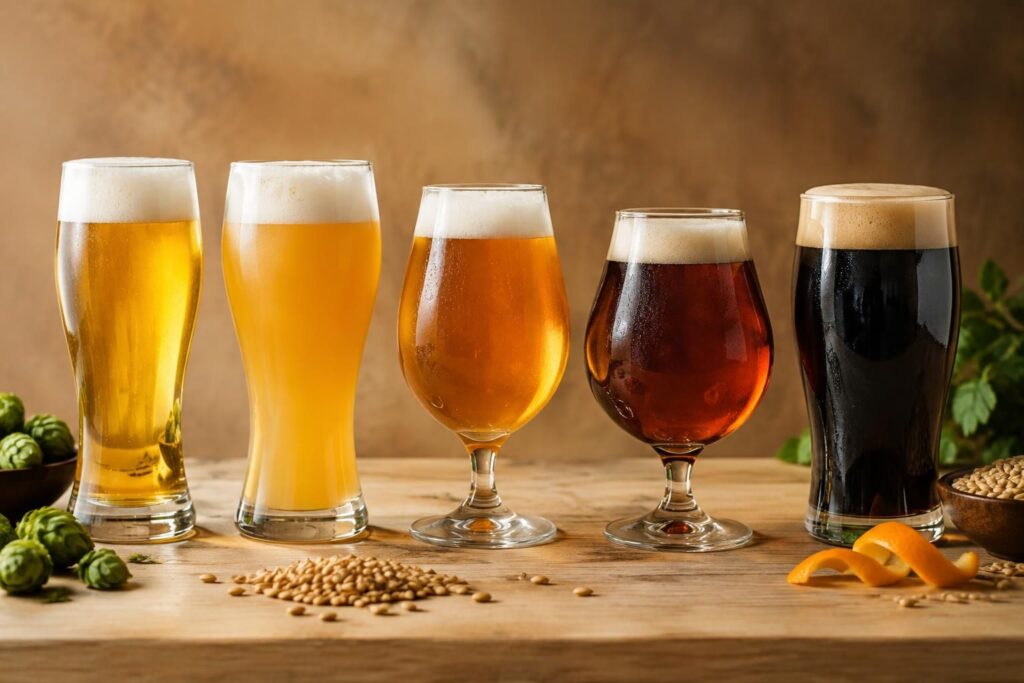
A 33 cl beer often provides between 150 and 200 kcal, but the figure changes with its alcohol content, carbohydrates, and the volume served. Blonde, brown, IPA or non-alcoholic: some simple benchmarks help compare styles and enjoy with awareness, without reducing pleasure to a calculation.
The article in brief
The calories in a beer vary mainly according to its alcohol content, recipe, and glass size. The table and advice below provide useful benchmarks to choose without losing sight of pleasure.
- The role of alcohol: Each gram of alcohol provides about 7 kcal, which impacts the balance.
- Different styles: The alcohol degree and carbohydrates cause calories to vary from one beer to another.
- Volume matters: A pint provides more calories than a 33 cl bottle.
- Lighter options: Low-alcohol or non-alcoholic beers can reduce total intake.
A comparison helps in choosing, but the served format and recipe remain decisive.
Calories in a beer: benchmarks by type
For a standard 33 cl beer, count generally between 150 and 200 kcal. Light versions can go down to around 100 to 125 kcal, while some strong or craft beers exceed 300 kcal, especially when they are more alcoholic and rich in residual carbohydrates.
These values are estimates: recipes vary from one brand to another and two beers of the same style do not necessarily have the same profile. To refine a comparison of calories according to type and alcohol, check the alcohol degree, volume, and, when available, the nutritional information on the label.
| Type of beer | Estimated calories for 33 cl | Indicative alcohol degree |
|---|---|---|
| Light beer | 100 to 125 kcal | 3 to 4 % |
| Standard lager | 150 to 170 kcal | 4 to 5 % |
| Blonde beer | 170 to 200 kcal | 5 to 6 % |
| Brown beer | 180 to 220 kcal | 5 to 7 % |
| Strong craft beer | 200 to over 300 kcal | 6 to 10 % |
| Non-alcoholic beer | Around 45 to 80 kcal | 0 to 0.5 % |
Why do beer calories vary so much?
Alcohol, an important contributor
Ethanol provides about 7 kcal per gram. As a guideline, a 5% beer contains around 13 g of alcohol in 33 cl, or about 90 kcal coming from alcohol alone; total calories also include remaining carbohydrates.
With a comparable recipe, a higher degree therefore tends to increase energy intake. An 8% beer can contain nearly 50% more calories from alcohol than a 5% beer, without this alone allowing to exactly calculate the total.
Carbohydrates and recipe also matter
Carbohydrates from malt provide additional energy. A classic beer can contain about 10 to 15 g per 33 cl bottle, while some light versions have less than 5 g; richer recipes can exceed 30 g.
Fermentation, added ingredients, and the desired body influence the amount of residual sugars. This is why color alone is not enough to predict calories: a dark beer is not automatically more energetic than a blonde of similar degree.
Calories in blonde, white, brown, amber and IPA beers
Calories in blonde beer often range around 170 to 200 kcal for 33 cl in the examples of the table, while calories in white beer can be more moderate, depending on its degree and recipe. Calories in brown beer are sometimes higher, but color alone does not allow for a conclusion.
For amber beer calories, malts and alcohol degree vary the result. IPA beer calories also depend a lot on the recipe: a light and low-alcohol IPA can remain moderate, while a strong and generously malted version can exceed 200 kcal.
Camille, who compares two bottles before a meal with friends, therefore cannot rely solely on the mention “blonde” or “brown.” Alcohol degree and volume offer more useful clues, completed by nutritional information when indicated.
The least caloric beer: think of degree and format
The least caloric beer is often a light or non-alcoholic beer, but there is no universal value for each category. For a reliable comparison, look at calories per bottle or bring values to the same volume: comparing a 25 cl glass to a pint distorts the benchmark.
A 33 cl bottle at 150 kcal goes up to about 225 kcal if you drink 50 cl of the same beer. The glass does not change the composition, but the portion directly changes the quantity consumed.
Some habits to enjoy while keeping your benchmarks
Reducing intake does not require turning every tasting into a calculation exercise. Simple choices — moderate degree, smaller portion, and alternating with water — help keep consumption measured while enjoying aromas.
- Compare alcohol degree and calories for the same volume.
- Choose a smaller glass rather than a pint out of habit.
- Alternate beer with water or a non-alcoholic drink.
- Favor simple accompaniments rather than very fatty or salty ones.
- Consider non-alcoholic beer as an option, without assuming it is always calorie-free.
If you also want to place this drink among meal intakes, this guide on calories in cooked rice by type offers another dietary benchmark; portions and accompaniments remain essential in both cases.
Non-alcoholic beer calories: an alternative to compare
Non-alcoholic beer calories often range around 45 to 80 kcal for 33 cl, but some references can deviate from this range. The absence or very low presence of alcohol reduces an important source of calories, while residual carbohydrates continue to contribute to the total.
These drinks allow you to keep the ritual of an apéritif or meal without consuming as much alcohol. To make an informed choice, check the label: “non-alcoholic” does not necessarily mean “calorie-free,” and compositions vary according to products.
Frequently asked questions about beer calories
How many calories does a 33 cl beer contain?
A standard 33 cl beer generally provides between 150 and 200 kcal. Light versions can be lower and some strong or craft beers exceed 300 kcal.
Which beer is generally the least caloric?
Light beers and several non-alcoholic beers are often among the least energetic options. However, the recipe and portion size can modify the result: check the label.
Is a brown beer always more caloric than a blonde?
No. Color alone does not determine calorie intake. Alcohol degree, residual carbohydrates, and recipe are more relevant benchmarks to compare two beers.
How many calories in a pint of beer?
A 50 cl pint contains about one and a half times the calories of a 33 cl bottle of the same beer. A beer at 150 kcal for 33 cl thus provides about 225 kcal for 50 cl.


