A herbal tea can be pleasant if well tolerated, but it does not cure liver disease. A hot water bottle can provide comfort; it does not “decongest” the organ. Before taking medication against heartburn or pain, ask a pharmacist or doctor, especially if you are already on treatment.
Dietary supplements and products presented as detox cures do not replace a diagnosis or treatment. To better understand precautions regarding plant-based products, consult this information about blackcurrant bud and its uses, then seek professional advice before any intake.
Liver pain: when symptoms suggest another problem
True pain in the liver region is not automatically confused with indigestion. For example, a hepatic colic often occurs when a gallstone temporarily blocks bile flow. The pain can be sudden, located under the right ribs or in the pit of the stomach, and sometimes radiate to the shoulder or back.
Other liver diseases may cause no signs at first. When they appear, certain symptoms — yellowing of the skin or the whites of the eyes, dark urine, very pale stools, marked fatigue, or abdominal swelling — justify medical advice. Additional guidelines on signs that may alert to liver disease can help prepare for a consultation, without replacing a medical examination.
| Observed situation | What it may suggest | Recommended reaction |
|---|---|---|
| Discomfort after a meal, moderate bloating, nausea | Indigestion or temporary digestive disorder | Rest, hydration, and gradual dietary resumption |
| Intense pain under the right ribs, sometimes radiating to the shoulder | Possible biliary cause, notably a gallstone | Seek medical advice quickly |
| Yellow skin or eyes, dark urine, pale stools | Liver or biliary problem to investigate | Consult without delay |
| Persistent pain, fever, or repeated vomiting | Situation requiring clinical evaluation | Contact a healthcare professional promptly |
Which signs require rapid medical consultation?
Do not hesitate to seek advice if the pain is severe, recurring, or does not improve, or if vomiting prevents drinking. Pain accompanied by fever, yellowing of the eyes or skin, dark urine, or discolored stools also requires medical evaluation.
In case of major discomfort, difficulty breathing, confusion, or rapid worsening, contact emergency services. It is better to have an unusual symptom checked than to immediately attribute it to a simple liver crisis.
Preventing digestive disorders without promising detox
There is no drink or cure that cleanses the liver after excess. This organ naturally ensures many transformation functions; the useful approach is rather to limit alcohol excess, favor a varied diet, and follow health recommendations adapted to one’s situation.
If the troubles recur often, note their frequency, the foods consumed, and associated symptoms. These concrete observations will help the doctor guide the consultation and decide if tests are necessary.
Frequently asked questions about liver crisis
How long does a liver crisis last?
A transient digestive disorder often improves within a few hours, but the duration depends on its cause. Consult if symptoms persist, worsen, or are accompanied by warning signs.
What to eat after indigestion?
When appetite returns, gradually resume eating small portions of simple, low-fat foods such as rice, potatoes, or broth. Drink regularly and avoid alcohol during recovery.
Do nausea mean the liver is sick?
No. Nausea is common in many digestive disorders and alone does not diagnose a liver disease. Dark urine, jaundice, or pale stools warrant medical advice.
When should I consult for abdominal pain?
Seek advice quickly if the pain is intense, persistent, or accompanied by fever, repeated vomiting, jaundice, or dark urine. In case of severe discomfort or rapid worsening, contact emergency services.
A herbal tea can be pleasant if well tolerated, but it does not cure liver disease. A hot water bottle can provide comfort; it does not “decongest” the organ. Before taking medication against heartburn or pain, ask a pharmacist or doctor, especially if you are already on treatment.
Dietary supplements and products presented as detox cures do not replace a diagnosis or treatment. To better understand precautions regarding plant-based products, consult this information about blackcurrant bud and its uses, then seek professional advice before any intake.
Liver pain: when symptoms suggest another problem
True pain in the liver region is not automatically confused with indigestion. For example, a hepatic colic often occurs when a gallstone temporarily blocks bile flow. The pain can be sudden, located under the right ribs or in the pit of the stomach, and sometimes radiate to the shoulder or back.
Other liver diseases may cause no signs at first. When they appear, certain symptoms — yellowing of the skin or the whites of the eyes, dark urine, very pale stools, marked fatigue, or abdominal swelling — justify medical advice. Additional guidelines on signs that may alert to liver disease can help prepare for a consultation, without replacing a medical examination.
| Observed situation | What it may suggest | Recommended reaction |
|---|---|---|
| Discomfort after a meal, moderate bloating, nausea | Indigestion or temporary digestive disorder | Rest, hydration, and gradual dietary resumption |
| Intense pain under the right ribs, sometimes radiating to the shoulder | Possible biliary cause, notably a gallstone | Seek medical advice quickly |
| Yellow skin or eyes, dark urine, pale stools | Liver or biliary problem to investigate | Consult without delay |
| Persistent pain, fever, or repeated vomiting | Situation requiring clinical evaluation | Contact a healthcare professional promptly |
Which signs require rapid medical consultation?
Do not hesitate to seek advice if the pain is severe, recurring, or does not improve, or if vomiting prevents drinking. Pain accompanied by fever, yellowing of the eyes or skin, dark urine, or discolored stools also requires medical evaluation.
In case of major discomfort, difficulty breathing, confusion, or rapid worsening, contact emergency services. It is better to have an unusual symptom checked than to immediately attribute it to a simple liver crisis.
Preventing digestive disorders without promising detox
There is no drink or cure that cleanses the liver after excess. This organ naturally ensures many transformation functions; the useful approach is rather to limit alcohol excess, favor a varied diet, and follow health recommendations adapted to one’s situation.
If the troubles recur often, note their frequency, the foods consumed, and associated symptoms. These concrete observations will help the doctor guide the consultation and decide if tests are necessary.
Frequently asked questions about liver crisis
How long does a liver crisis last?
A transient digestive disorder often improves within a few hours, but the duration depends on its cause. Consult if symptoms persist, worsen, or are accompanied by warning signs.
What to eat after indigestion?
When appetite returns, gradually resume eating small portions of simple, low-fat foods such as rice, potatoes, or broth. Drink regularly and avoid alcohol during recovery.
Do nausea mean the liver is sick?
No. Nausea is common in many digestive disorders and alone does not diagnose a liver disease. Dark urine, jaundice, or pale stools warrant medical advice.
When should I consult for abdominal pain?
Seek advice quickly if the pain is intense, persistent, or accompanied by fever, repeated vomiting, jaundice, or dark urine. In case of severe discomfort or rapid worsening, contact emergency services.
- Drink regularly: take small sips of water, especially if vomiting occurs. Proper hydration helps compensate for losses.
- Choose simple foods: try, according to your tolerance, rice, potatoes, broth, a cracker, or low-fat fish.
- Pause indulgences: temporarily avoid alcohol, very fatty meals, and large portions.
- Rest: resume activities when discomfort decreases, without trying to speed digestion with so-called detox products.
A herbal tea can be pleasant if well tolerated, but it does not cure liver disease. A hot water bottle can provide comfort; it does not “decongest” the organ. Before taking medication against heartburn or pain, ask a pharmacist or doctor, especially if you are already on treatment.
Dietary supplements and products presented as detox cures do not replace a diagnosis or treatment. To better understand precautions regarding plant-based products, consult this information about blackcurrant bud and its uses, then seek professional advice before any intake.
Liver pain: when symptoms suggest another problem
True pain in the liver region is not automatically confused with indigestion. For example, a hepatic colic often occurs when a gallstone temporarily blocks bile flow. The pain can be sudden, located under the right ribs or in the pit of the stomach, and sometimes radiate to the shoulder or back.
Other liver diseases may cause no signs at first. When they appear, certain symptoms — yellowing of the skin or the whites of the eyes, dark urine, very pale stools, marked fatigue, or abdominal swelling — justify medical advice. Additional guidelines on signs that may alert to liver disease can help prepare for a consultation, without replacing a medical examination.
| Observed situation | What it may suggest | Recommended reaction |
|---|---|---|
| Discomfort after a meal, moderate bloating, nausea | Indigestion or temporary digestive disorder | Rest, hydration, and gradual dietary resumption |
| Intense pain under the right ribs, sometimes radiating to the shoulder | Possible biliary cause, notably a gallstone | Seek medical advice quickly |
| Yellow skin or eyes, dark urine, pale stools | Liver or biliary problem to investigate | Consult without delay |
| Persistent pain, fever, or repeated vomiting | Situation requiring clinical evaluation | Contact a healthcare professional promptly |
Which signs require rapid medical consultation?
Do not hesitate to seek advice if the pain is severe, recurring, or does not improve, or if vomiting prevents drinking. Pain accompanied by fever, yellowing of the eyes or skin, dark urine, or discolored stools also requires medical evaluation.
In case of major discomfort, difficulty breathing, confusion, or rapid worsening, contact emergency services. It is better to have an unusual symptom checked than to immediately attribute it to a simple liver crisis.
Preventing digestive disorders without promising detox
There is no drink or cure that cleanses the liver after excess. This organ naturally ensures many transformation functions; the useful approach is rather to limit alcohol excess, favor a varied diet, and follow health recommendations adapted to one’s situation.
If the troubles recur often, note their frequency, the foods consumed, and associated symptoms. These concrete observations will help the doctor guide the consultation and decide if tests are necessary.
Frequently asked questions about liver crisis
How long does a liver crisis last?
A transient digestive disorder often improves within a few hours, but the duration depends on its cause. Consult if symptoms persist, worsen, or are accompanied by warning signs.
What to eat after indigestion?
When appetite returns, gradually resume eating small portions of simple, low-fat foods such as rice, potatoes, or broth. Drink regularly and avoid alcohol during recovery.
Do nausea mean the liver is sick?
No. Nausea is common in many digestive disorders and alone does not diagnose a liver disease. Dark urine, jaundice, or pale stools warrant medical advice.
When should I consult for abdominal pain?
Seek advice quickly if the pain is intense, persistent, or accompanied by fever, repeated vomiting, jaundice, or dark urine. In case of severe discomfort or rapid worsening, contact emergency services.
After an overly heavy meal, nausea, bloating, and abdominal pain are sometimes summed up by the expression “liver crisis.” However, this discomfort most often corresponds to indigestion and not to inflammation of the liver. Knowing how to recognize common digestive symptoms, adopting the right actions, and spotting signs that warrant medical consultation helps to respond without unnecessary alarm.
The article in brief
The “liver crisis” is a common expression that often covers a temporary digestive disorder. A few guidelines help to relieve it and distinguish situations that require medical advice.
- What the term means: The term refers to indigestion, not inflammation of the liver.
- Common signs: Notice nausea, bloating, and pain after a heavy meal.
- Helpful actions: Drink regularly, rest, and gradually resume a light diet.
- Warning signals: Jaundice, dark urine, or intense pain require medical consultation.
To remember: persistent or unusual symptoms deserve professional advice.
Liver crisis: what does this expression really mean?
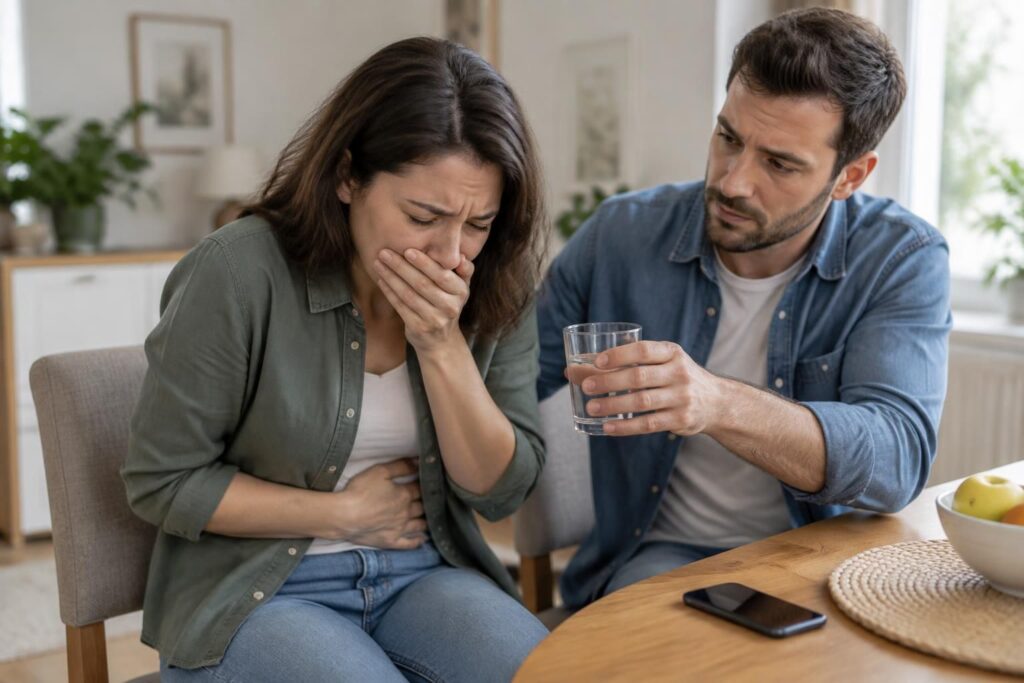
In everyday language, a liver crisis evokes discomfort after a rich meal or a night of drinking. In reality, this term does not describe a precise medical diagnosis: it most often refers to indigestion, with symptoms affecting the stomach and sometimes the intestines or gallbladder.
The liver itself is an essential organ located in the upper right of the abdomen, partly protected by the ribs. It notably participates in bile production, the storage and transformation of nutrients, blood sugar regulation, and the processing of substances such as alcohol or certain medications.
Symptoms of a liver crisis: digestive signs to recognize
After an overly heavy meal, the most frequent signs are a feeling of heaviness, bloating, nausea, and sometimes vomiting. Abdominal pain or a headache can also appear, especially when the meal is accompanied by alcohol, fatigue, or dehydration.
These manifestations are generally temporary and diminish with rest. Their intensity varies from person to person: discomfort after a rich dinner alone does not indicate that the liver is ill.
Liver pain or stomach pain: how to distinguish them?
Pain felt in the pit of the stomach is often located in the middle upper abdomen, just above the navel. Pain under the right ribs can have several origins, notably biliary, but its location alone is not enough to conclude that it comes from the liver.
The liver itself does not have nerve endings sensitive to pain like the skin. Pain in this region can, among other causes, be linked to the gallbladder or tension in the capsule surrounding the liver. Only a healthcare professional can determine its origin.
What to do in case of a liver crisis: helpful actions
If symptoms remain mild, a break and gradual resumption of meals can improve comfort. It is not necessary to force eating: when appetite returns, a light diet and small portions are often better tolerated.
- Drink regularly: take small sips of water, especially if vomiting occurs. Proper hydration helps compensate for losses.
- Choose simple foods: try, according to your tolerance, rice, potatoes, broth, a cracker, or low-fat fish.
- Pause indulgences: temporarily avoid alcohol, very fatty meals, and large portions.
- Rest: resume activities when discomfort decreases, without trying to speed digestion with so-called detox products.
A herbal tea can be pleasant if well tolerated, but it does not cure liver disease. A hot water bottle can provide comfort; it does not “decongest” the organ. Before taking medication against heartburn or pain, ask a pharmacist or doctor, especially if you are already on treatment.
Dietary supplements and products presented as detox cures do not replace a diagnosis or treatment. To better understand precautions regarding plant-based products, consult this information about blackcurrant bud and its uses, then seek professional advice before any intake.
Liver pain: when symptoms suggest another problem
True pain in the liver region is not automatically confused with indigestion. For example, a hepatic colic often occurs when a gallstone temporarily blocks bile flow. The pain can be sudden, located under the right ribs or in the pit of the stomach, and sometimes radiate to the shoulder or back.
Other liver diseases may cause no signs at first. When they appear, certain symptoms — yellowing of the skin or the whites of the eyes, dark urine, very pale stools, marked fatigue, or abdominal swelling — justify medical advice. Additional guidelines on signs that may alert to liver disease can help prepare for a consultation, without replacing a medical examination.
| Observed situation | What it may suggest | Recommended reaction |
|---|---|---|
| Discomfort after a meal, moderate bloating, nausea | Indigestion or temporary digestive disorder | Rest, hydration, and gradual dietary resumption |
| Intense pain under the right ribs, sometimes radiating to the shoulder | Possible biliary cause, notably a gallstone | Seek medical advice quickly |
| Yellow skin or eyes, dark urine, pale stools | Liver or biliary problem to investigate | Consult without delay |
| Persistent pain, fever, or repeated vomiting | Situation requiring clinical evaluation | Contact a healthcare professional promptly |
Which signs require rapid medical consultation?
Do not hesitate to seek advice if the pain is severe, recurring, or does not improve, or if vomiting prevents drinking. Pain accompanied by fever, yellowing of the eyes or skin, dark urine, or discolored stools also requires medical evaluation.
In case of major discomfort, difficulty breathing, confusion, or rapid worsening, contact emergency services. It is better to have an unusual symptom checked than to immediately attribute it to a simple liver crisis.
Preventing digestive disorders without promising detox
There is no drink or cure that cleanses the liver after excess. This organ naturally ensures many transformation functions; the useful approach is rather to limit alcohol excess, favor a varied diet, and follow health recommendations adapted to one’s situation.
If the troubles recur often, note their frequency, the foods consumed, and associated symptoms. These concrete observations will help the doctor guide the consultation and decide if tests are necessary.
Frequently asked questions about liver crisis
How long does a liver crisis last?
A transient digestive disorder often improves within a few hours, but the duration depends on its cause. Consult if symptoms persist, worsen, or are accompanied by warning signs.
What to eat after indigestion?
When appetite returns, gradually resume eating small portions of simple, low-fat foods such as rice, potatoes, or broth. Drink regularly and avoid alcohol during recovery.
Do nausea mean the liver is sick?
No. Nausea is common in many digestive disorders and alone does not diagnose a liver disease. Dark urine, jaundice, or pale stools warrant medical advice.
When should I consult for abdominal pain?
Seek advice quickly if the pain is intense, persistent, or accompanied by fever, repeated vomiting, jaundice, or dark urine. In case of severe discomfort or rapid worsening, contact emergency services.


