
A forgotten prescription at the bottom of a bag, a misread date, and the race against time can begin. Between prescription validity, duration of prescription, and prescription expiration date, the rules differ depending on whether it concerns medications, glasses, contact lenses, exams, or more regulated substances. In 2026, with the rise of digital prescriptions and strengthened security around certain treatments, it’s better to know the correct deadlines to avoid a refusal at the pharmacy or a useless appointment.
The article in brief
Validity deadlines vary depending on the type of prescription, and confusion between first dispensing and total treatment duration remains frequent. A simple reference point is often enough to avoid many blockages at the counter.
- Common medications: first dispensing within three months, treatment limited to one year
- Optics and devices: glasses, lenses, and LPP follow distinct durations
- Exams and rehabilitation: flexible legal validity, but quick relevance essential
- Regulated treatments: narcotics, codeine, and tramadol follow strict rules
A well-read prescription often means saved time, less stress, and smoother care. This article helps to quickly identify the right deadlines for each situation.
At the counter, the scenario often repeats itself: a person arrives with a medical prescription “not that old,” convinced they can leave with their treatment. Then comes the discovery of the detail that changes everything: for certain documents, the prescription law distinguishes the first dispensing, the maximum duration, and sometimes even stricter rules depending on the product. This mechanism may seem technical, but it is based on a simple logic: avoid interruptions in care while protecting the patient from an inappropriate prescription. It’s a bit like a train ticket and a monthly pass, which don’t grant the same rights at the same time. To illustrate these rules, let’s imagine Léa, who leaves a consultation for an anti-infectious treatment, then realizes two weeks later that she stored her prescription with her office papers. Her case is nothing exceptional. Between variable deadlines, possible renewals, and exceptions, the best strategy remains to know what each date corresponds to before needing it.
In practice, prescription rules are never read as a single block. A prescription may be valid for dispensing a medication over a certain period, while covering treatment over a longer duration. Other prescriptions, such as those for glasses or medical devices, follow yet other benchmarks. This gap between the document and its use explains why so many patients are surprised at the counter. It is therefore better to distinguish the paper that authorizes, the care that continues, and the moment when one must return to a medical consultation. Once this trio is understood, navigating becomes much simpler.
In short, remembering three ideas already changes everything:
- First dispensing does not always coincide with the total treatment duration
- Each type of prescription follows specific deadlines according to the care involved
- The pharmacy applies the strict rule, without margin on limited cases
- Anticipating prescription renewal avoids interruptions and delays
Medical prescription validity: the difference between first dispensing and total duration
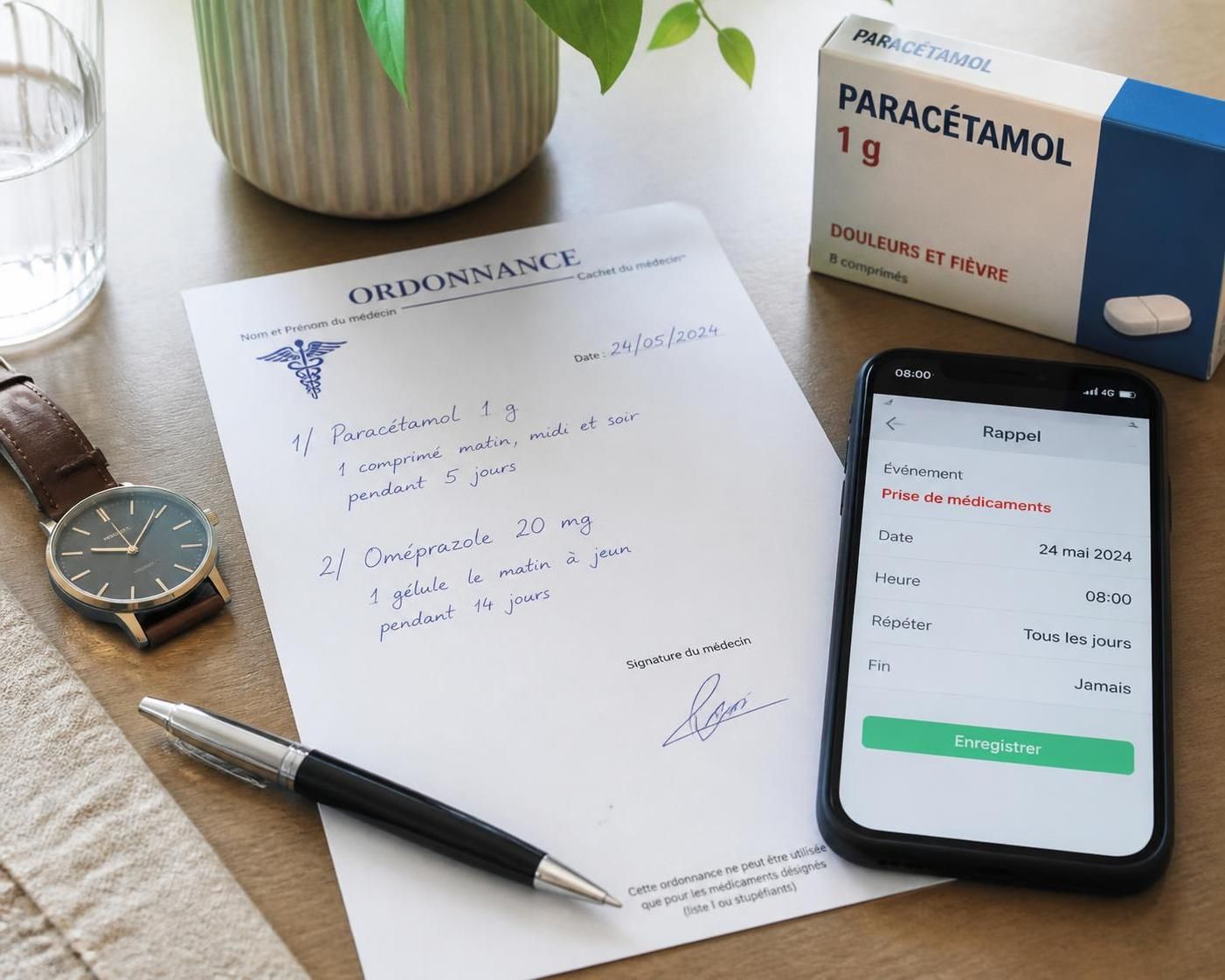
The point that most often trips people up involves two distinct notions. The duration of prescription can cover several months, but the first presentation at the pharmacy often complies with a much shorter deadline. For classic medications, the general rule requires to pick up the treatment within three months following the prescription date. Then, the treatment itself cannot exceed twelve months in total, renewals included. In other words, a prescription is not an unlimited pass: it’s rather a window of access, with a precise framework for what follows.
This distinction explains why a prescription dated four months ago may still seem “valid” on paper, while already being unusable for a first dispensing. In a mutual fund, many insured persons already confused years ago prevention and curative care; here, confusion rather relates to the calendar. The right reflex is to check not only the date but also the product type and any remarks by the prescriber. A prescription may appear simple, then reveal a very different framework as soon as you look closely.
Common medications: three months to start, twelve months at most
For a classic treatment, the rule remains clear: the first supply at the pharmacy must take place within three months following the writing. After this deadline, the prescription becomes invalid for that dispensing. Regarding total duration, the year acts as a ceiling, which allows spreading out several withdrawals if the doctor has planned it.
In real life, this avoids sudden interruptions for chronic patients while keeping a clear framework. If the prescription expires while a treatment has already been well established for at least three months, an exceptional emergency supply can sometimes exist, but it remains very controlled. The message is clear: it’s better to anticipate than to run after the calendar.
To find your way quickly, here is a useful reference:
- First dispensing: maximum three months after prescription
- Total treatment: maximum twelve months, renewals included
- Expired prescription: new medical consultation usually necessary
- Chronic case: emergency supply possible under strict conditions
Medical prescription and devices: glasses, lenses, reimbursed equipment
The rules become more nuanced once you leave the field of medications. For medical devices listed in the products and services list, validity is generally twelve months. This notably concerns compression stockings, crutches, walkers, some intrauterine devices, or hearing aids. Here, the longer deadline offers some flexibility without removing the need to meet the coverage conditions.
In optics, everything depends on age. Glasses and lenses do not follow the same rhythm as an antibiotic or a painkiller. It’s logical: vision changes much faster in children than in adults, a bit like a shoe changing size as the foot grows. Hence the importance of reading the prescription fully before going to the optician.
Glasses: different deadlines depending on age
For visual correction, validity depends on the patient’s age. For those under 16 years old, the prescription is valid for one year. Between 16 and 42 years, it can be used for five years, then three years from age 43 onward. However, the first dispensing at the optician must occur within six months.
This arrangement avoids multiplying appointments when vision changes little, while keeping regular control when the eye is more fragile. The optician can sometimes slightly adjust the correction during a renewal but cannot rewrite the patient’s visual history. In case of doubt, the ophthalmologist’s opinion takes full precedence.
Contact lenses and medical equipment: similar but not identical rules
Contact lenses follow a nearby logic: three years for those 16 and older, one year for younger patients. Again, reimbursement is not automatic and depends on the medical indications provided by the texts. For some patients, the mutual insurance compensates part of the remaining cost, which can lighten the bill.
For reimbursed medical equipment, the twelve-month deadline allows time to organize without rush. It is useful after surgery or in the follow-up of a chronic condition. But again, validity only makes sense if the device still corresponds to the patient’s real need.
| Prescription type | Validity duration | Key point to remember |
|---|---|---|
| Common medications | 3 months for first dispensing, 1 year maximum | Total treatment must not exceed twelve months |
| Reimbursed medical devices | 12 months | Valid for many daily-use equipments |
| Glasses | 1, 3 or 5 years depending on age | First dispensing at optician within 6 months |
| Contact lenses | 1 year or 3 years depending on age | Coverage depends on medical indications |
Prescription rules for medical exams, speech therapy, and rehabilitation
For biological or imaging exams, the law is much more flexible on paper. There is not always a strict legal deadline, but clinical relevance does not forgive delay. A blood test performed too late risks no longer reflecting the initial situation, a bit like a photo taken after the scene has changed. That’s why many laboratories prefer recent prescriptions, even when the text does not impose a formal deadline.
The same reasoning applies to X-rays, ultrasounds, CT scans, and MRIs. An exam requested for acute pain quickly loses its meaning if the symptom has disappeared or changed. As for speech therapy or rehabilitation, no legal duration is imposed, but starting quickly remains the best way to optimize coverage, especially in children. Again, the right timing makes all the difference.
Why clinical validity matters as much as the date
A prescription can remain acceptable while becoming medically less relevant. This is especially true for blood tests, imaging exams, and rehabilitation follow-ups. Waiting several months sometimes means asking the body a question that is no longer the right one.
In practice, a laboratory or imaging center can request a more recent prescription if the previous one seems too old. This is not administrative rigidity but a way to avoid exams disconnected from the patient’s real condition. When health evolves, common sense must keep pace.
Secured prescription, codeine, tramadol: much stricter deadlines
Certain treatments do not fall into the category of regular prescriptions. Since 2025, codeine and tramadol require a secured prescription, which has strengthened control around these substances. The logic is simple: limit misuse risks and protect both the patient and the dispensing circuit. For narcotics, the presentation deadline is particularly short: generally three days, with a maximum treatment duration of twenty-eight days, sometimes shorter depending on the molecule.
Here, there is no room for improvisation. If the deadline is exceeded, the pharmacy applies the rule without possible exemptions. This rigor may seem severe, but it responds to very real safety concerns.
The case of analgesic treatments and fractionation
When the prescription provides for fractionation, each fraction obeys the same tight schedule. In other words, you must return at the right moment, without delay. This arrangement avoids unnecessary stockpiles and diversion, while maintaining treatment within a clear framework.
In the case of a planned hospital discharge, a specific window may apply around the discharge date. The patient must then organize with the facility and the pharmacist to avoid any interruption. The right reflex remains the same: check the date before leaving the ward, not once at home.
| Prescription type | Practical deadline | Consequence if deadline exceeded |
|---|---|---|
| Narcotics | Presentation within 3 days | Supply reduced to remaining time |
| Codeine, tramadol | Secured prescription mandatory | Refusal to dispense if the document is non-compliant |
| Fractioned prescription | Respect each due date | Loss of the fraction not collected in time |
Prescription renewal: what to do before the prescription expiration date
The best way to avoid interruption remains anticipation. A prescription nearing its end must be flagged before the last day, especially for chronic treatment. A phone reminder, a note in a planner, or a message to the office may seem trivial, but these small gestures often avoid a real hassle.
In some cases, a professional may temporarily extend an oral contraceptive if the prescription is less than a year old, without unlimited renewal though. For long-term treatments, the pharmacist can sometimes ensure an exceptional relay, but this never replaces a well-prepared prescription renewal. The golden rule is simple: don’t wait to run out before reacting.
- Check the prescription date as soon as the document is handed over
- Note the deadline in a planner or on a smartphone
- Contact the prescriber a few weeks before the end
- Ask for advice at the pharmacy if the situation seems unclear
This type of organization changes everything in daily life. A neighborhood nurse recently told how a patient did not understand why his prescription “worked” one month and then nothing. On checking, it was simply a first dispensing deadline exceeded. A detail, apparently, but a real turning point in the care pathway. A well-read date is often better than a long detour.
FAQ on prescription validity and prescription renewals
Is a medication prescription valid for three months or one year?
Both deadlines coexist. Three months concern the first dispensing at the pharmacy, while the total treatment duration must not exceed one year, including renewals.
What to do if the prescription expiration date has passed?
You must contact the doctor or prescribing professional again to obtain a new prescription. At the pharmacy, dispensing can be refused if the deadline is no longer respected.
Do medical exams have a legal validity period?
Not always. However, their clinical relevance quickly diminishes with time, which leads laboratories and imaging centers to request recent prescriptions.
Can a prescription for oral contraception be extended?
Yes, in some cases, a pharmacist or nurse can extend the prescription up to six months if the prescription is less than one year old. This extension remains limited and non-renewable.


