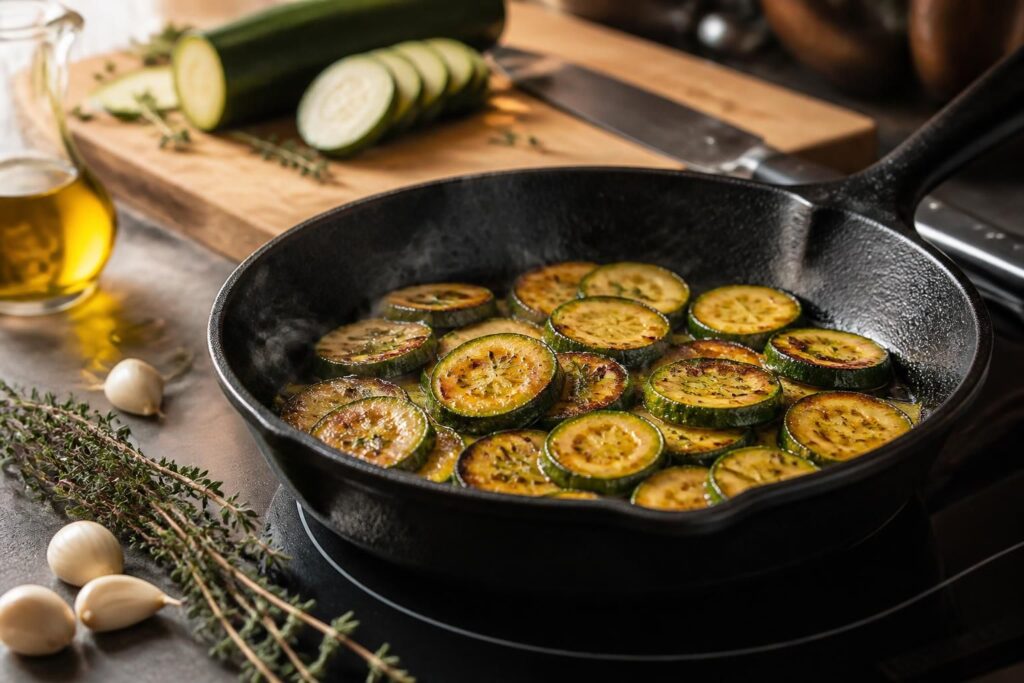
The pan-fried zucchini has everything to please when time is short and the desire to eat well remains intact. In just a few minutes, this discreet vegetable transforms into a flavorful, golden, and tender dish, provided you pay attention to the cut, the heat, and the seasoning. It’s the kind of simple recipe that reminds us that a good dish doesn’t necessarily require many ingredients, but rather a few well-chosen tips.
The article in brief
A few simple gestures are enough to achieve a quick cooking full of flavor, without soaking the zucchinis. A hot pan, good olive oil, and well-dosed aromatics change everything.
- Choice of zucchinis: favor young, firm, and shiny vegetables
- Well-managed cooking: sear in the pan without overcrowding to brown
- Enhanced taste: garlic, herbs, lemon, or parmesan elevate the sauté
- Clever use: serve as a side dish, light meal, or gourmet base
With the right reflexes, zucchini becomes a practical and pleasant everyday dish.
In many kitchens, zucchini often plays a supporting role. Yet, well prepared, it can steal the spotlight: tender flesh, a slight sweet note, a nicely browned surface, and that little fresh touch that makes you want to come back for more. The secret rarely lies in a complicated technique; it mainly rests on simple reflexes, almost obvious once you know them. Choosing suitable zucchinis, avoiding excess water, not suffocating the pan, then enhancing everything with just the right seasoning: this is the foundation of a successful sauté, quick to start on a weeknight and rich enough to please the whole table.
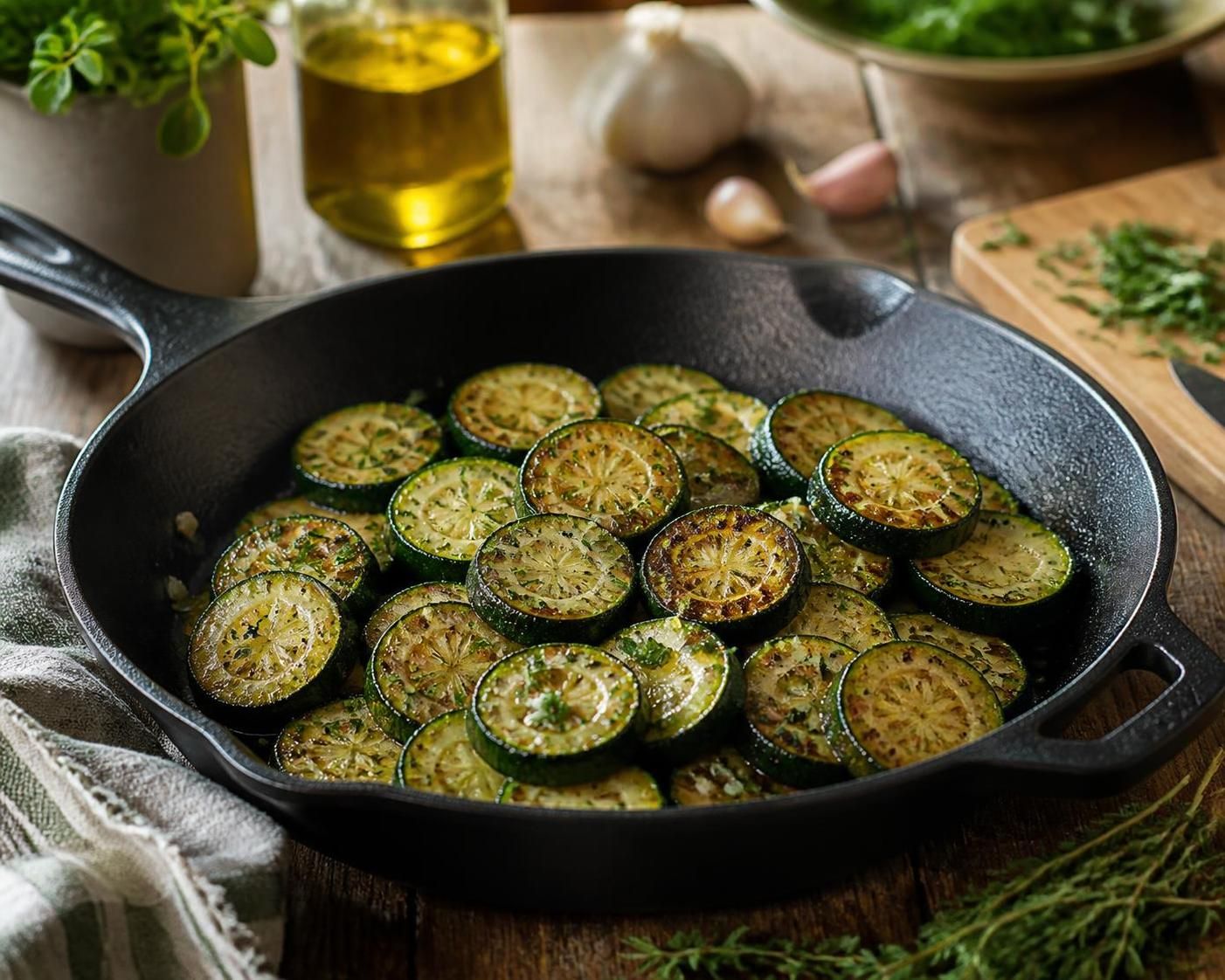
Choosing the right zucchini for quick and tasty cooking
Success starts at the moment of purchase. A young, firm, and smooth zucchini holds its shape better in the pan and releases less water during cooking. Smaller varieties, often more tender, offer a more pleasant texture and a clearer flavor—a detail that matters when you want quick cooking without losing quality.
In a busy family, this choice really makes a difference. For example, an improvised dinner in Lyon can turn into a complete dish in ten minutes if the vegetables are well selected from the start. To go further on the nutritional aspect, a visit to zucchini calories helps to better place this vegetable in a light and balanced diet.
Washing should remain careful, but peeling is not essential when the skin is thin and the vegetable very fresh. This skin even provides some firmness, much like a peel protects a fruit: without it, the flesh crushes more quickly. A simple rinse under water, quick drying, and the stage is set for what follows.
Regular cutting and stress-free preparation
A slice that’s too thick keeps a firm core, while a slice too thin tends to fall apart. Ideally, aim for regular pieces, about a few millimeters thick, to achieve even cooking. This regularity avoids texture differences and results in a cleaner outcome both visually and tastewise.
When zucchinis are larger, removing some of the seeds helps limit excess moisture. It’s a subtle gesture but hugely effective, like a small correction that changes everything in an everyday dish. In cooking, precision often resembles a time-saver.
Mastering the pan to get golden and tender zucchinis
Heat plays the main role here. A hot pan, a drizzle of olive oil, and zucchinis laid out in a single layer allow the vegetables to sear without drowning them. If the pan is too full, water accumulates and the zucchini starts to steam instead of lightly grilling; that’s when the magic falls apart.
The right pace remains simple: let color develop without stirring constantly, then turn the pieces at the right moment. Practically, a few minutes on each side often suffice for a tender and golden sauté. For other ideas in the same spirit, the zucchini fritter version shows well how texture can change depending on the chosen method.
| Step | Useful actions | Expected result |
|---|---|---|
| Preparation | Wash, dry, and cut into regular slices | Even and quicker cooking |
| Heating | Heat the pan with a bit of olive oil | Well-seared surface, no sticking |
| Searing | Place pieces without overcrowding | Less water, more browning |
| Finishing | Add seasoning at the end of cooking | Clearer aromas and preserved texture |
An often underestimated detail deserves to be highlighted: patience. Letting the vegetable take on a beautiful golden hue brings a rounder, almost slightly caramelized flavor, much more interesting than a pale and wet sauté. This step transforms a simple side dish into a real meal base.
Why medium heat cooking changes everything
Too high heat burns the outside before the inside has time to relax. Conversely, too low heat makes the vegetables release too much water and breaks the pan’s dynamic. Medium heat is often the best compromise, especially when aiming for a quick sauté that is both fast and pleasant.
This choice reflects a very simple rule, often passed down in family kitchens: it’s better to adjust the heat than to chase the outcome. This logic also works for other quick cooking methods, whether vegetables or proteins. To compare approaches, these tips for pan-seared tuna demonstrate well the importance of heat control.
Seasoning and gourmet ideas to enhance sautéed zucchini
The moment of flavor arrives at the end of cooking, when aromas can express themselves without burning. A bit of garlic, some fresh herbs, pepper, a pinch of salt, and for those who like, a splash of lemon immediately give more character. The idea is not to mask the zucchini but to make it sing.
Those who enjoy richer dishes can add parmesan, while a hint of paprika or curry adds warmer nuances. This flexibility is the vegetable’s great strength: it accepts almost everything, as long as it is respected. For a complementary version, zucchini tagliatelle sautéed offers a light and very visual alternative.
- Garlic at the end of cooking: a clear aroma without bitterness
- Fresh herbs: basil, parsley, or thyme for freshness
- Lemon: a bright note that lightens the dish
- Parmesan: a creamy and gourmet addition
- Mild spices: paprika or curry to vary the recipe
On a family plate, these small touches often make the difference between a plain vegetable and a preparation eagerly awaited. This also explains the lasting success of this recipe: it stays simple without becoming monotonous. A well-seasoned sauté quickly becomes a go-to of everyday meals.
Ideas to serve the sauté without complicating it
Pan-fried zucchinis go very well with fish, eggs, poultry, or even whole grains. They can also become the base of a light dinner with a composed salad or some legumes. In a balanced meal logic, they bring color, softness, and a genuine fresh sensation.
For a more structured menu, this preparation can be part of a plate inspired by quick weeknight dinners, with a protein source and a simple starch. Those who want to compose a harmonious whole can also rely on balanced menu ideas for the week, useful for staying on track without complicating life. A well-thought-out sauté often remains the meal’s balancing point.
Avoiding common mistakes to keep a pleasant texture
The main trap is to try to go too fast by overcrowding the pan. When pieces overlap, moisture concentrates and the vegetable loses its golden aspect. It’s better to cook twice than to end up with a soft and bland mass.
Another common mistake: salting too early. Salt draws out water, which slows browning and increases sogginess. In a family kitchen, this detail is quickly noticed, especially when seeking a simple but well-held vegetable base. A successful sauté therefore depends as much on what you do as on what you avoid.
Storage also matters. If leftovers remain, it’s better to reheat them gently in the pan rather than in the microwave to preserve texture. This way of doing fits into a more attentive cooking style, where every gesture counts without weighing down daily life.
Should you peel zucchinis before putting them in the pan?
No, it is generally not necessary if the zucchinis are young and well washed. The skin provides firmness and contributes to the good texture of the sauté.
How to avoid zucchinis releasing too much water?
You need to cut them regularly, not overcrowd the pan, and cook on medium to fairly high heat. Salting only at the end of cooking also helps limit excess moisture.
Which seasonings work best with zucchini?
Garlic, fresh herbs, pepper, lemon, paprika, or a bit of parmesan give very good results. The important thing is to stay moderate to keep the vegetable’s flavor.
Can zucchinis be prepared in advance?
Yes, they can be cooked a bit in advance then gently reheated in the pan. This method suits meals planned in advance or busy evenings very well.
Which pan to choose for this recipe?
A good quality non-stick pan or a cast-iron pan allows more even cooking and limits sticking. This helps achieve a nice browning without damaging the zucchini.


