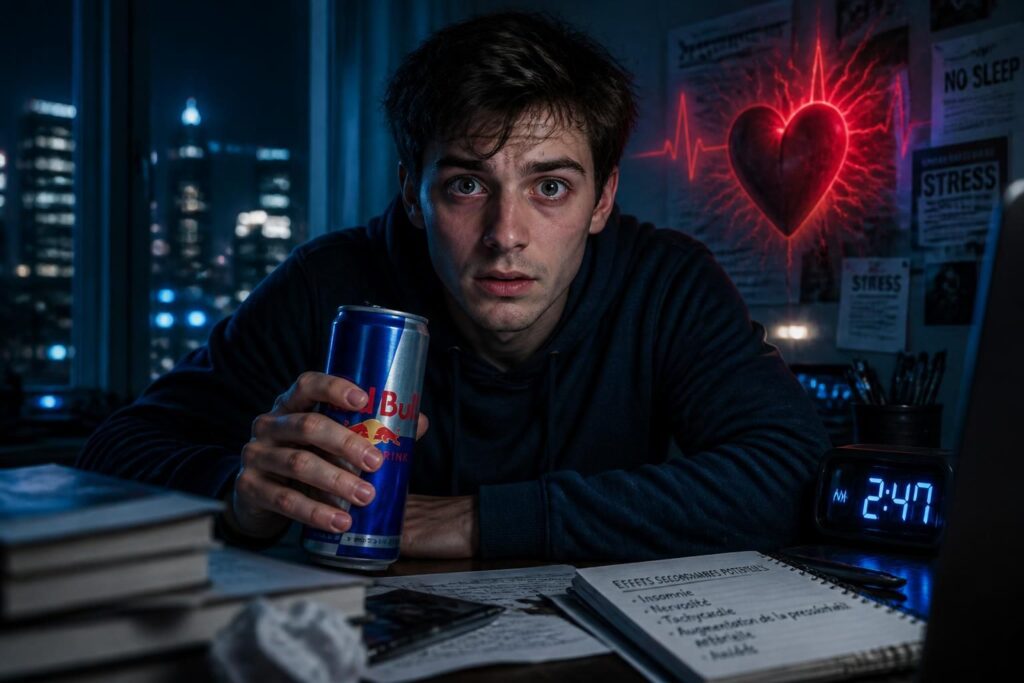
With its image as an energy drink supposed to boost alertness in the blink of an eye, Red Bull has become a reflex for many students, tired workers, and busy athletes. However, behind the promised kick, the side effects can be very real, especially when consumption becomes regular or is added to other stimulants. Between tachycardia, hypertension, sleep disorders, and rising stress, the subject deserves more than a simple bar debate.
The article in brief
Red Bull attracts by its rapid effect, but its formula is no trivial matter when it becomes habitual. The real question is not just “does it wake you up?”, but “at what cost to health?”.
- A misleading stimulant cocktail: caffeine, sugar, and other active ingredients speed up the body
- Cardiovascular risks: possible palpitations, high blood pressure, and tachycardia
- A real mental impact: anxiety, nervousness, and stress may increase
- Uses to be monitored: teenagers, alcohol, medications, and repeated consumption increase exposure
Better knowing the warning signs helps to consume more wisely, or to do without.
In stores as well as in party habits, Red Bull is among the most visible drinks in the stimulant market. Its success is easy to explain: a recognizable taste, a promise of immediate energy, and accessibility that normalizes its consumption, including among the youngest. But this ease of access hides a crucial point: this type of drink does not act like a simple soda. The combination of caffeine, sugar, and other active ingredients can disrupt the body’s balance, somewhat like the body receiving an acceleration boost without real adaptation time.
Health professionals increasingly remind that the problem is not only the amount absorbed at once, but also the accumulation effect. One can to “get through” a tough day, then another to stay awake at night, and the circle quickly becomes tricky. For some, the first signs are subtle: racing heart, sweaty palms, shortened sleep. For others, reactions are more pronounced and can lead to real risks to health. It is precisely this gray area, between occasional use and established habit, that worries the most.
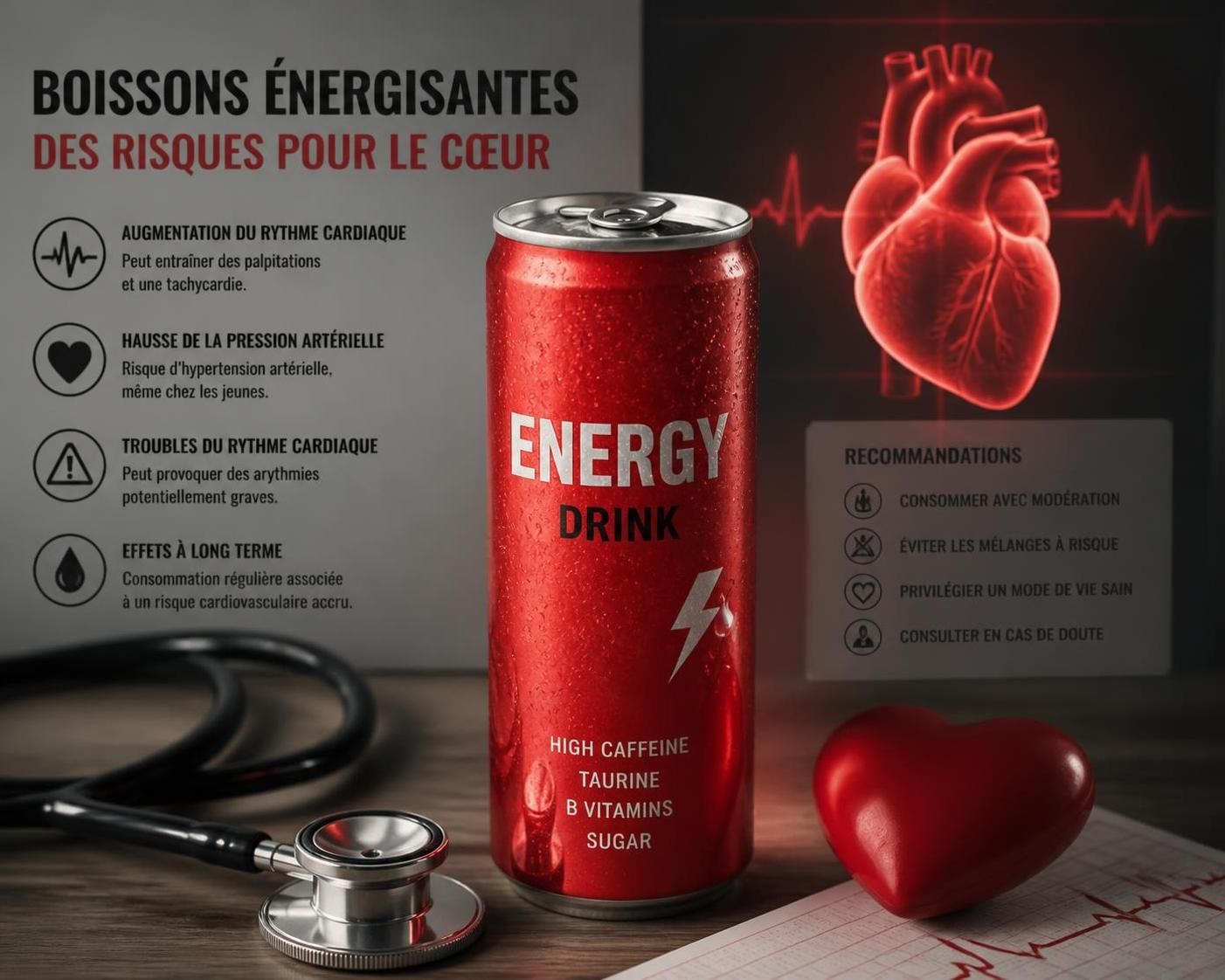
Why Red Bull worries doctors so much
Red Bull is not a problem just because it wakes people up. It worries mainly because it acts on several levers at once: nervous system, heart, blood pressure, sleep, and emotional balance. In other words, it’s not just a slightly tonic sweet drink, but a product whose effects can add up like domino pieces. When the first one falls, the others sometimes follow quickly.
A standard can contains a dose of caffeine close to that of a coffee, but it also comes with a significant sugar load and other compounds that enhance stimulation. This mix distinguishes the energy drink from classic coffee. The body then receives several messages at the same time: stay awake, mobilize energy quickly, then compensate for the following drop. For some people, this mechanism is tolerated without major incident; for others, it immediately triggers disturbing symptoms.
The case of a young employee, let’s call him Lucas, illustrates this drift well. To finish his days without losing pace, he got in the habit of alternating coffee and Red Bull, then adding a can before sports. In a few weeks, his nights shortened, his mood tensed, and his heart started beating faster at the slightest effort. This kind of scenario, very common, shows how the side effect of Red Bull can slip into daily life without hitting immediately as an obvious danger.
Effects on the heart and blood pressure
On the cardiovascular level, vigilance is at its peak. Caffeine stimulates the sympathetic nervous system, which can accelerate heart rate and cause a sensation of palpitations. In some sensitive people, this reaction becomes a clear tachycardia, sometimes accompanied by discomfort, tightness, or shortness of breath.
People who already suffer from hypertension or heart problems are the most exposed. Blood pressure may temporarily rise after consumption, which is not trivial when the body is already fragile. The risk becomes even more concerning during intense physical effort, lack of sleep, or mixing with alcohol. The heart does not always “get used” as well as one might think.
| Observed effect | What happens in the body | Most vulnerable people |
|---|---|---|
| Palpitations | Accelerated heart rate | People sensitive to caffeine |
| Tachycardia | The heart beats too fast for the required effort | Cardiac or anxious people |
| Hypertension | Temporary increase in blood pressure | Hypertensive adults, athletes, teenagers |
| Discomfort | The body poorly manages repeated stimulation | In case of high dose or fatigue |
This reality explains why cardiologists prefer to talk about caution rather than normalization. A young organism does not guarantee total protection, and a good immediate impression says nothing about the body’s response a few hours later.
Sleep, anxiety, and stress: the discreet but powerful trio
Many consume an energy drink to save time, without seeing that they often lose it at the other end of the day. The first side effect of Red Bull in this area is disturbed sleep. The later the intake, the harder it becomes to fall asleep, and the more the night loses quality. Result: next-day fatigue sometimes leads to taking another can, thus maintaining the cycle.
This mechanism also affects mental balance. The feeling of nervousness can rise quickly, especially in people already sensitive to stress or prone to anxiety. The body then interprets the stimulation as an alert, somewhat like needing to prepare to run without ever actually moving. In some, this results in trembling, inner agitation, or even a panic attack.
A student used to studying at night described a very simple impression: “the brain just wouldn’t stop”. This often happens when artificial energy replaces real rest. The problem is not just to last longer, but to do so by forcing the nervous system to remain tense.
Energy drinks and addiction: when the body demands its dose
The most underestimated dimension is often dependence. Red Bull can establish a very strong psychological habit: it becomes associated with performance, concentration, or simply “getting through”. Over time, the brain anticipates its dose and demands a new intake as soon as the energy drop is felt. This is where the word addiction fully makes sense, even if it seems mild at first.
Withdrawal is not pleasant. Headaches, intense fatigue, irritability, and difficulty concentrating are frequent when consumption drops abruptly. Hence the interest of a gradual stop rather than a sudden break. This approach works better, like slowly dimming a bright light to let the eyes adjust.
Drug interactions add another level of caution. Some combinations can reinforce caffeine’s effects or complicate the body’s tolerance. Before regularly consuming an energy drink, especially when on medication, it is better to check compatibility with a healthcare professional. The reflex is simple, but it avoids many unpleasant surprises.
For those looking for a gentler alternative to the artificial kick, there are more stable options to regain drive in daily life. More regular eating, better hydration, and real breaks can sometimes do more than a very stimulating drink. In fact, some readers seeking balance also are interested in complementary approaches like the zinc and magnesium duo for vitality or broader avenues around natural management of anxiety and stress.
When consumption becomes risky among young people
Teenagers and young adults are particularly concerned, as their relationship to stimulants is often more impulsive. An energy drink consumed before training, a party, or an exam night may quickly seem harmless. Yet, fatigue masked by caffeine does not disappear: it shifts and sometimes returns stronger.
Among minors, professionals observe more risky behaviors, sleep disorders, and agitation. The problem is worsened when the drink is mixed with alcohol, as the stimulating effect gives a misleading sense of control. It’s a bit like accelerating in a car with a dashboard hiding warning lights: the feeling of mastery does not prevent real danger.
- Before sport: stimulation can mask fatigue and overstrain the heart.
- With alcohol: the risk of overestimating one’s abilities increases markedly.
- During exams: shortened sleep often ends up penalizing memory.
- Daily use: tolerance rises and dependence settles more easily.
This logic explains why the WHO and several health agencies insist on clear and accessible information. Better knowing the composition of a drink is already regaining some control over its effects.
Other side effects of Red Bull not to be minimized
Beyond the heart and sleep, other reactions deserve monitoring. Some consumers report headaches, nausea, or vomiting after too high a dose. Others describe tremors, unusual nervousness, or digestive discomfort. Nothing spectacular at first, but repetition ends up wearing out the body.
The sugar content also contributes to glycemic spikes followed by energy drops. In the long term, this alternation can promote a terrain unfavorable to metabolism, especially in people who consume it often. This is one of the reasons why energy drinks are closely monitored within the framework of type 2 diabetes prevention.
Allergic reactions, although less frequent, also exist. Itching, respiratory discomfort, or redness may appear in some people sensitive to one of the components. Added to this is the risk of combined consumption with other stimulants, which multiplies side effects. In health matters, adding small excesses rarely ends with reassuring results.
For those who like to compare daily solutions, it may be useful to also look at broader prevention topics, like how to choose safer health products or questions related to some often unknown side effects. The right reflex is always to read the label, but also to listen to the body’s reactions.
What health authorities say and good practices to remember
Official recommendations go in the same direction: caution, moderation, and particular vigilance among vulnerable populations. Children, teenagers, pregnant women, hypertensive people, and those on medication should avoid these drinks, or at least seek medical advice. The question is not to ban everyone equally but to recognize that not all bodies react the same way.
The most useful message is probably the simplest: if the body often demands an energy drink to function, it may be a sign that it lacks rest, hydration, or a more stable rhythm. In that case, the answer is not found in a can alone but in the overall lifestyle habits. Health, as often recalled by a former hiking enthusiast, is built through small repeated actions, not quick fixes.
To keep energy without falling into the stimulant spiral, a few levers really make a difference: sleep enough, eat regularly, move a bit every day, and reserve caffeine for moments when it remains useful. Red Bull is therefore not an absolute ban for everyone, but its place should remain exceptional, especially when signs like tachycardia, anxiety, or degraded sleep appear.
Can Red Bull cause tachycardia?
Yes, especially in people sensitive to caffeine or already fragile on the cardiac level. Heart rate can accelerate rapidly after consumption.
Why can Red Bull increase blood pressure?
Caffeine stimulates the nervous system and causes transient vasoconstriction, which can raise blood pressure. The risk is more pronounced in hypertensive people.
Can one become dependent on an energy drink?
Yes, because caffeine can create a habit and tolerance. Sudden stopping can cause fatigue, headaches, and irritability.
Is Red Bull riskier with alcohol?
Yes, this association masks fatigue and can lead to underestimating intoxication, with more risky behaviors and increased cardiovascular stress.
What attitude to adopt if side effects appear?
You should reduce or stop consumption, avoid repeated intakes, and seek medical advice if palpitations, breathing discomfort, or sleep disorders persist.


