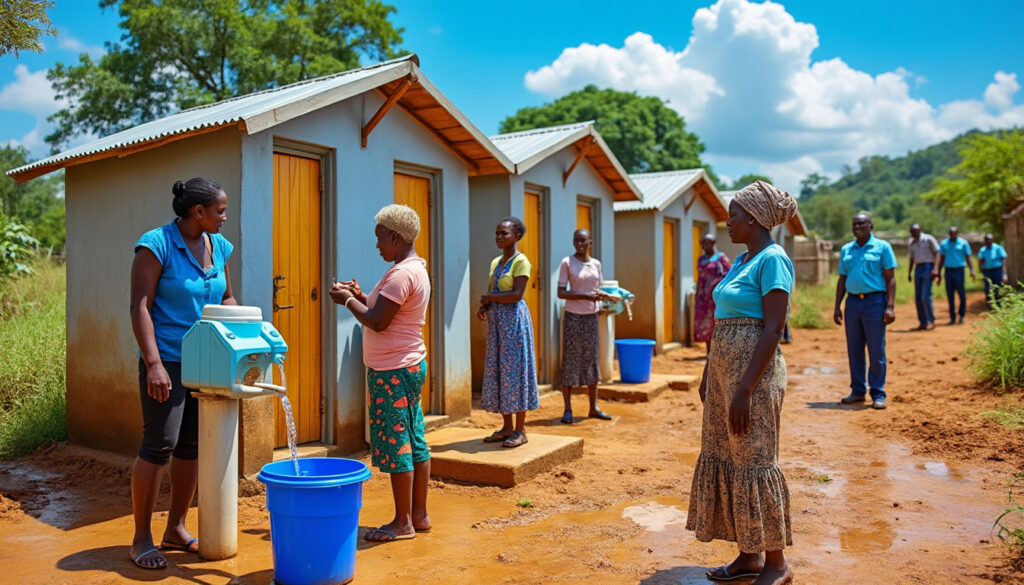
Faced with the alarming reality of over 3.6 billion people worldwide lacking adequate sanitation facilities, the Global Sanitation Fund (GSF) stands out as a key player in revolutionizing access to sanitation in developing countries. By combining strategic financing, technological innovation, and community mobilization, this fund takes concrete action to improve public health, reduce poverty, and support sustainable development. This article immerses you in the mechanisms and tangible results of the GSF, revealing how it sustainably transforms hygiene conditions and access to drinking water in the most vulnerable regions.
🕒 The article in brief
Discover how the global sanitation fund energizes universal access to sustainable sanitation infrastructure and enhances disease prevention in developing countries.
- ✅ Targeted financing and innovation: Unique combination of grants, loans, and tailored public-private partnerships.
- ✅ Active community mobilization: Local leaders trained to ensure infrastructure sustainability.
- ✅ Measurable health impacts: Notable reduction in diarrheal diseases in intervention areas.
- ✅ Strategic partnerships: Collaboration with NGOs, social enterprises, and institutions to amplify results.
📌 An inspiring example of international investment combining public health and sustainable development on a large scale.
The key role of the Global Sanitation Fund in improving access to sanitation in developing countries
The Global Sanitation Fund, or global sanitation fund, plays a fundamental role in combating unsanitary conditions affecting a large portion of populations in developing countries. In 2026, this fund is recognized for its unique ability to mobilize targeted international resources to improve access to sanitation infrastructure, notably in rural and peri-urban areas of Sub-Saharan Africa and Southeast Asia. These regions are often the most deprived due to insufficient adequate sanitation facilities, severely compromising public health.
The GSF operates through direct financing of integrated projects, combining the construction of improved latrines, social support for communities, and technical training. For example, in Cambodia, the fund supports initiatives that take into account local cultural specificities, thus ensuring acceptance and sustainable use of sanitation facilities. This adaptability is necessary for the investment made to bring a real improvement in living conditions while respecting traditions.
Beyond the technical aspect, the fund places disease prevention at the heart of its objectives. By enabling better access to sanitation and drinking water, it directly contributes to reducing diseases related to unsanitary conditions, such as diarrheal infections, which still cause millions of victims each year. It is a public health lever massively supported by international investments but also through innovative approaches adapted to field realities. The GSF thus establishes itself as an essential driver to sustainably transform sanitation systems in developing countries.
Community mobilization and local leadership: the core of the global sanitation fund’s strategy
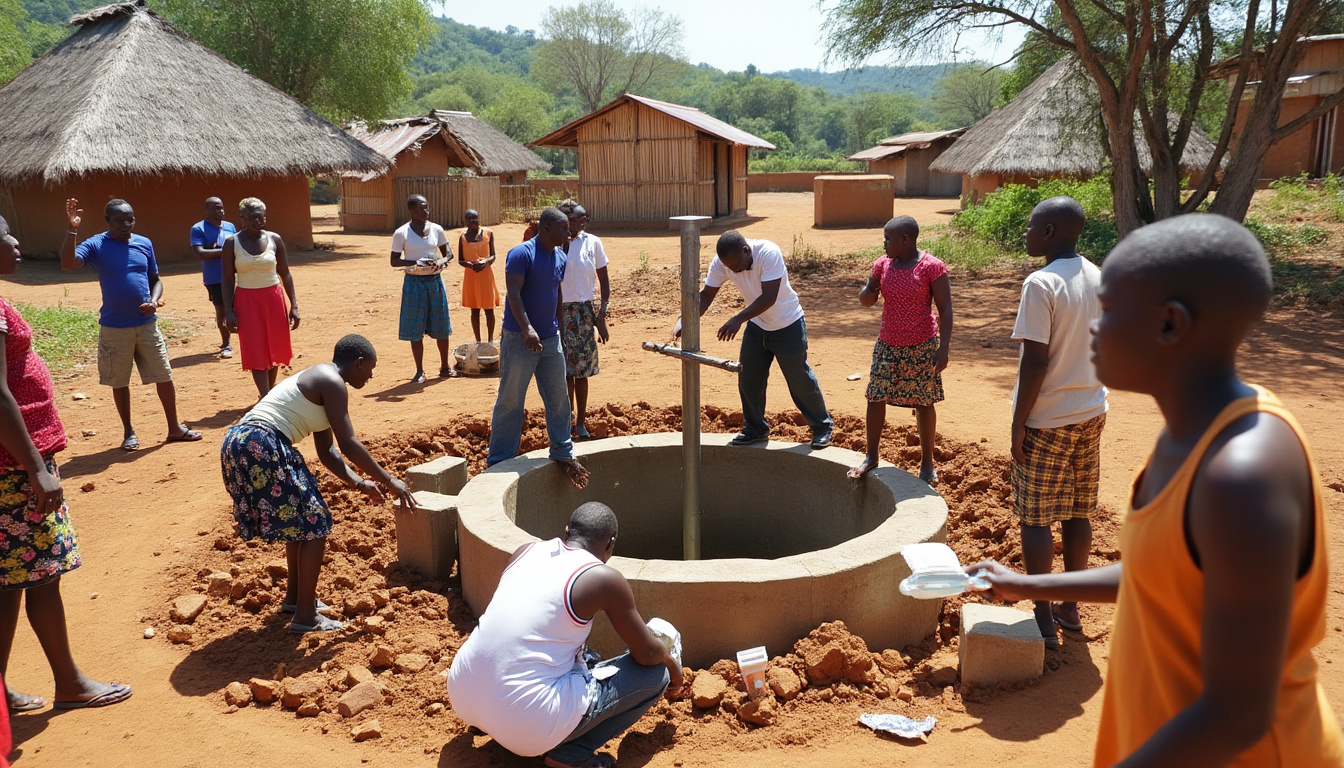
One of the major strengths of the Global Sanitation Fund lies in its participatory strategy centered on the involvement of local communities. The fund recognizes that the ownership of projects by the concerned populations is indispensable to their success and sustainability. This mobilization is reflected through the training and support of community leaders who become the real engines of change.
These local representatives play a crucial role: they organize awareness sessions on good hygiene practices, supervise the construction of sanitation infrastructures, and ensure their regular maintenance. This approach creates a shared sense of responsibility that strengthens the sustainability of the facilities. For example, in Bangladesh, thanks to this model, the maintenance of 85% of latrines built is regularly ensured three years after the end of projects, an exceptional rate in the sector. This result shows how important local management is to guarantee sustainable access to sanitation.
The GSF also emphasizes cultural and social adaptation of solutions. By encouraging communities to analyze their own practices, especially open defecation, it helps identify effective levers for lasting change. Programs like those implemented in Togo attest to this effectiveness, where over 333,000 people stopped practicing open defecation between 2014 and 2017. Active community participation thus becomes a powerful lever, not only to improve sanitation infrastructures but also to drive profound behavior changes.
Innovative financing mechanisms of the Global Sanitation Fund
To reach its ambitious goals, the Global Sanitation Fund relies on diversified financing mechanisms adapted to the context of developing countries. This plurality maximizes the efficiency of investments while facilitating local ownership.
First, direct grants are the priority tool. They cover up to 80% of costs in the most disadvantaged areas, thus ensuring the accessibility of sanitation infrastructure to the most vulnerable populations. This financial aid encourages the rapid implementation of latrines and other essential sanitation solutions.
Second, preferential rate loans are sometimes mobilized for project components that generate income, thus ensuring economic sustainability. This lever is particularly interesting to support entrepreneurial initiatives in the sanitation field, reinforcing both durability and social impact.
The third pillar is financial innovation through public-private partnerships (PPP). These innovative collaborations allow mobilizing private capital while maintaining social accessibility of services. The GSF also experiments with results-based financing, where financial commitments are conditioned on achieving measurable objectives in terms of access or use.
| 🛠️ Financing mechanism | ⚙️ Main objective | 🌍 Impact on the ground |
|---|---|---|
| Direct grants | Cover infrastructure costs in disadvantaged areas | Expanded access to sanitation for the most vulnerable |
| Preferential rate loans | Finance income-generating projects | Economic sustainability of sanitation initiatives |
| Public-private partnerships | Mobilize private capital and ensure social accessibility | Strengthening and innovation of sanitation services |
| Results-based financing | Condition disbursements on achieving objectives | Optimization of project performance |
How the Global Sanitation Fund improves access to sanitation in developing countries
1. Financing mechanisms
The Global Sanitation Fund (GSF) mobilizes funds from public and private donors to finance sustainable sanitation programs in low-income countries.
- Direct grants to governments and NGOs
- Co-financing with local communities
- Transparent monitoring of expenditures
2. Community involvement
Communities are at the heart of GSF’s actions to ensure sustainability:
- Training of local teams for facility maintenance
- Hygiene awareness campaigns
- Participation in decision-making
3. Impact on sanitation
GSF has enabled measurable progress:
- +25 million people now have access to improved toilets
- 40% reduction in water-related diseases in covered areas
- Strengthening of local sanitation management capacities
4. Innovations
GSF encourages innovative solutions adapted to local contexts:
- Eco-friendly toilets with low water consumption
- Innovative wastewater collection and treatment systems
- Mobile application for community monitoring and maintenance
Interactive infographic: GSF projects by geographic area
Data from the fictitious public API https://public.api.sanitationfund.org/projects
Measuring the health and socio-economic impacts of the global sanitation fund
The effectiveness of the Global Sanitation Fund is supported by a rigorous monitoring and evaluation system. This includes multidimensional indicators covering physical access to infrastructure, adoption of good hygiene practices, and concrete health impacts.
For example, since its creation in 2008, the GSF has improved access to sanitation for over 25 million people in developing countries. This progress is accompanied by an average 35% decrease in diarrheal diseases in intervention areas, a direct indicator of improved public health. These results confirm that investing in sanitation has major positive spillovers for disease prevention, well-being, and population productivity.
On the socio-economic level, the benefits are also significant. In India, the GSF has supported the construction of more than 800,000 household latrines and numerous community infrastructures. This deployment has transformed family behaviors, with 90% of them maintaining connections to the facilities for at least two years after project completion. Moreover, these gains translate into an average annual increase of 260 dollars per household, corresponding to time saved searching for sanitation facilities and reduced care related to diseases.
In Africa, particularly in Senegal, supported projects have led to the creation of more than 3,000 jobs in the local sanitation sector, demonstrating a triple impact on health, the local economy, and sustainable development. This proves that international investments in sanitation can generate broadly beneficial outcomes.
Partnership, social innovation, and future prospects for sustainable sanitation
The Global Sanitation Fund continues to evolve by integrating social and technological innovations to meet current and future challenges. In 2026, it dedicates about 15% of its resources to supporting innovative solutions that combine social impact and economic viability. Social entrepreneurs, in particular, find in the GSF a preferred partner, thanks to incubation programs offering technical and financial support over several years.
Initiatives such as modular toilets made from recycled materials in Ghana or decentralized wastewater treatment systems in India illustrate this dynamic of innovation applied to sustainable sanitation. These prototypes are rigorously evaluated before expansion to other territories, ensuring controlled dissemination of best practices.
Additionally, the GSF faces new challenges, notably those linked to climate change. The resilience of sanitation infrastructure becomes a priority. The development and integration of new indicators to measure installations’ resistance to extreme climate events are already part of the fund’s strategic agenda. These initiatives directly contribute to strengthening sustainable development in developing countries.
To engage or collaborate with the fund, organizations are advised to carefully prepare their application, aligning technical, social, and financial projects. The application requires a detailed analysis of local needs, a rigorous diagnosis, and solid partnerships to ensure the success and sustainability of interventions. The GSF thus encourages the emergence of creative solutions while facilitating the dissemination of best practices through its international network.
- 🌟 Access to financing adapted to local needs
- 🌟 Support for innovative entrepreneurial initiatives
- 🌟 Strengthening human capital through training
- 🌟 Precise measurement of results and continuous adaptation
For further information on the benefits of financing in sectors related to health and well-being, you can consult these useful references: the benefits of health investments and applied sciences in health.
How does the Global Sanitation Fund select beneficiary countries?
The GSF chooses its priority countries based on sanitation needs, with a particular focus on the most vulnerable rural and peri-urban areas, notably in Sub-Saharan Africa and Southeast Asia.
What are the main advantages of involving local communities in sanitation projects?
Community involvement ensures better acceptance of facilities, sustainable maintenance, and behavior transformation, increasing project success chances by 40%.
How does the GSF measure the health impact of its actions?
The fund uses a sophisticated system integrating indicators on access to infrastructure, hygiene practices, and disease reduction, allowing a multidimensional evaluation of progress made.
What challenges does the GSF face regarding climate change?
The main difficulty lies in adapting sanitation infrastructure to be resilient to extreme climate events, requiring new indicators and specialized training.
How can an organization benefit from the support of the Global Sanitation Fund?
It must submit a complete file demonstrating the strategic relevance and technical feasibility of its project, based on a detailed analysis of local needs and strong partnerships.


