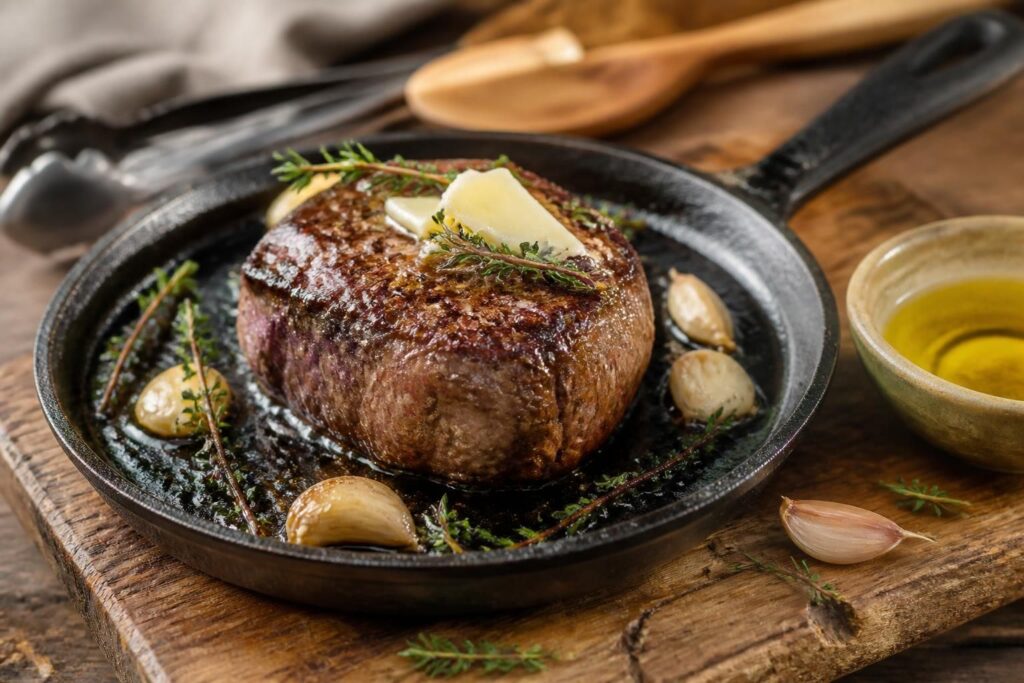
Pan-seared filet mignon has everything to seduce: quick cooking, tender and juicy meat, and that little Sunday dish aroma that invites itself effortlessly into the middle of the week. When the searing is just right, the pan becomes a precious ally: it browns, concentrates the juices, and prepares a flavorful meat, provided some simple steps are followed. The goal is not performance, but the balance between high heat, resting, and well-thought-out sauce, for a filet mignon recipe that remains accessible while keeping a true gourmet touch.
The article in brief
Pan-seared filet mignon is successful mainly when cooking is precise, the meat well prepared, and the finishing neat. A few simple landmarks are enough to obtain a tender and juicy result, without complicated equipment.
- Controlled searing: brown quickly then lower the heat to keep tenderness
- Well-adjusted timing: adapt cooking depending on thickness and cut
- Expressive sauce: mustard, cream, and cooking juices for more depth
- Smart pairings: vegetables, purée or Japanese inspirations depending on the mood
With the right reflexes, pan-seared filet mignon becomes a simple, precise, and always tasty dish.
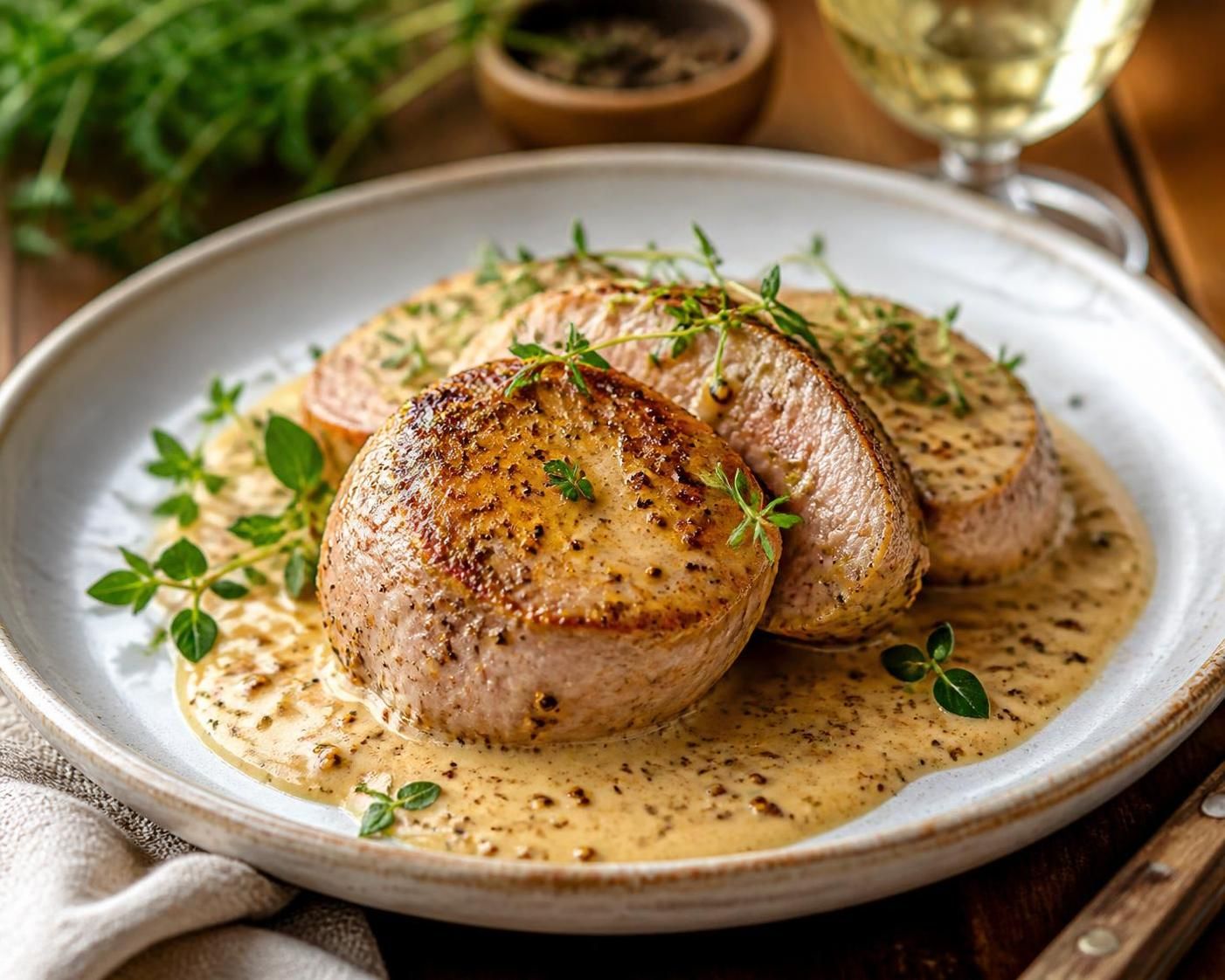
Pan-seared filet mignon: achieving tender and flavorful meat cooking
The secret to a good pan cooking starts even before lighting the heat. A well-chosen filet mignon, lightly trimmed, then taken out of the cold about twenty minutes before cooking, reacts much better to heat; the surface sears without hardening the inside. This detail, often overlooked, changes the mouthfeel and transforms a simple piece of pork into tender and refined meat.
In everyday cooking, success relies on a simple logic: a hot pan, a little oil, sometimes a knob of butter, then a brief sear on each side. This duo gives a golden crust that retains juices and a tender center. To understand the cut and the interest of certain pork pieces, a detour through these pork cutting references can shed light on piece choice and help better anticipate cooking.
A fictional character, Élodie, perfectly illustrates this everyday gesture: coming home late from work, she prepares a hot pan, sears her filet mignon, then lowers the heat. The result? Flavorful meat, quick to serve, and elegant enough to give the impression of a grand dinner without stress. It is often here that simplicity takes all its value.
Quick searing, the first decisive step
The first minute counts as much as the rest. When the meat touches the hot pan, it must brown without being moved, so the juices set and the surface develops a slightly caramelized flavor.
This step primarily requires patience. Turning too early or moving it repeatedly prevents the formation of the beautiful crust that signifies successful cooking; conversely, a quick and clear motion helps keep the inside tender and juicy.
Resting, that little time that changes everything
Once the meat is cooked, a few minutes of resting makes a real difference. The juices redistribute in the fibers instead of escaping when sliced, which reinforces texture and the sensation of tenderness.
This very simple reflex avoids many disappointments. Often just lightly covering the piece and preparing the side dish during this short interval gains comfort and flavor.
Filet mignon recipe: the mustard, cream, and fresh herbs version
The mustard version remains a solid classic because it balances well the character of the sauce and the softness of the meat. In this filet mignon recipe, the cream softens, the mustard lifts, and the cooking juice gives depth; the result is straightforward, comforting, and much appreciated both during the week and on weekends.
For four people, you need a piece of about 500 g, an onion, a bit of olive oil, a knob of butter, liquid cream, chicken broth, and a spoonful of strong mustard. A clove of garlic, a sprig of thyme, and a turn of pepper complete the set without weighing it down. This base works particularly well if the meat has been well seared initially.
| Step | Key gesture | Useful time frame |
|---|---|---|
| Searing | Brown the meat in oil and butter | About 5 minutes |
| Sauce base | Sauté onion, garlic and mustard | Around 10 minutes |
| Finishing | Add cream and broth, then put the meat back | 10 to 15 minutes |
| Rest | Let the piece relax off the heat | A few minutes |
The good reflex is to scrape the bottom of the pan with a little broth before adding the cream. This gesture recovers the juices, adds depth, and builds a rounder sauce, like an attentive cook who wants to lose no flavor.
The ingredients that make the difference
A filet mignon of good quality needs no artifices, but it deserves reliable products. A mustard with character, a flavored broth, and fresh herbs give a clear base, whereas a simple excess of cream can quickly mask the meat’s profile.
This logic also applies to seasoning: better few elements, but well dosed, than a sauce overloaded. The dish then gains precision and elegance, without losing its indulgence.
Pan-seared filet mignon cooking: time, temperature, and mistakes to avoid
Cooking depends first on the cut. A whole filet requires a gentler and longer approach than a medallion, which benefits from a larger surface in contact with the pan. In practice, the idea is simple: sear quickly, then finish at moderate heat to preserve flavorful meat without drying it out.
The good reference remains the internal temperature, around 63 to 65 °C for a tender and slightly pink result. A cooking thermometer greatly simplifies this step, especially when you want to avoid guesswork. In 2026, many households adopt it precisely because it secures meat cooking without complicating preparation.
| Cut | Indicative time | Desired effect |
|---|---|---|
| Whole filet | 18 to 20 minutes | Even cooking and tender flesh |
| Medallions | 5 to 10 minutes | Quick searing and very tender texture |
| Thick slices | 10 to 15 minutes | Good browning, juicy center |
Common mistakes are known: heat too high from start to finish, cutting meat immediately after removing from the pan, or excessive basting that loses the beautiful crust. Once these traps are avoided, cooking becomes much more consistent and the result cleaner.
Good reflexes when cooking
- Take the meat out in advance to limit thermal shock.
- Dry the surface well before searing to favor browning.
- Turn with tongs so as not to pierce the fibers.
- Measure the cooking rather than guessing by touch.
- Let rest before slicing to keep the juice.
These reflexes do not require spectacular technique. Yet, they create a real, almost immediate difference in the final texture.
Cooking tip: flavoring the filet mignon with a generous sauce
A good cooking tip is not to throw away the pan drippings. This flavor concentrate becomes the ideal base for a quick sauce, whether mustard, white wine, or chicken broth. In a few minutes, the meat is covered with a smooth juice that enhances its tender and juicy side.
The mustard-cream version remains the most reassuring, but a splash of white wine or some herbs like thyme lighten it and make it more lively. Some even add a more acidic note to awaken the whole, giving a more dynamic plate without leaving the spirit of French cuisine.
This play on sauce recalls a simple principle: the meat provides the structure, the garnish provides the breath, and the sauce makes the link. When this balance is found, the dish seems much more accomplished than it really is.
Ideas to enrich the sauce without complicating it
A little broth is enough to lift the juices. Then the cream binds the whole, while mustard gives depth and thyme adds a more aromatic note.
For a more marked result, a hint of garlic or shallot can complete the base. Nothing excessive though: the filet mignon must remain central, and the sauce must accompany, not mask it.
Accessories, gentle cooking, and gourmet variations for a broader dish
Equipment also plays a discreet but real role. A stainless steel or enameled cast iron pan distributes heat better, which helps achieve even browning. For those who like gentler finishes, the casserole remains an excellent alternative: first sear, then let cook covered for an even more melting result.
This logic can also inspire slower oven cooking at low temperature when you want to serve the whole piece with very regular tenderness. It’s not mandatory but another way to treat this noble cut, depending on the time available and the mood of the day. The filet mignon then keeps its identity while slightly changing register.
The most interesting remains the freedom of pairing. Homemade purée brings creaminess, green vegetables give freshness, and roasted potatoes add crunch. In a well-thought-out plate, each element plays its part.
Variations that give another face to the filet mignon
Japanese cuisine offers a very current lead: quick cooking, soy sauce, miso, or umami reduction recall the spirit of homemade yakitori. This approach works well with pork, as it enhances the flavor without weighing down the whole.
On the opposite, a mushroom sauce or a balsamic reduction gives a more earthy, almost autumnal note. These variations allow renewing the filet mignon recipe without losing its reassuring side.
| Variation | Flavor profile | Recommended accompaniment |
|---|---|---|
| Mustard-cream | Round, straightforward, slightly spicy | Homemade purée |
| Mushrooms-white wine | Woody and elegant | Roasted potatoes |
| Japanese inspiration | Umami and balanced saltiness | Rice or sautéed vegetables |
| Balsamic and honey | Sweet and tangy | Roasted vegetables |
To vary even more, exploring pork preparation techniques can be useful, especially if you want to compare the effects of quick searing, simmering, or oven roasting. It’s often this way that the best cooking habits are born: by testing, then keeping what really works.
Ultimately, pan-seared filet mignon does not seek to impress. It bets on accuracy, speed, and immediate pleasure, three qualities that make it particularly precious in a daily kitchen that is more attentive and more gourmet.
How to keep a filet mignon tender when pan-searing?
The best method is to quickly sear the meat, then lower the heat to finish cooking gently. A few minutes of resting before slicing also helps keep the juices in the flesh.
What temperature to aim for successful cooking?
Around 63 to 65 °C internally, the meat remains tender and juicy. A cooking thermometer makes it much easier to hit this mark accurately.
Can you pan-sear filet mignon without butter?
Yes, good olive oil is sufficient for searing. Butter does add richness and helps achieve a more even browning though.
Which sauce works best with this meat?
Mustard-cream sauce remains a safe choice as it adds character without covering the filet mignon’s flavor. A pan base deglazed with broth or white wine further enriches the result.


