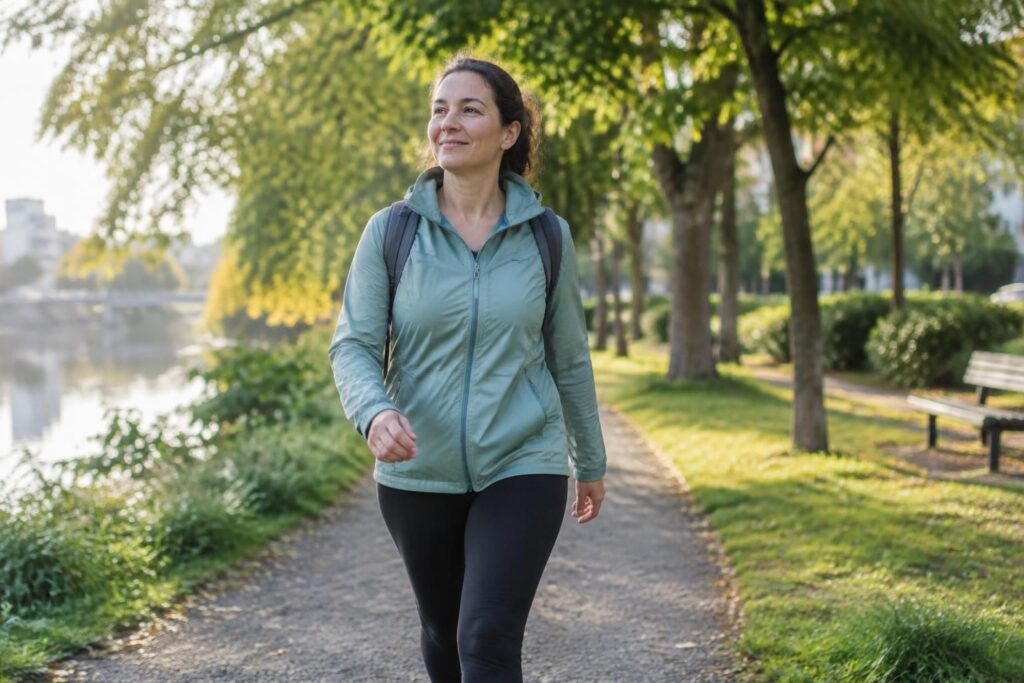
Walking can support weight loss without imposing a complex sports program. To make progress, the key is to build a routine adapted to one’s condition, to increase effort gradually, and to combine it, if possible, with a balanced diet. Results vary from person to person: it is better to aim for lasting changes than spectacular promises.
The article in brief
Daily walking can become an accessible appointment with one’s well-being and fitness. Steady progress, without obsessing over numbers, helps to establish a lasting habit.
- An accessible start: Begin with short outings, then gradually increase their duration.
- An adapted pace: Walk at a good pace while still being able to speak.
- Variable results: Weight loss depends on many individual factors.
- A broader benefit: Walking also supports morale, sleep, and endurance.
To remember: every outing counts, even when it starts with a few minutes.
Walking every day to lose weight: what can we really expect?
Walking increases calorie expenditure and can contribute to weight loss, especially when it is part of a sustainable routine. However, the result also depends on pace, duration, diet, sleep, and personal factors like age or health status.
Routes vary: some people first notice better endurance or more restful sleep, while weight changes more slowly. A rapid variation on the scale, especially the first week, can also reflect changes in body water rather than an equivalent fat loss.
Weight loss and daily walking: the factors that matter
An outing of 30 to 60 minutes can represent an interesting physical activity, but there is no universal amount that guarantees a precise result. Calories burned vary notably according to weight, speed, terrain, and duration.
Walking becomes more effective when it accompanies consistent habits: varied meals, sufficient hydration, and a lifestyle that allows recovery. The goal is not to compensate for every meal, but to create a realistic routine that can be maintained.
How to start walking to lose weight without getting discouraged
Gradual progress gives the body time to adapt. If 30 minutes seems too ambitious, starting with 10 or 15 minutes is already useful: habit is built like a path, not a sprint.
A simple guiding thread can help: Sam, who works seated and wants to move more, starts with three 15-minute outings per week. When this routine becomes comfortable, he adds a few minutes or an extra outing, without trying to accelerate everything at once.
Progression over several weeks
| Stage | Starting point | To prioritize |
|---|---|---|
| First outings | 10 to 20 minutes, depending on comfort | Establish the routine at an easy pace |
| When habit takes root | 20 to 30 minutes, several times per week | Gradually add time |
| Faster pace | 30 to 60 minutes if suitable | Slightly accelerate or choose a varied route |
These benchmarks are not a prescription: it is better to adapt them to one’s level and constraints. In case of unusual pain, health problems, or resuming after a long break, a health professional can help choose a suitable start.
Brisk walking: finding a bearable pace
For many, good brisk walking corresponds to a pace where breathing quickens, while still allowing speaking in sentences. If singing becomes difficult but holding a conversation remains possible, the intensity is often moderate. No need to aim for a precise speed: terrain and personal abilities make the difference.
Light warm-up, relaxed posture, and comfortable shoes make outings more pleasant. It is also possible to split a session into two shorter walks when the schedule is busy.
Consistency, balanced diet, and realistic goals
Consistency matters more than an exceptional outing followed by long weeks without moving. Adding a walk after lunch, getting off one stop earlier, or taking a call while walking transforms ordinary moments into opportunities for movement.
A balanced diet can support efforts without drastic dieting: vegetables, fruits, protein sources, and satiating foods have their place in varied meals. Walking does not cancel out eating habits, but it can contribute to an overall favorable state for health and weight.
Motivating benchmarks beyond the scale
Weight is only one indicator among others, and its daily fluctuations are normal. To track progress without focusing only on kilos, it is possible to note:
- the duration or frequency of outings done each week;
- ease of climbing stairs or walking longer;
- energy level, mood, and sleep quality;
- sensations during and after effort, including joint comfort.
A calendar, pedometer, or app can support motivation, provided they remain aids and not sources of pressure. Realistic goals are those that fit real life and can evolve with it.
Maintaining motivation and enjoying the benefits of walking
On days when motivation lacks, making the outing more enjoyable can make a difference: listen to a podcast, choose a pleasant route, or walk with a friend. A friendly challenge or a group can also help, as long as comparison does not become an obligation to always do more.
Walking also brings benefits beyond the silhouette. It allows fresh air, breaks from a sedentary day, and can contribute to mental well-being. For some people, these changes in fitness and mood appear before visible weight changes on the scale.
When to slow down or seek advice
Temporary fatigue invites adjusting pace or duration rather than forcing. Persistent pain, unusual shortness of breath, or a known health problem justify seeking advice from a professional before intensifying activity.
Rest is part of a sustainable routine: it helps recovery and can prevent discouragement. The right approach respects the body’s sensations as much as set goals.
Frequently asked questions about walking and weight loss
How long should you walk to start?
It is possible to start with 10 to 15 minutes, then lengthen outings according to comfort. The ideal duration depends on physical condition, schedule, and possible regularity.
Do you need to walk fast to lose weight?
Not necessarily at first. A faster pace increases effort, but comfortable walking remains beneficial. Increase speed gradually if you feel comfortable and can maintain that pace without pain.
Can you lose weight without changing your diet?
Walking can increase calorie expenditure, but weight loss depends on overall habits and individual characteristics. A balanced diet can support progress without imposing a strict diet.
When do results become visible?
The time frame varies greatly from one person to another. Endurance, energy, or sleep can improve before weight; it is better to follow several indicators and allow time for the routine to settle.


