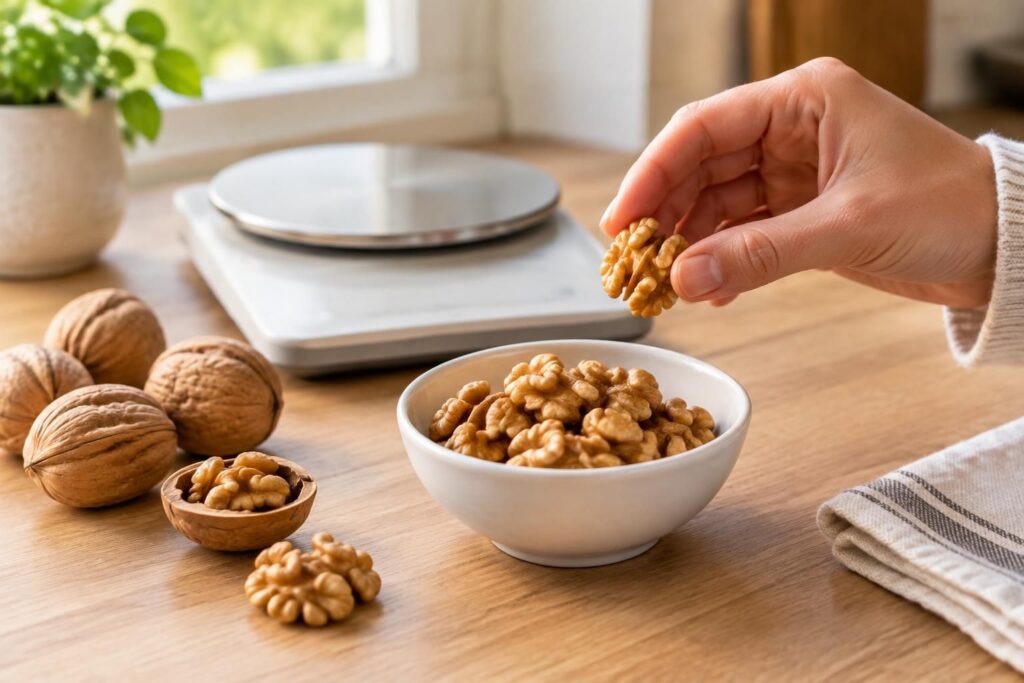
- For a snack: combine a few halves with a fruit or plain yogurt.
- In a salad: sprinkle a small amount of crushed walnuts to add crunch.
- At breakfast: add some to porridge or cottage cheese, taking into account other toppings.
- At aperitif: prefer natural walnuts over salted, sweetened, or coated versions.
The recommended portion of nuts is a practical benchmark, not a rule identical for all. For a complete and balanced salad, walnuts can accompany vegetables, a protein source, and a suitable portion of starches; some ideas can be found in these tips for a tasty and well-composed salad.
Walnuts and dietary balance: savoring them without excess
Walnuts do not automatically cause weight gain. Their energy intake deserves to be taken into account, but a reasonable portion can find its place in a balanced diet, especially if it replaces another source of fats or a less nourishing snack.
A simple example: a salad of arugula, apple, and some walnuts, dressed with a measured amount of oil. If walnuts are added to a dish already rich in cheese, oil, or sauce, the overall intake increases; balance is played out in the whole plate.
Natural or lightly roasted walnuts also help avoid added salt, sugar, and coatings. The most useful rule remains to choose a conscious portion and incorporate it into the meal rather than considering them as a forbidden food.
Precautions and specific profiles
Walnuts are among allergenic tree nuts: in case of known allergy, they must be avoided according to the instructions of the healthcare professional. People following a particular diet may also have an interest in adjusting their portion with a doctor or dietitian.
In a low-carbohydrate diet, walnuts are relatively low in carbohydrates, but their calories still need to be included in the total daily intake. The nutritional interest therefore does not exempt taking into account the quantity consumed.
Frequently asked questions about calories and walnut portions
How many calories does a walnut provide?
It depends on the weight of the half. As an indication, a half weighing about 4 g provides nearly 28 kcal; 30 g of halves represent about 213 kcal according to the data used here.
How many walnuts can one eat per day?
A common guideline is a portion of 20 to 30 g, which is about six to eight halves depending on their size. Individual needs and the rest of the diet can modify this quantity.
Do walnuts cause weight gain?
They are energy-rich, but moderate consumption does not automatically lead to weight gain. Their place in the diet and the foods they replace matter more than their mere presence.
Are walnuts suitable for a low-carbohydrate diet?
They contain relatively few carbohydrates and can fit into some low-carbohydrate diets. It is still necessary to consider their energy intake and seek advice in case of a therapeutic diet.
A walnut looks small, but its energy is concentrated: count about 213 kcal for 30 g, which is a small handful of halves. The good news is that it also provides unsaturated fats, proteins, and micronutrients. The useful guideline is therefore to choose an appropriate portion and include it in meals, rather than banishing it out of fear of calories.
The article in brief
The walnut is caloric, but its nutritional richness makes it an interesting food when consumed in reasonable quantity. Some simple references help to enjoy its taste and qualities without losing sight of overall balance.
- Energy benchmark: 30 g of halves provide about 213 kcal.
- Practical portion: A small handful generally represents six to eight halves.
- Nutritional assets: Proteins, fibers, and unsaturated lipids complement this nourishing portion.
- Balanced integration: Replacing another fat helps to control total intake.
A measured portion makes it possible to savor walnuts while maintaining a varied dietary balance.
Calories of a walnut: the figures according to the portion
For walnut halves, the reference value provided is about 709 kcal per 100 g. In practice, a 30 g portion provides nearly 213 kcal: a modest quantity in volume but energy dense.
The number of calories per walnut depends on its size and the weight of the half. As an indication, a half weighing about 4 g provides around 28 kcal; six to eight halves can thus make up a portion close to 30 g.
| Portion of halves | Estimated calories | Practical reference |
|---|---|---|
| 10 g | About 71 kcal | Some halves |
| 20 g | About 142 kcal | Small portion |
| 30 g | About 213 kcal | Small handful, about 6 to 8 halves |
| 100 g | About 709 kcal | A quantity well above a common portion |
The figures may vary depending on the size of the walnuts and the nutritional bases used. To compare product data, weight in grams remains more reliable than the simple counting of halves.
Energy value of walnuts and nutritional composition
For 30 g, available data indicate about 4 g of proteins, 20 g of lipids, and 2.1 g of carbohydrates. The main source of energy therefore comes from fats, but this does not mean that all fats are equal.
The lipids in walnuts are mostly unsaturated. Walnuts notably contain alpha-linolenic acid, a plant omega-3, as well as omega-6 and omega-9 fatty acids. They also provide fiber, vitamin E, B-group vitamins, and minerals like magnesium, copper, and manganese.
These nutrients contribute to the qualities of the food, without making it a remedy nor replacing a varied diet. Walnuts also provide polyphenols; their presence contributes to the nutritional interest of this food but alone does not promise a specific health effect.
Why a walnut can be satiating
The combination of lipids, proteins, and fiber makes walnuts nourishing. For example, added to a bowl of cottage cheese or a salad, they bring crunch and can make the meal more satisfying.
Walnuts and calories should therefore not be considered in isolation: how they fit into the meal also matters. To delve deeper into the composition of meals favorable to cardiovascular health, see this guide on foods to prioritize in case of cholesterol.
What daily portion of walnuts to choose?
A common guideline is to aim for 20 to 30 g per day, which is a small handful. Depending on the size, this generally corresponds to six to eight halves. The amount of walnuts per day can, however, vary depending on needs, other foods consumed, and personalized recommendations from a healthcare professional.
For Nora, who likes to snack in the late afternoon, preparing her portion in a small container is simpler than eating directly from the bag. This gesture helps to visualize the quantity and savor without turning the snack into automatic consumption.
- For a snack: combine a few halves with a fruit or plain yogurt.
- In a salad: sprinkle a small amount of crushed walnuts to add crunch.
- At breakfast: add some to porridge or cottage cheese, taking into account other toppings.
- At aperitif: prefer natural walnuts over salted, sweetened, or coated versions.
The recommended portion of nuts is a practical benchmark, not a rule identical for all. For a complete and balanced salad, walnuts can accompany vegetables, a protein source, and a suitable portion of starches; some ideas can be found in these tips for a tasty and well-composed salad.
Walnuts and dietary balance: savoring them without excess
Walnuts do not automatically cause weight gain. Their energy intake deserves to be taken into account, but a reasonable portion can find its place in a balanced diet, especially if it replaces another source of fats or a less nourishing snack.
A simple example: a salad of arugula, apple, and some walnuts, dressed with a measured amount of oil. If walnuts are added to a dish already rich in cheese, oil, or sauce, the overall intake increases; balance is played out in the whole plate.
Natural or lightly roasted walnuts also help avoid added salt, sugar, and coatings. The most useful rule remains to choose a conscious portion and incorporate it into the meal rather than considering them as a forbidden food.
Precautions and specific profiles
Walnuts are among allergenic tree nuts: in case of known allergy, they must be avoided according to the instructions of the healthcare professional. People following a particular diet may also have an interest in adjusting their portion with a doctor or dietitian.
In a low-carbohydrate diet, walnuts are relatively low in carbohydrates, but their calories still need to be included in the total daily intake. The nutritional interest therefore does not exempt taking into account the quantity consumed.
Frequently asked questions about calories and walnut portions
How many calories does a walnut provide?
It depends on the weight of the half. As an indication, a half weighing about 4 g provides nearly 28 kcal; 30 g of halves represent about 213 kcal according to the data used here.
How many walnuts can one eat per day?
A common guideline is a portion of 20 to 30 g, which is about six to eight halves depending on their size. Individual needs and the rest of the diet can modify this quantity.
Do walnuts cause weight gain?
They are energy-rich, but moderate consumption does not automatically lead to weight gain. Their place in the diet and the foods they replace matter more than their mere presence.
Are walnuts suitable for a low-carbohydrate diet?
They contain relatively few carbohydrates and can fit into some low-carbohydrate diets. It is still necessary to consider their energy intake and seek advice in case of a therapeutic diet.


