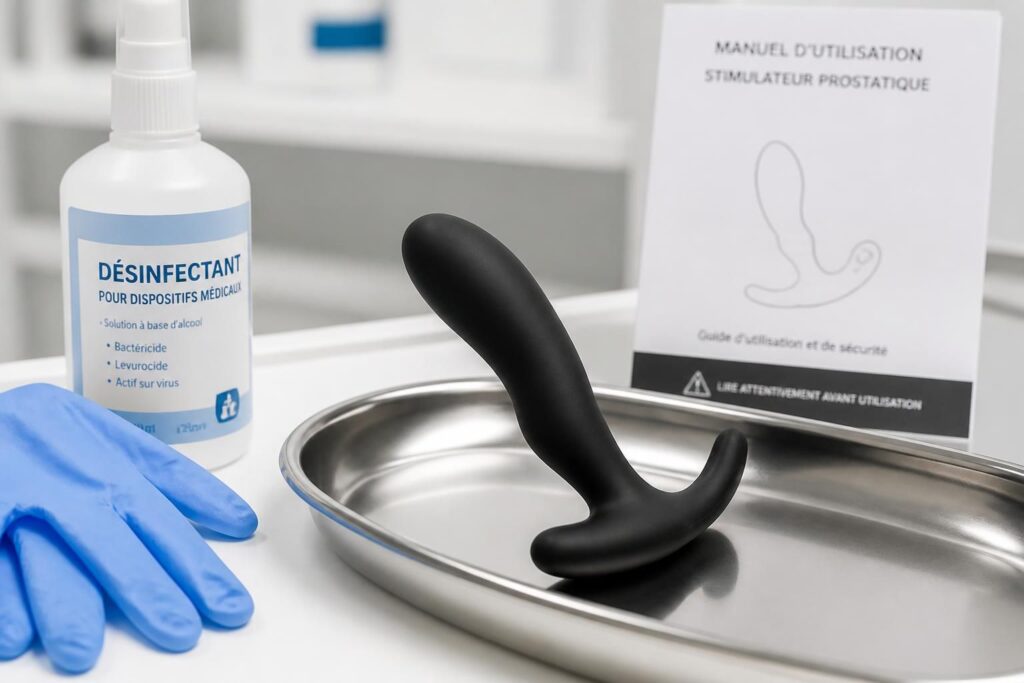
The prostate stimulator is attracting more and more curious people, driven by the promise of a different pleasure and a better understanding of the body. Yet, behind this enthusiasm, real risks exist if use is improvised: irritation, pain, small lesions, even infections. As with any intimate act, the key remains a progressive approach, good hygiene, and simple but essential precautions to protect health.
The article in brief
The prostate stimulator can offer a very satisfying intimate experience, provided the safety rules are mastered. Before starting, it is better to know the warning signs and the right reflexes to avoid side effects.
- Common risks to know: Irritations, lesions, and infections in case of careless use
- Impeccable hygiene: Thorough cleaning before and after each use
- Choosing the right model: Size, material, and shape influence comfort and safety
- Essential precautions: Lubrication, gentleness, and medical consultation if pain
Well informed, this intimate act can remain pleasant without endangering the prostate.
In discussions around male sexuality, the prostate is often surrounded by taboos. Yet, this small gland, located just below the bladder, is not a marginal subject: it participates in the production of seminal fluid and can also become a pleasure zone when stimulated methodically. The problem does not lie in the principle but in the way it is done. Too rough a practice, poorly chosen equipment, or approximate hygiene quickly turn a pleasant discovery into a source of side effects.
An example often mentioned by health professionals: a user who wants to go too fast, without lubricant, with an unsuitable accessory. Result, the mucosa gets irritated, comfort vanishes, and tension rises. Conversely, a patient approach, with clear markers and body listening, changes everything. It’s a bit like walking on a hiking trail: moving forward without looking where you put your foot rarely ends well.
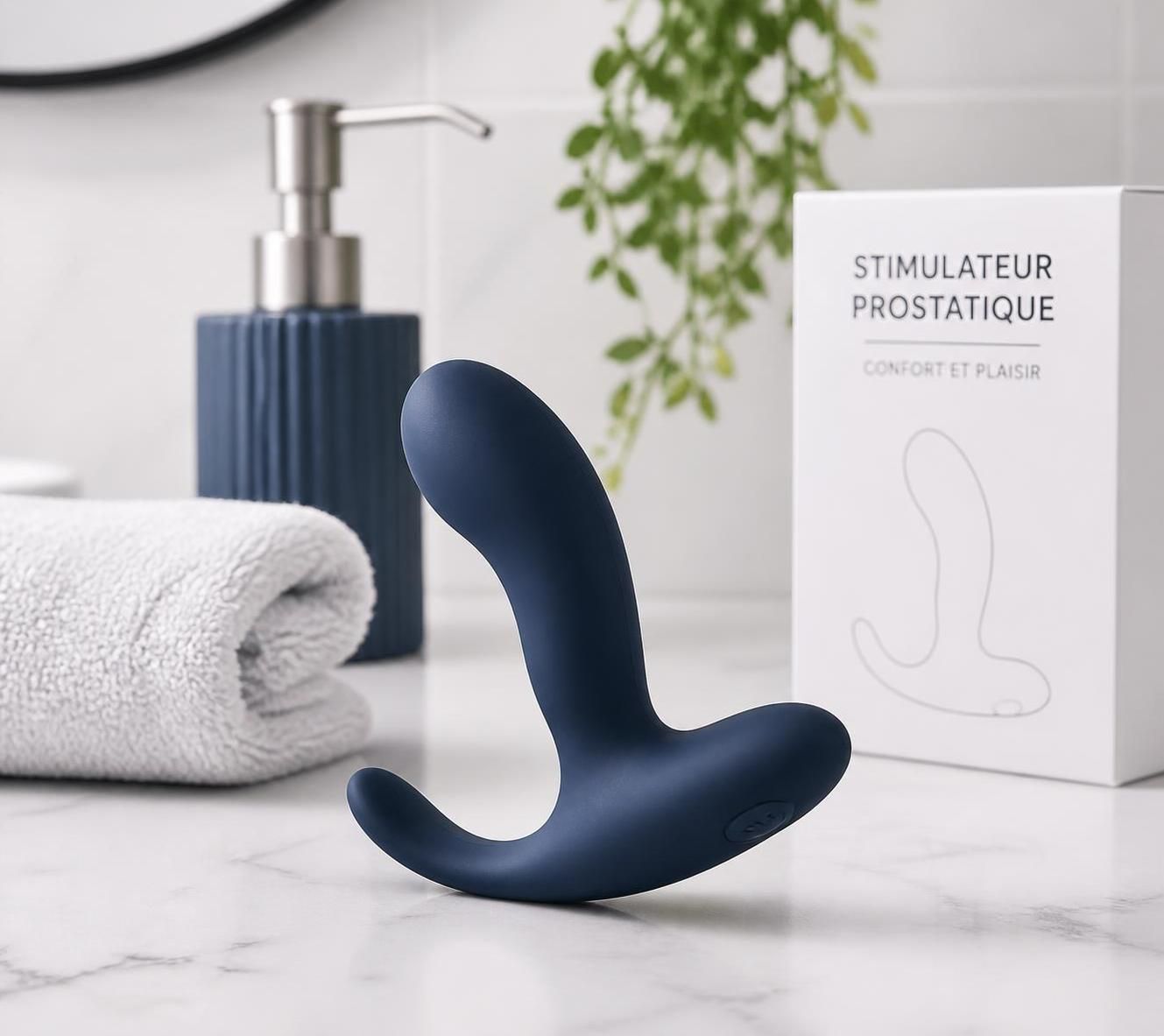
Prostate stimulator and risks to the prostate: what to watch out for
The main danger of a poorly used prostate stimulator lies in the fragility of the tissues involved. The anal area and rectum are sensitive, and the prostate itself can react to excessive pressure with pain, inflammation, or a lasting sensation of discomfort. In some people, too intense use can also cause small cracks, light bleeding, or temporary urinary discomfort.
One must also consider situations where caution becomes non-negotiable. In cases of prostatitis, active hemorrhoids, rectal infection, or unusual bleeding, it is better to suspend the practice and seek professional advice. Here, the right reflex is not to “hold on” but to recognize that the body is sending a clear signal.
Possible side effects with too rough use
The most frequent side effects are often mild, but they should never be underestimated. Insertion without lubrication, overly insistent movements, or an object that is too bulky can cause immediate irritation, sometimes followed by persistent sensitivity lasting several hours or even a few days.
In a small advice office imagined for the occasion, a user explains having believed that “stronger” meant “more effective”. In reality, the prostate responds better to regularity and gentleness than to force. The rule is simple: as soon as the sensation changes from stimulating to clearly painful, the experience must stop.
- Local irritation: redness, burning, discomfort on touch
- Superficial lesions: microcracks or small bleeding
- Urinary discomfort: more frequent need to urinate or discomfort
- Inflammation: prolonged sensitivity after a too intense session
Hygiene and precautions: actions that really protect
The best way to limit risks remains rigorous hygiene. Clean hands, short nails, carefully washed accessory, and suitable lubricant form the foundation of safe use. Without these, bacteria take advantage of a favorable environment, and complications become much more likely, notably urinary or rectal infections.
The choice of material also matters. Medical silicone or stainless steel models usually offer a surface easier to clean than porous materials. It is also necessary to check compatibility between the lubricant and the accessory, as some products degrade materials and increase the risk of snagging or irritation.
Simple checklist before each use
A clear routine avoids many mistakes, especially when a practice remains occasional. This little ritual is not constraining: it simply serves to create a reassuring framework, a bit like adjusting gear before a sports outing.
| Check | Why it is useful | Risk avoided |
|---|---|---|
| Washed hands and filed nails | Reduces micro-injuries | Irritation and contamination |
| Abundant lubricant | Facilitates insertion | Pain and friction |
| Cleaned accessory | Limits germs | Infections |
| Progressive insertion | Respects the body’s rhythm | Lesions and tension |
The right reflex is to prepare the session before starting, not to correct mistakes along the way. This anticipation often makes the difference between a calm experience and an unpleasant surprise.
Choosing a suitable prostate stimulator to limit side effects
Not all prostate stimulators are equal. A model that is too wide, too rigid, or poorly designed can complicate use and promote discomfort, especially for beginners. Conversely, an accessory designed for the prostate, with a safety base and a curved shape, allows a more precise and reassuring gesture.
The vibration level also deserves attention. Electric devices seduce by their variety of modes, but it is preferable to start at minimum and increase very gradually. The best intensity is never the one that impresses, but the one that the body accepts without protest.
Comparing the main model families
The 2026 market offers more ergonomic options than before, but the decisive criterion remains comfort. A novice man will not have the same needs as an experienced user, and that is exactly what should guide the choice.
| Type of stimulator | Main advantage | Point of caution |
|---|---|---|
| Manual | Fine control of movements | Requires patience and gentleness |
| Vibrating | Adjustable stimulation | Intensity to handle cautiously |
| With perineal stimulation | More enveloping sensation | May be too stimulating at first |
In practice, the best model is often the simplest to master. When the equipment adapts to the body instead of the other way around, the risk drops significantly.
When to seek medical consultation after use
Some signals should lead to a medical consultation without delay. Pain that persists, bleeding, urinary burning, fever, or unusual discomfort are not a simple “normal effect”. These are indicators to take seriously, as they may indicate a lesion, infection, or inflammation of the prostate.
This vigilance is not alarmist. It rather recalls a simple idea, often conveyed by caregivers: an intimate act can remain compatible with health if the body’s limits are respected. In case of doubt, it is better to ask one question too many than to let a symptom drag on.
Situations where immediate stop is necessary
A good marker is to stop as soon as the sensation loses its comfortable character. The longer use continues despite discomfort, the greater the risk of worsening irritation.
- Sharp or persistent pain after the session
- Visible bleeding, even light
- Urinary burning or difficulty urinating
- Fever, chills, or general malaise
A cautious approach does not spoil pleasure; it makes it more reliable. This often allows transforming a passing curiosity into a calm practice.
Can the prostate stimulator cause normal pain?
Mild discomfort may occur at the beginning, but clear, persistent, or repeated pain is not normal. In this case, usage should be stopped and a medical consultation considered.
Should lubricant be used at every use?
Yes, suitable lubricant is essential to limit friction, reduce irritation, and make insertion smoother. Without it, risks increase significantly.
Can one share their prostate stimulator?
It is better to avoid. Sharing promotes the transmission of germs and infections, even when the accessory appears clean. Personal use remains the safest rule.
What signs should alert after the session?
Bleeding, persistent pain, burning during urination, fever, or unusual discomfort should lead to stopping the practice and consulting quickly.


