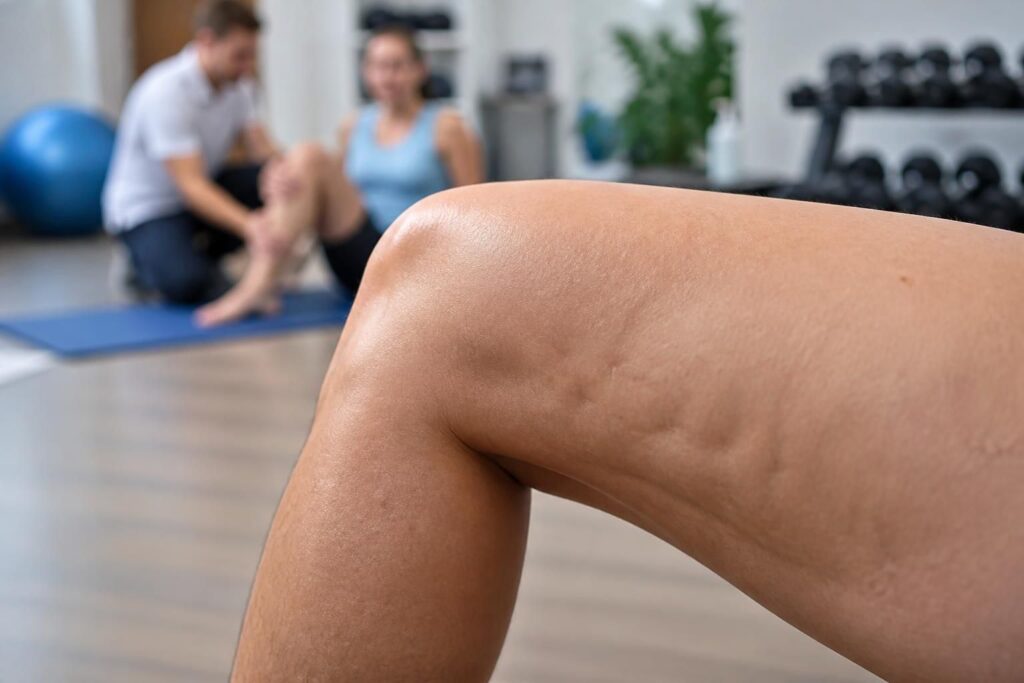
When the knee becomes heavy, swollen, or less flexible, each step can feel like a small obstacle. Fat knee is not a diagnosis in itself, but a common sign of knee inflammation, joint wear, overload, or sometimes a missed wrong movement. Understanding the cause of fat knee often allows quick action, with simple gestures, well-conducted knee rehabilitation, and, if necessary, targeted medical advice to regain true knee mobility.
The article in brief
A knee that swells or loses flexibility often hides an identifiable cause, from overwork to osteoarthritis. Good news: clear markers, a few adjustments, and appropriate care can restart movement without dramatizing.
- Identify the real signal: swelling, stiffness, and pain point to a specific cause
- Understand the triggers: trauma, knee osteoarthritis, overload, or local inflammation
- Act from the first days: ice, relative rest, gentle mobilization, and monitoring
- Regain range: knee exercises, physiotherapy, and targeted fat knee treatment
A less swollen and more mobile knee often rebuilds step by step, with the right reflexes.
In practice, this type of discomfort often occurs after a period of more intense activity, a wrong movement descending stairs, or a somewhat ambitious sports resumption. The knee bears an impressive load with each step, far more than just the body weight, explaining why imbalance can quickly translate into a sensation of tension, effusion, or blockage. For some people, the problem is mainly mechanical; for others, it is an inflammatory terrain or progressive wear, especially in the case of overweight and knee working together like an overloaded backpack on a hike.
The good news is that there are often concrete answers. Between correctly identifying symptoms, clinical examination, imaging if necessary, and a progressive resumption of movement, fat knee treatment is not limited to “waiting for it to pass.” A common example: after a long walk or a gardening session, knee pain with stiffness can set in without a serious lesion being present. However, if the swelling lasts, if putting weight becomes painful, or if flexion remains limited, a real management strategy must be considered.
Fat knee: recognize the signs that guide diagnosis
A so-called “fat” knee most often corresponds to visible swelling or a feeling of fullness inside the joint. It’s not just an aesthetic question: this additional volume often reflects fluid, irritation, or a body protection mechanism. The first useful question is simple: is it diffuse swelling, difficulty bending, well-localized pain, or a real blockage?
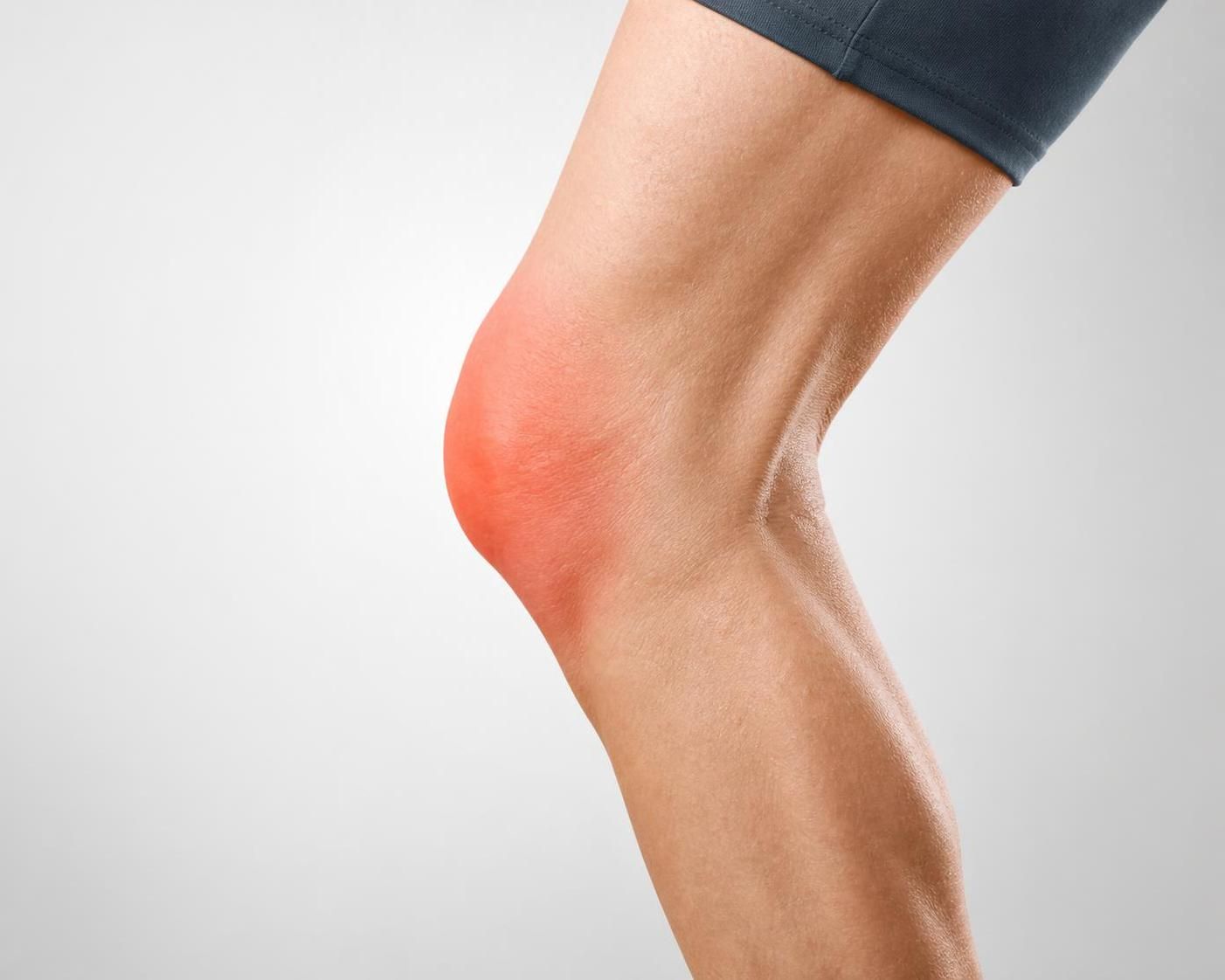
In a very classic small case study, a person resumes running after several months of stopping. Two days later, the knee swells, stairs become difficult, and a pulling sensation appears on the inner side. This picture may suggest meniscal irritation, a flare-up of knee osteoarthritis, or simply joint overload. The key point remains the same: the more precise the symptoms, the more reliable the guidance.
Differentiating a swollen knee from a real blockage
Swelling can slow movement without there being a real mechanical obstacle. Conversely, a meniscal fragment, a loose body, or a ligament injury can cause a sharper blockage, with inability to fully straighten the leg. This distinction changes everything, as a knee stiffened by pain is not treated the same as a truly locked knee.
When mobility decreases mainly due to pain, the body protects the joint as a safety reflex. When something physically gets stuck, the sensation is often more abrupt and discomfort persists despite effort. This sorting is precisely what allows the subsequent steps to be rapidly guided.
Common causes of fat knee and knee pain
Several mechanisms often reoccur in the cause of fat knee. Osteoarthritis, meniscal injury, inflammatory flare after effort, ligament instability, or even a loose fragment in the joint are among the most common leads. Each has its own logic, somewhat like different possible breakdowns on the same highly used machine.
| Possible cause | What happens | How it is confirmed | Management |
|---|---|---|---|
| Meniscal injury | A fragment hinders flexion or extension | Clinical exam, then MRI if blockage persists | Rest, ice, gentle mobilization, sometimes arthroscopy |
| Intra-articular foreign body | A bone or cartilage fragment floats in the joint | Imaging and specialist opinion | Treatment depending on discomfort, sometimes surgery |
| Sprain or instability | The knee gives way and contracts with pain | Examination, sometimes MRI depending on trauma | Relative immobilization, rehabilitation, medical follow-up |
| Osteoarthritis | Cartilage wears and creates stiffness and friction | X-rays and progressive wear context | Painkillers, physiotherapy, infiltrations as needed |
| Patellofemoral syndrome | The kneecap slides poorly and causes a pseudo-blockage | Targeted clinical exam, sometimes imaging | Rehabilitation and effort adaptation |
In reality, knee osteoarthritis remains a major cause of stiffness and swelling in active or older adults. The cartilage thins, friction increases, and the knee reacts with a subtle but persistent inflammation. For others, the scenario is more abrupt: a sports twist, prolonged squatting, or a misstep triggers sharp pain, sometimes immediately followed by an effusion.
Another situation deserves attention: patellofemoral syndrome, often confused with a “blockage.” The kneecap then moves less smoothly, causing discomfort when climbing stairs, standing up from a chair, or after prolonged sitting. The knee does not always lock, but it protests enough to limit range of motion.
Why the meniscus appears so often in the picture
The meniscus acts as a shock absorber and stabilizer. When it cracks, a fragment can hinder movement and cause a lasting mechanical blockage, especially if knee pain is accompanied by a sensation of catching on the inside or outside of the joint.
For a 52-year-old jogger who repeatedly runs downhill quickly, or for someone who kneels a lot at work, repetition eventually weakens this structure. It’s not spectacular at first, but the knee remembers for a long time.
The role of overweight and inflammation in fat knee
Overweight and knee form a duo that tires the joint like an overly heavy suitcase carried daily. Mechanical pressure increases, cartilage wears faster, and local inflammation can settle more easily, especially if physical activity was interrupted and then resumed too quickly.
It’s not a question of guilt, but of balance. Reducing the load, better distributing effort, and strengthening muscles around the knee often change things very concretely.
What to do immediately to relieve a fat knee
The first measures aim to calm the local reaction without confining the joint in immobility. Relative rest remains useful, but not prolonged total cessation, which maintains stiffness. Ice, elevation, adapting support, and gentle movements often make the difference in the first days.
When pain is moderate, a gradual resumption of movement can help prevent the knee from “rusting.” It’s a bit like regularly oiling a hinge instead of waiting for it to lock completely. The goal is not to force, but to restart the mechanism without rushing it.
- Apply cold for short periods, several times a day
- Avoid sudden efforts and deep bending
- Keep some movement with simple and painless gestures
- Monitor the evolution of swelling, pain, and support
For some inflammatory pains, the doctor may offer a painkiller or infiltration depending on the context. On this point, the delay of relief after injection varies, and a useful reference can be found with the disappearance time of pain after infiltration. The goal always remains the same: reduce irritation to move again without maintaining the pain-stiffness circle.
When tensions also build in muscles around the knee, it may be useful to focus on neighboring muscle chains. Discomfort in the calf, thigh, or hip can sometimes maintain the sensation of a heavy knee; an interesting reference point is found in this article on muscle tension points and their effects.
Knee exercises and knee rehabilitation to regain mobility
Knee rehabilitation is based on a simple idea: a knee that no longer moves quickly loses flexibility, then strength. So movement must be restored without awakening inflammation. The most useful knee exercises at the start are often modest, almost invisible from the outside, but very effective over time.
In a successful process, progression counts as much as the exercise itself. Usually, one starts with gentle mobility, then strengthening, then balance. This sequence helps regain real stability and better knee mobility.
A physiotherapist usually adjusts work according to the cause: after a sprain, the goal will be to reassure the joint and reactivate muscles; in case of osteoarthritis, strengthening without overload is required; after surgery, the healing rhythm must be respected. The main principle remains constant: better little, well, and regularly.
Simple program to do at home
Here is a frequently used base when pain is compatible with movement:
- Gentle mobilization: lie down then slightly bend the knee without forcing.
- Quadriceps contraction: straighten the leg on the floor for a few seconds, release, repeat.
- Light strengthening: raise the straight leg or sit-stand from a high chair.
- Balance: stand on one leg for a few moments, near a support.
If walking remains possible, it can be kept by adjusting the dose. For useful markers on resuming daily movement, the article on the benefits of walking 10,000 steps reminds that it is not a rigid goal, but a modifiable base depending on joint tolerance. The idea is not to break a record but to restore confidence in the knee.
When discomfort is more marked, low-impact activities can complement the work. Light cycling, swimming, or interval walking are often better tolerated than continuous long effort. In this logic, a progressive approach inspired by 30/30 cardio intervals can be adapted later, once pain has calmed and stability returned.
When to consult for more advanced fat knee treatment
Certain signs require rapid assessment: inability to put weight, major deformity, sudden swelling, significant redness, marked heat, or fever. In these cases, medical evaluation must not wait, because the issue is not just pain, but also not missing a more serious injury.
If the knee remains locked for several hours despite rest and ice, or if discomfort regularly returns after each activity attempt, a more complete assessment must be considered. Clinical examination, sometimes supplemented by an X-ray or MRI, then helps distinguish meniscal injury, knee osteoarthritis, instability, or inflammatory pseudo-blockage.
In practice, management can range from simple adaptation of efforts to more specialized treatment. The article on causes and solutions of knee pain can usefully complement this reflection, as not all swollen knees call for the same response. Sometimes, the solution lies in a few weeks of rehabilitation; sometimes, it requires arthroscopy if a fragment really blocks the joint.
Surgery is never the first automatic reflex. It becomes relevant when a mechanical obstacle is clearly identified, like a trapped meniscus or an intra-articular loose body, and mobility does not return despite well-conducted treatment. In these situations, the important thing is especially not to let the loss of range of motion become permanent.
Better living with a fat knee daily
Preventing recurrences often relies on small constant gestures rather than a sudden major transformation. Better activity dosing, regular strengthening, more stable weight, and appropriate breaks at work often reduce discomfort. The knee likes regularity, a bit like a peaceful walking routine at the end of the day.
For some, it also involves better reading of body signals. Pain that increases beyond a few sessions, unusual fatigue, or swelling that returns after efforts deserve to be taken seriously. This vigilance prevents turning a transient irritation into a chronic problem.
When momentum is well launched, the knee often regains better comfort, a smoother walk, and restored confidence on stairs, uneven terrain, or daily activities. It is this concrete progression that changes life the most, much more than spectacular but brief relief.
Can a fat knee disappear without treatment?
Yes, if the swelling is related to a temporary overload or mild irritation, it can decrease with relative rest, ice, and gentle mobilization. If the discomfort persists, a medical evaluation becomes necessary.
Does knee osteoarthritis always cause swelling?
No, but it can promote stiffness, friction, and sometimes effusion. Swelling is more common during inflammatory flare-ups or after poorly dosed effort.
Which knee exercises are most useful at the start?
Gentle extension movements, quadriceps contraction and light balance exercises are often preferred. They help restart mobility without overloading the joint.
When should an MRI be requested?
MRI is often proposed if blockage, pain, or swelling persist despite initial measures, or if meniscal injury, loose fragment or ligament damage is suspected.
Can overweight really worsen a fat knee?
Yes, because it increases the load on the joint with every step and can maintain knee inflammation. Gradual reduction of strain often helps relieve pain and improve mobility.


