
In the field of public health, ensuring equitable access to medicines is a major global challenge. Health Action International, a committed organization, plays a key role in promoting health justice and fair and transparent pharmaceutical distribution. The issue goes beyond the mere availability of treatments; it is rooted in the fundamental rights to affordable and accessible medicine for all, everywhere.
🕒 The article in brief
Discover how Health Action International influences health policies for equitable access to medicines, facing issues related to pricing and transparency.
- ✅ Strengthened health justice: Promote fair and transparent medicine prices
- ✅ Effective regulation: Limit monopolies and encourage local production
- ✅ Inclusive health policies: Involve patients and civil society in decision-making
- ✅ Prioritized public health: Guarantee affordable and universally accessible medicine
📌 An essential collective mobilization to ensure that public health is not a privilege but a universal right.
Contemporary challenges of equitable access to medicines in public health
In terms of public health, access to medicines is a fundamental indicator of the quality and equity of a health system. Yet, in 2026, this equity remains far from being achieved in many countries. Innovative treatments such as those against HIV/AIDS or hepatitis C reveal the complexity and opacity of economic and regulatory mechanisms that directly affect the availability of medicines to the most vulnerable populations.
A key point lies in the setting of pharmaceutical prices, often exorbitant. These prices are negotiated in a rather opaque manner between pharmaceutical companies and governments, notably through bodies such as the Economic Committee for Health Products (CEPS) in France. Due to monopolies granted by patents and other intellectual protections, companies hold significant market power, allowing them to impose high costs, contrary to the principles of health justice. For example, the case of the Truvada treatment against HIV shows that legal expertise and collective mobilization can challenge these monopolies, lowering the medication price and expanding access to prophylaxis.
Moreover, this situation generates fractures in pharmaceutical distribution, notably in health centers such as the Cegidds in France. Often constrained by limited budgets, these establishments struggle to respond effectively to all needs, thus reducing access to pre-exposure prophylaxis (PrEP) and other essential treatments. This dynamic illustrates a dual issue: on one hand, public health is weakened by high prices; on the other, disadvantaged populations remain excluded from access to care, which goes against the fundamental principles of health rights.
This situation driven by economic logics depriving patients of access to affordable medicine highlights the importance of initiatives like those led by Health Action International. Their action aims to build a public health model based on transparency, social justice, and the need for smart regulation in the face of the pharmaceutical industry.
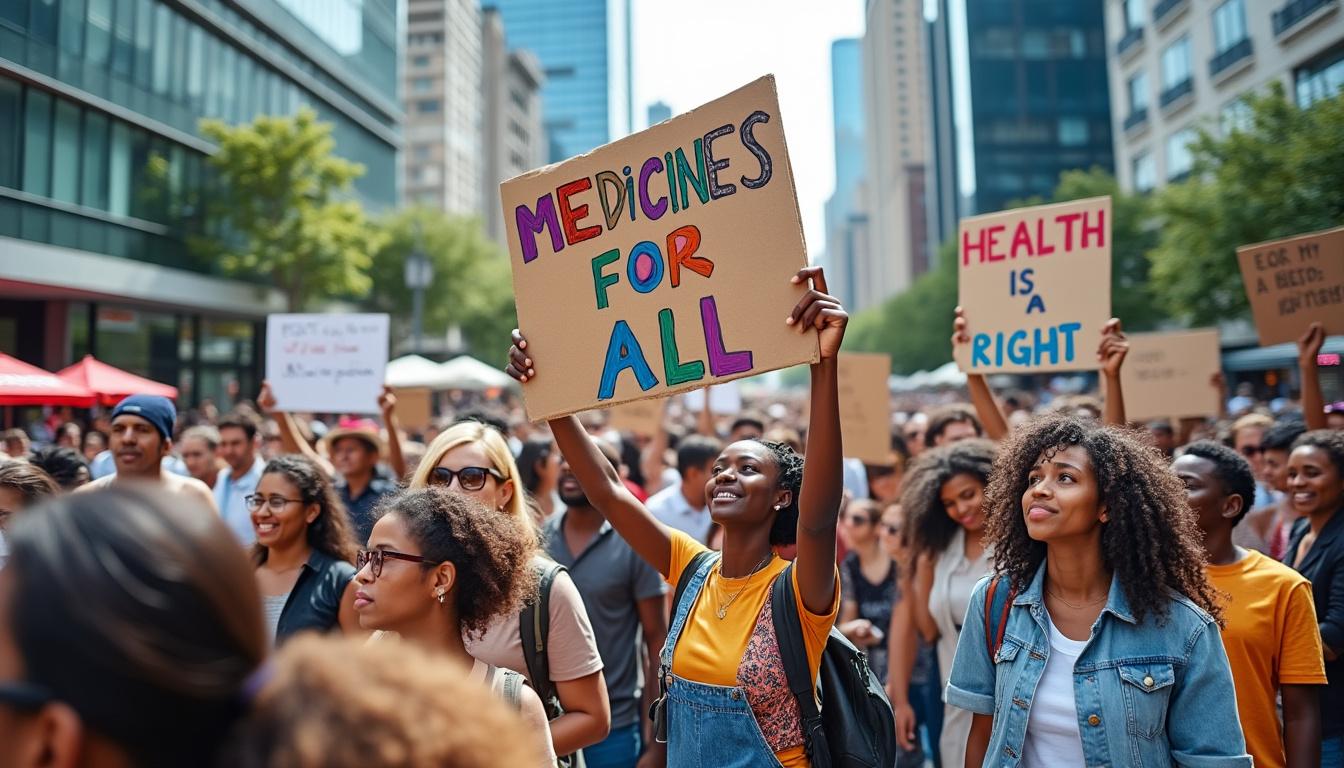
Health Action International: promoter of a health policy based on transparency and justice
Health Action International (HAI) is established as a major player in advocacy for equitable access to medicines. For several decades, this international organization has been fighting to disentangle public health from the opaque logics of the pharmaceutical sector. Its mission is to foster an open dialogue about costs, prices, and innovation mechanisms in medical research while highlighting the importance of health rights in building health policies.
One of the essential focuses of HAI’s work concerns denouncing the unjustified monopolies enabled by pharmaceutical patents. These, often artificially extended by mechanisms such as supplementary protection certificates, prevent the arrival of generics on the market, thereby maintaining high prices to the detriment of health systems and patients. HAI works to challenge these abusive extensions, as was the case for the Truvada treatment which, after a legal challenge, saw its patent invalidated and thus allowed broader access to a previously blocked medicine.
Furthermore, HAI advocates for greater transparency in negotiations around medicine prices. It demands that governments obtain clear and accessible data on the actual research and development costs, as well as on indirect public subsidies granted to laboratories. This approach is essential to restore balance in price negotiations, favoring dialogue based on precise and objective knowledge rather than opaque figures. In this regard, the recommendations and reports produced by HAI feed international debates, including in bodies like WHO or OECD, both of which have highlighted the challenge of transparency in their fight against excessive prices.
Behind these structuring battles, Health Action International also bases its action on the involvement of patients and various stakeholders, in order to build truly inclusive health policies. This approach strengthens health democracy by giving a voice to patients and citizens, often left on the sidelines of decisions that nevertheless affect their access to affordable medicine.
The crucial role of public regulation facing economic challenges in pharmaceutical distribution
The regulation of pharmaceutical markets represents an indispensable tool to fight against the excesses of the current economic system. However, the implementation of these regulations is hindered by structural barriers and a lack of political will in several countries. In France and elsewhere, despite the existence of powerful legal mechanisms such as compulsory licensing or the possibility for CEPS to unilaterally set a price, these levers remain very little used. This weakens the capacity of states to guarantee health justice and ensure balanced pharmaceutical distribution.
For example, the recurring shortage of essential medicines, often neglected by manufacturers due to their low profitability, is symptomatic of a failing market. This disinterest severely affects public health by depriving patients of access to essential treatments. Encouraging local production, notably via small and medium pharmaceutical enterprises (SMEs), and supporting public industrial capacities are recommended solutions to improve this situation.
Moreover, the complexity of publicly displayed prices, often very far from the actual net costs borne by health systems, contributes to an opaque and inefficient system. The absence of verifiable data on prices, margins, and profits masks the real capacity of public authorities to control pharmaceutical expenditure. This opacity inevitably reinforces public distrust and compromises long-term confidence in the health system.
Improving regulation is not limited to the financial aspect. It must also address the evaluation of new health technologies, their health and societal impact, as well as the equity of their distribution through appropriate policies. In this area, the contribution of international bodies and NGOs like Health Action International is valuable to guide lawmakers and take patients into account in these trade-offs.
Concrete proposals to strengthen equitable access to medicines in health policies
Facing the growing challenges of an opaque pharmaceutical economy generating inequalities, Health Action International associates its proposals with a clear vision of strengthened public health. These proposals are based on the conviction that health is a right, not a commercial privilege, and that drug policy must take this into account from the early stages of rule and decision design.
These recommendations notably include:
- 🔍 Fight against abusive monopolies: Reduce patent duration, curb extension abuses, apply compulsory licensing to address the public interest.
- 🏭 Support for local production: Promote the capacities of pharmaceutical SMEs and public structures to ensure the availability of old and essential medicines.
- 📊 Total transparency: Demand disclosure of research costs, net prices, profits, and public aids in price negotiations.
- ⚖️ Citizen participation: Involve patient associations and civil society in the development of health policies.
- 💡 Open research: Encourage free access to scientific knowledge to accelerate innovations serving all.
To illustrate these measures, the table below summarizes their advantages and expected impact on public health and access to treatments:
| Proposal 🚀 | Key advantages 💡 | Expected impact on public health 🌍 |
|---|---|---|
| Fight against abusive monopolies | Fairer prices, expanded access to generics | Reduction of inequalities, better coverage of care |
| Support for local production | Health independence, securing supply chains | Decrease in shortages, continuity of essential treatments |
| Total transparency | Negotiations based on real data, trust | Efficient use of public resources |
| Citizen participation | Democratic governance, better adaptation | Accepted policies, more humane and inclusive |
| Open research | Sharing knowledge, accelerated innovation | Therapeutic advances accessible to all |
The implementation of these measures would favor a transition towards a fairer health model, less dependent on purely economic interests. This also echoes the calls from the Health Sciences Authority for better safety and transparency in the pharmaceutical field, thus contributing to affordable and balanced medicine.
Public health and equitable access to medicines
Explore the fundamental role of Health Action International in promoting health justice and equitable access to affordable medicines.
Select a theme above to discover the role of Health Action International on that topic.
Future perspectives for equitable pharmaceutical distribution and strengthened public health
The future of public health depends on the capacity of international, national institutions and field actors to profoundly renew the framework for access to medicines. Facing the constant rise in prices, political will to firmly regulate and guarantee fair pharmaceutical distribution becomes indispensable. Health Action International and other organizations continue their efforts to raise public awareness, influence decision-makers, and foster sustainable reforms.
Recent experiences in health equipment and pandemic response have demonstrated how global cooperation, combined with an inclusive health policy, can save lives. The right to health, recognized at European and international levels, requires increased accountability of economic and political actors around drug pricing.
The rise in citizen involvement, thanks to activism and accessible information, lights the way towards a system where affordable medicine would no longer be a distant ideal. This dynamic is reinforced by the growing use of digital innovations and more localized production chains, contributing to better resilience of health systems, especially in disadvantaged regions.
To accompany this evolution, health professionals and specialized writers continue to play a role in popularizing information, allowing for a broader understanding of the issues. Promoting a culture of accessible health, coupled with clear knowledge of health rights, is a powerful lever to support necessary changes.
Why is equitable access to medicines crucial for public health?
Because it guarantees that all populations, regardless of their social or geographic condition, can benefit from the necessary treatments to live in good health.
How do patents influence medicine prices?
Patents grant a monopoly to pharmaceutical companies, allowing them to set high prices in the absence of generic competition.
What are the main actions of Health Action International?
Promoting price transparency, fighting against abusive monopolies, and including patients and civil society in health decisions.
What tools exist to effectively regulate the pharmaceutical market?
Legal mechanisms such as compulsory licensing, unilateral price setting, and mandatory transparency on costs and public support.
How can citizen participation improve health policies?
It ensures better consideration of patients’ real needs and a more transparent and adapted democratic governance.


