
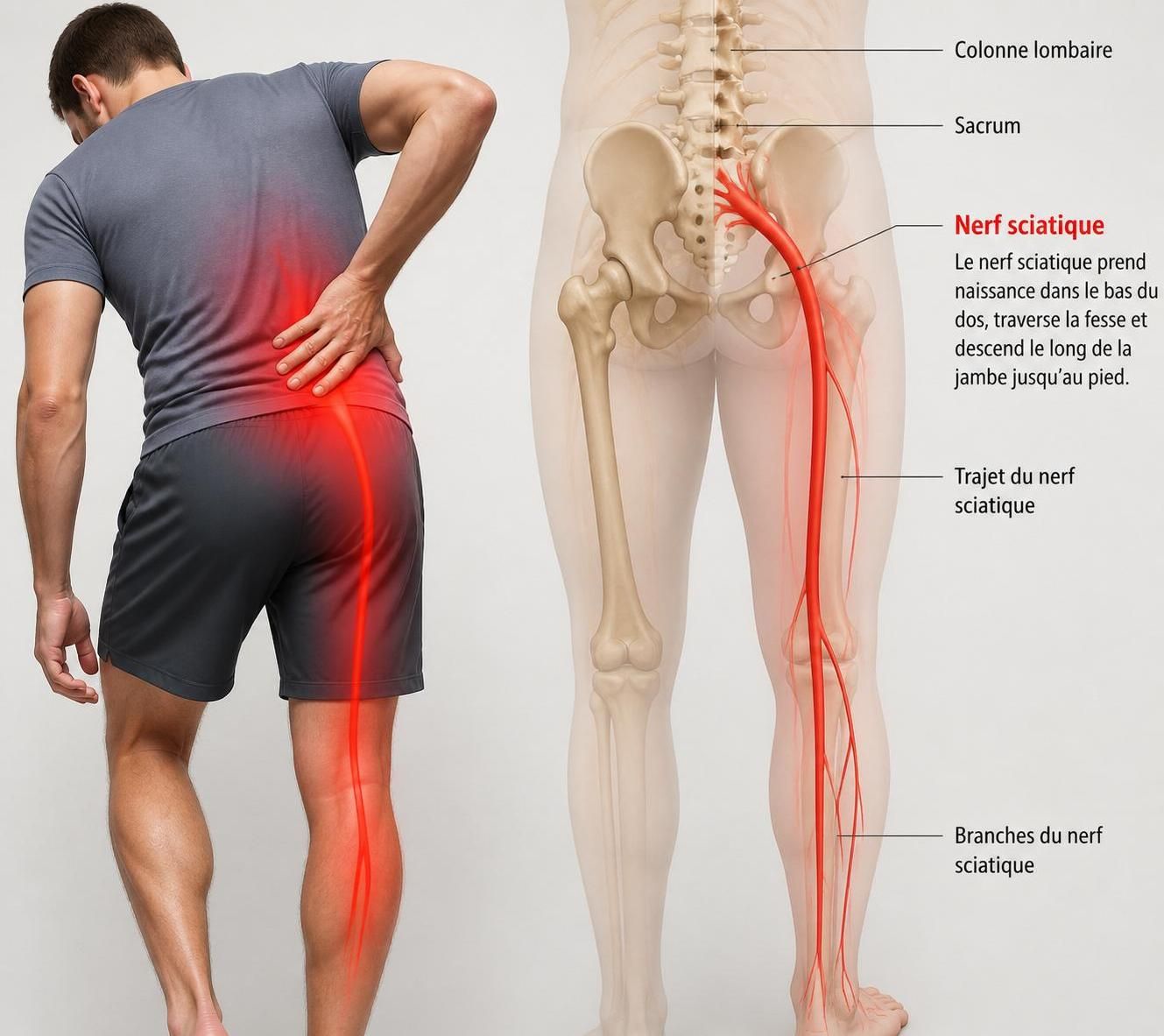
Sciatica is an intense and overwhelming pain that often begins in the lower back and radiates down the leg. This unpleasant symptom is caused by irritation or compression of the sciatic nerve, a vital nerve pathway. While certain daily postures can worsen this pain, it is essential to know which to avoid to limit inflammation and promote relief. Learning to adjust one’s posture then becomes a key step, capable of turning a painful daily life into a more comfortable and active one.
The article in brief
Discover how certain common positions can amplify sciatic pain and which postures to adopt to reduce discomfort in daily life.
- Seated positions to avoid: Avoid prolonged sitting without lumbar support.
- Movements to avoid: Sudden bending and twisting that compress the nerve.
- Healthy postural alternatives: Favor neutral and dynamic positions.
- Targeted exercises: Gentle stretching and strengthening to soothe pain.
Adapting gestures and the environment promotes effective management of sciatica.
Sciatica and postures: understanding the mechanisms that worsen pain
The sciatic nerve, the longest in the human body, runs from the lumbar spine down to the feet. When compressed, notably by a herniated disc or muscular tension, the pain becomes sharp and can cause persistent inflammation. Positions that force excessive curvature of the back or direct pressure on the intervertebral discs increase this compression, exacerbating the discomfort. Prolonged sitting on a chair without lumbar support or a permanently arched back are common aggravating factors. Knowing how to identify these risky postures is the first step to better comfort.
Prolonged seated positions: an enemy of the sciatic nerve
Sitting for hours without proper support eliminates the natural lordosis of the lower back, which increases pressure on the intervertebral discs and irritates the sciatic nerve. Slouching on a too-soft couch or sitting on a chair without a firm backrest are practices to avoid. Similarly, crossing the legs while sitting creates an imbalance of the pelvis that can cause asymmetrical tension on the nerve.
To counter these bad habits, it is advisable to use a lumbar cushion, change position regularly, and alternate between sitting and standing periods. These simple gestures limit inflammation and prevent pain from becoming chronic.
Bending and lifting: how to protect your back
Lifting a heavy object while keeping the back bent or bending forward without bending the knees increases intradiscal pressure on the lumbar spine and thus promotes the onset or worsening of sciatica. This excessive pressure stretches or compresses the nerve, causing a shooting pain that can radiate to the calf or ankle.
It is absolutely necessary to avoid sudden trunk twists and remember to bend by flexing the legs while keeping the back straight. This technique prevents excessive strain on the discs and protects the sciatic nerve. To deepen this topic and understand calf pain associated with this disorder, it is possible to consult a specialized resource on calf pain.
Positions to avoid during sleep
The choice of sleeping position has a direct impact on sciatic nerve tension. Sleeping on the stomach accentuates lumbar lordosis, which creates additional tension. Conversely, sleeping on the back with a pillow under the knees or on the side with a pillow between the legs promotes better pressure distribution and relieves tension on the spine.
How to relieve sciatica through adapted postures and targeted exercises
To ease a sciatica attack, gentle and regular movements are valuable allies. Slow walking on flat terrain stimulates local circulation, reduces inflammation, and helps maintain mobility. Gentle stretching of the piriformis, hamstrings, and lumbar muscles frees the nerve and relieves muscular tension. Yoga or Pilates provide specific postures that stabilize the back and strengthen the abdominal belt.
Adopting a routine of light exercises, combined with deep breathing techniques, optimizes overall relaxation and reduces pain. Other complementary approaches include therapeutic massages and physiotherapy, which are effective solutions to support rehabilitation and prevent recurrences.
Synthetic table of postures to avoid and recommended alternatives
| Positions to avoid | Effects on the sciatic nerve | Alternative postures | Practical advice |
|---|---|---|---|
| Prolonged sitting without lumbar support | Increased compression and inflammation | Sitting with lumbar cushion, frequent breaks | Change posture every 30 min |
| Forward bend with rounded back | Excessive intra-discal pressure | Bend knees, keep back straight | Use legs to lift |
| Sudden trunk twist | Strain on discs and nerves | Gentle rotation with stabilized pelvis | Avoid rapid movements |
| Sleeping on the stomach | Increased lumbar tension | Back with pillow under knees or side with pillow | Choose firm, suitable mattress |
Adopt an active and caring lifestyle for your back
In 2026, managing sciatica also involves better self-awareness and understanding of one’s limits. Postural rehabilitation, combined with targeted treatments, helps reduce painful episodes. It is essential to listen to one’s body: excessive pain, loss of strength, or numbness require prompt medical consultation. To deepen understanding of these pains and their implications, visit this guide on right hip pain.
By combining postural caution, gentle exercises, and therapeutic support, it is possible to gradually regain confidence in your back and improve daily well-being.
Which positions avoid worsening sciatica?
It is recommended to limit prolonged sitting without lumbar support, avoid forward bends with a rounded back, sudden trunk twists, and not to sleep on the stomach.
Is it beneficial to walk with sciatica?
Yes, gentle walking promotes blood circulation and muscle flexibility, thereby reducing inflammation and pain associated with sciatica.
Which exercises can relieve sciatic nerve pain?
Stretching of the piriformis, hamstrings, posture improvement through yoga or Pilates, as well as core strengthening exercises are recommended.
When should one consult a doctor for sciatica?
A consultation is urgent in case of intense pain preventing any movement, loss of sensation or strength in the leg, or incontinence.
Are natural treatments effective for sciatica?
Therapeutic massages, acupuncture, physiotherapy, and hot or cold compresses can complement good postures and exercises to relieve pain.


