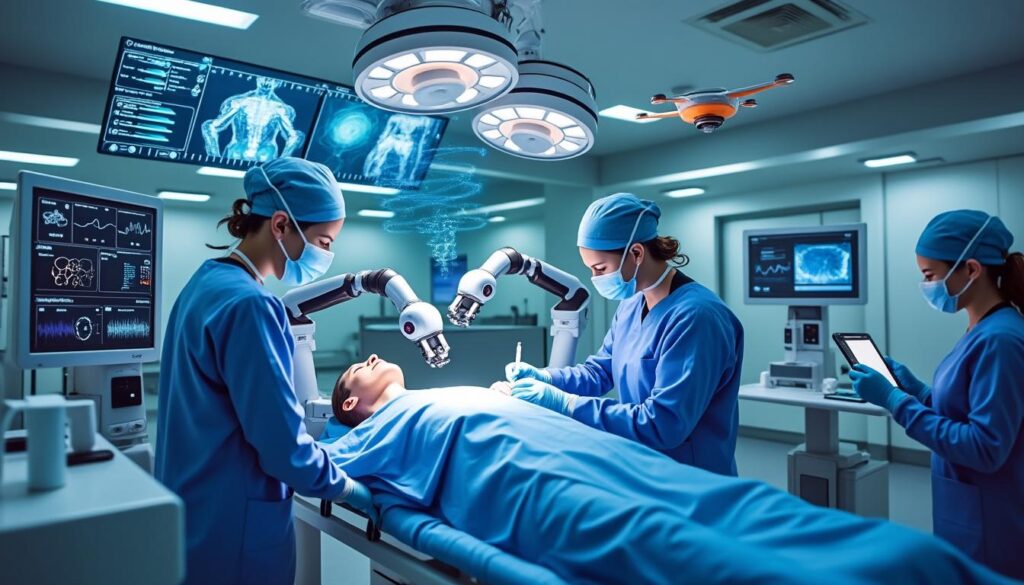
Technological innovations are profoundly reshaping the healthcare landscape, offering unprecedented opportunities to improve diagnostics, treatments, and patient monitoring. From artificial intelligence to 3D bioprinting, including telemedicine and surgical robotics, these advances are transforming medical practices and strengthening personalized medicine, for more effective and humane care. This dynamic also fosters the emergence of a genuine partnership between patients and professionals, serving a more proactive and tailored healthcare system.
🕒 The article in brief
Technologies today shape an innovative healthcare system focused on precision and foresight in care, pushing beyond traditional boundaries.
- ✅ AI-assisted diagnosis and treatment: significant improvement in detection and medical precision
- ✅ Advances in 3D bioprinting: creation of tissues and organs for regenerative medicine
- ✅ Connected health and telemedicine: real-time monitoring with innovative devices
- ✅ Neurotechnologies and robotics: personalized rehabilitation and robot-assisted surgery facilitating recovery
📌 An overview of key innovations redefining the healthcare of tomorrow.
Major contributions of artificial intelligence in diagnosis and personalized medicine
Artificial intelligence (AI) is now established as an essential tool in the medical sector. In 2026, it is revolutionizing how health professionals approach diagnosis. Thanks to massive data analysis from big data, AI detects anomalies with precision that the human eye might miss. For example, at Georges-Pompidou Hospital, algorithms like MammoScreen increase the early breast cancer detection rate by 20%, a crucial advancement for patient survival.
Platforms deployed in various regions, such as those from Incepto in the university hospitals of Brest and Toulouse, optimize emergency diagnoses like strokes or pulmonary embolisms by providing quick and reliable support to radiologists. By 2030, the World Health Organization predicts that half of medical imaging exams will benefit from this automated assistance, thus accelerating medical decision-making.
AI also facilitates personalized medicine, oriented towards a unique treatment adapted to a patient’s precise profile. This focus on the individual integrates not only genetic data but also information related to lifestyle, microbiota, and environmental factors. The goal is clear: to efficiently anticipate risks and personalize interventions to achieve the best outcome with the fewest possible side effects.
Moreover, medical chatbots are another facet of AI, helping patients navigate the healthcare system, obtain preliminary advice, and quickly direct themselves to appropriate resources. These technologies contribute to relieving healthcare centers and optimizing hospital resource allocation.
However, this technological evolution requires constant vigilance regarding data security and compliance with standards to ensure the trust of patients and professionals. Clinical validation, an essential condition for adoption, is at the heart of current debates.
3D bioprinting and innovative therapies: a revolution for tissue and organ regeneration
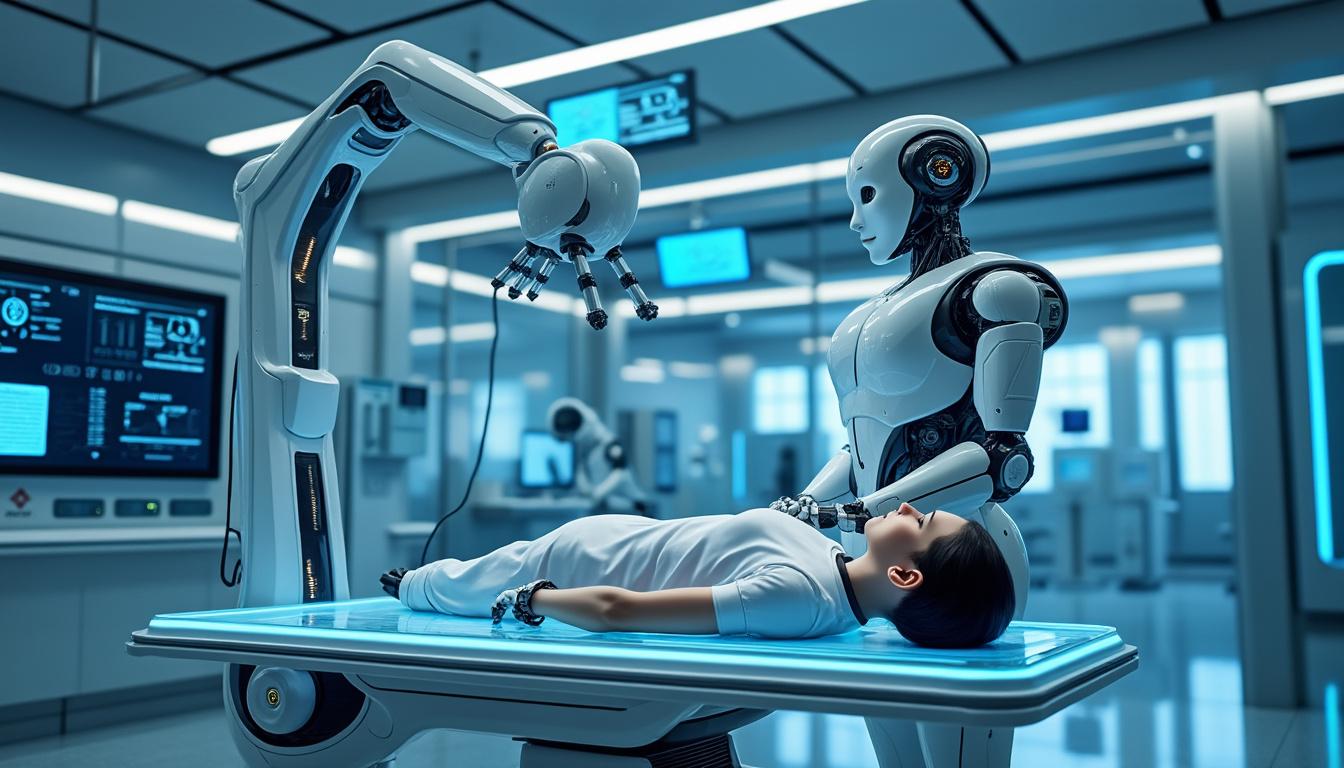
3D bioprinting is a rapidly growing technology that paves the way for spectacular progress in regenerating living tissues. The principle relies on using cells and biomaterials printed layer by layer to recreate complex biological structures. This advance marks a rupture in treating many pathologies, notably burns, nerve injuries, and even organ failures.
French companies like Poietis, based in Bordeaux, innovate in producing living skin for grafts, while now exploring the printing of cartilage and hepatic tissues. These biofabricated tissues also enable testing drugs under real conditions, thereby reducing the use of animal models, often criticized on ethical grounds. This dual medical and pharmaceutical use promises a market estimated at over 7 billion dollars by 2030.
Applications are also multiplying in nerve and vascular reconstruction, with startups working on materials capable not only of mimicking structure but also promoting cellular growth. This regenerative medicine fits perfectly within the trend toward personalized healthcare, as it allows adapting tissues to each patient’s characteristics, thus reducing rejection risks.
However, scaling these products to industrial production remains a challenge, notably due to strict regulations and high clinical quality requirements. Experts emphasize the need for ongoing dialogue between researchers, clinicians, and health authorities to frame this promising innovation.
This field demonstrates a profound transformation where technology no longer replaces the body but actively assists its repair and renewal mechanisms.
Telemedicine, connected devices, and electronic medical records: towards enhanced real-time health monitoring
Telemedicine, powered by connected devices and the development of electronic medical records, is transforming the relationship between patients and healthcare professionals. These digital tools support continuous and personalized monitoring, especially for chronic diseases. Adapted to an aging population, this system enables more proactive care.
Devices such as connected watches or bracelets continuously capture essential physiological data: heart rate, sleep quality, physical activity, and even specific parameters like blood glucose or oxygen saturation. This information, synchronized with electronic records, facilitates prevention and rapid deployment of interventions when anomalies are detected.
For example, Withings offers connected scales capable of performing ECGs or assessing nervous system status, while BioSerenity develops smart clothing to monitor conditions such as epilepsy or sleep apnea. Thanks to the progressive reimbursement policy for connected devices since 2023, their accessibility is greatly expanding, redefining care pathways.
Telemedicine itself enables effective remote consultations, removing geographic barriers and facilitating access to specialized expertise. These teleconsultations, conducted via secure platforms, offer unparalleled comfort while respecting data confidentiality. By strengthening prevention, telemedicine eases the burden on hospitals and provides a valuable solution in areas under-resourced in professionals.
Massive databases from big data enrich this dynamic by enabling anticipation of epidemiological trends, adapting public health plans, and optimizing national resource allocation. Full integration of the electronic medical record ensures continuity and coordination of care among various actors, a key factor in quality management.
Main benefits of connected health devices
Explore the major advantages of connected devices revolutionizing health monitoring and care.
Surgical robotics and neurotechnologies: precision and rehabilitation at the heart of modern care
Surgical robotics is revolutionizing operative practice thanks to devices like the Da Vinci robot, which offer unparalleled surgical precision. These systems assist the surgeon to limit errors, reduce incision size, and speed up patient recovery. These advances particularly benefit delicate interventions such as in urology, gynecology, or neurosurgery.
Moreover, neurotechnologies open new perspectives for rehabilitation of patients with motor or neurological disorders. Clinatec, in Grenoble, has notably developed a thought-controlled exoskeleton, allowing paralyzed individuals to regain some mobility. Likewise, Neurinnov, a CNRS spin-off, designs implants stimulating peripheral nerves to initiate motor function recovery.
These technologies address not only severe physical disabilities but also enter the field of treating neurodegenerative diseases like Parkinson’s or Alzheimer’s. Targeted electrical stimulation helps alleviate certain symptoms, thereby improving patients’ quality of life.
However, scaling production remains a challenge. Between strict regulation and high costs, startups in the sector navigate a complex environment. Their success also depends on acceptability by patients and professionals, who must be involved in the appropriation process.
Robotics and neurotechnologies represent a dual lever to refine care, reduce sequelae, and promote faster social reintegration, redefining the standards of medicine as ever more humane and precise.
Biotechnologies and predictive medicine: towards tailored prevention and treatment
The field of biotechnologies continues to expand its boundaries with major applications in oncology and predictive medicine. Advances in systematic genomic sequencing have enabled centers like Gustave-Roussy to show that 30% of patients with advanced cancers benefit from more effective targeted treatments. These unprecedented advances transform care delivery, offering new hopes, notably in breast cancer thanks to increasingly precise biomarker tests.
Among new therapeutic weapons is Inavolisib (Itovebi), a targeted drug for advanced breast cancer carrying the PIK3CA mutation, which doubles progression-free survival when combined with classical hormone therapies. This innovation marks a turning point towards less invasive and more profile-adapted treatments.
Moreover, FLASH radiotherapy promises to revolutionize cancer treatment by significantly reducing side effects. By concentrating the dose in a few hundredths of a second instead of several minutes, this technique better preserves healthy tissues and greatly improves patient comfort.
Advances in liquid biopsy also offer a simpler and less invasive alternative to traditional biopsies, enabling precise monitoring of tumor progression through a simple blood draw. This technique, validated notably by the SERENA-6 study, allows rapid treatment adaptation in case of mutation emergence.
Biotechnologies therefore focus their efforts on finely personalized care strategies, radically transforming traditional care models and paving the way for truly predictive and preventive health. These practices are accompanied by increased patient engagement, supported by adapted digital tools, at the heart of modernized care pathways.
| Technology 🚀 | Key impact 🌟 | Concrete example 🎯 | 2030 perspective 🔮 |
|---|---|---|---|
| Artificial intelligence 🧠 | Faster and more accurate diagnosis | MammoScreen for breast cancer | 50% of imaging exams assisted |
| 3D bioprinting 🖨️ | Tissue and organ regeneration | Living skin bioprinted in Bordeaux | Global market > 7 billion $ |
| Telemedicine & connected devices 📱 | Real-time monitoring at home | Smart clothing by BioSerenity | Progressive reimbursement of devices |
| Surgical robotics 🤖 | Precise surgery, rapid recovery | Da Vinci robot in operation | Widespread use for complex interventions |
| Biotechnologies & predictive medicine 🧬 | Targeted treatments, enhanced prevention | Inavolisib for advanced breast cancer | Expanded personalized care |
To better understand these developments and deepen insights into digital transformation in healthcare, it may be useful to refer to analyses available at health insurance and innovations, which provide pragmatic perspectives on key players and emerging solutions.
How does artificial intelligence improve medical diagnosis?
Artificial intelligence analyzes vast amounts of medical data, enabling faster and more precise detection of anomalies, leading to more reliable diagnoses and better disease anticipation.
What are the advantages of 3D bioprinting in medicine?
This technique allows the fabrication of custom tissues and organs from the patient’s own cells, offering possibilities for tailored grafts, ethical drug testing, and better biological integration.
How does telemedicine change patient monitoring?
It facilitates remote consultations, improves access to specialists, and enables continuous monitoring via connected devices, optimizing prevention and management of chronic diseases.
What challenges does surgical robotics face?
Key challenges include high equipment costs, integration into medical practices, professional training, and adhering to safety and ethical standards.
How does predictive medicine influence prevention?
Using genetic and biological data, predictive medicine anticipates risks of specific diseases, facilitating preventive and personalized interventions before symptoms appear.


