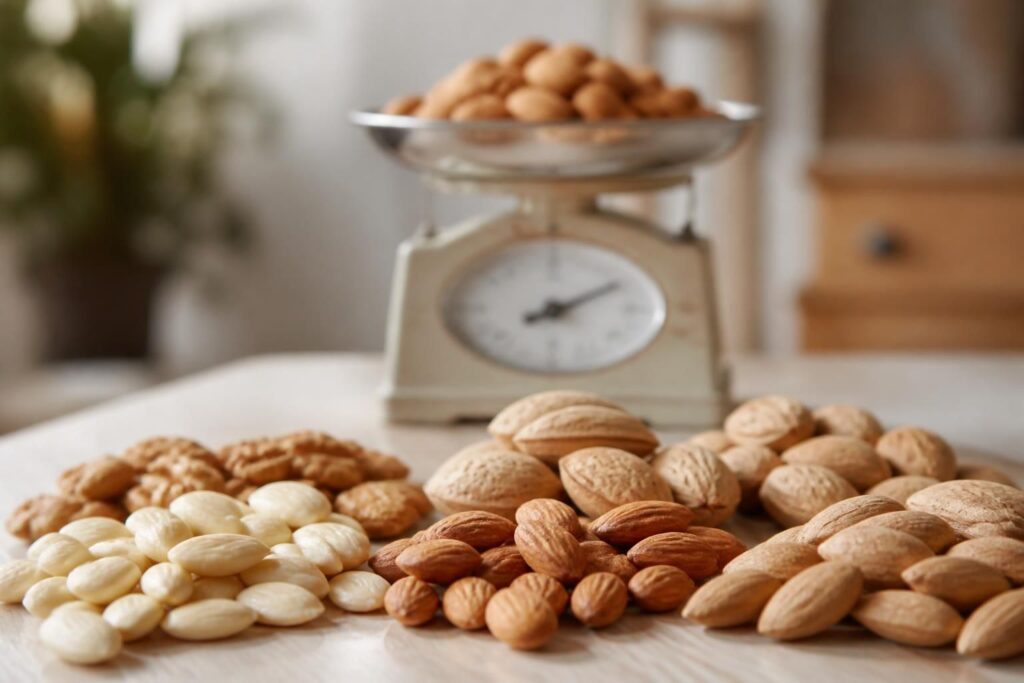
Almonds are among the favorite dried fruits in France, appreciated for their taste and nutritional benefits. However, their price per kilo varies significantly depending on the variety, quality, origin, and the form offered. While California dominates with its standard Nonpareil and Carmel varieties at affordable rates for professionals, the Marcona almond from Spain or the almond from Provence, rarer and more prized, display much higher costs. A clear overview of the different options helps to better understand where to invest for a wise purchase.
The article in brief
Almond prices per kilo strongly depend on variety and quality, influencing culinary uses and budgets.
- Key almond varieties: California, Spanish Marcona, Provence, and Australia dominate the market.
- Price according to quality: From €2.61/kg wholesale to over €80/kg for organic Provence almonds.
- Available formats: Raw, blanched, sliced, sticks or powder, depending on use.
- Preservation & storage: Affect shelf life and maintenance of quality.
Understanding these variations allows an informed choice to fully benefit from the qualities of this essential dried fruit.
The diversity of almond varieties and their impact on the price per kilo
The almond market is largely dominated by three main origins, each with its specificities. California supplies about 80% of the global production, with its Nonpareil and Carmel varieties characterized by a consistent size and elongated shape. Their price generally ranges between €12 and €22 per kilo depending on sizing, making them a favored reference for the pastry industry and commercial uses.
In contrast, the Spanish Marcona almond stands out for its shorter size, round shape, and higher oil content, giving it a sweet and buttery flavor. This specific quality makes it particularly suited for tapas, confectionery, and high-end calissons, justifying a price two to three times higher, between €28 and €45 per kilo. This cost difference also reflects more traditional harvesting methods and often smaller batch sizes.
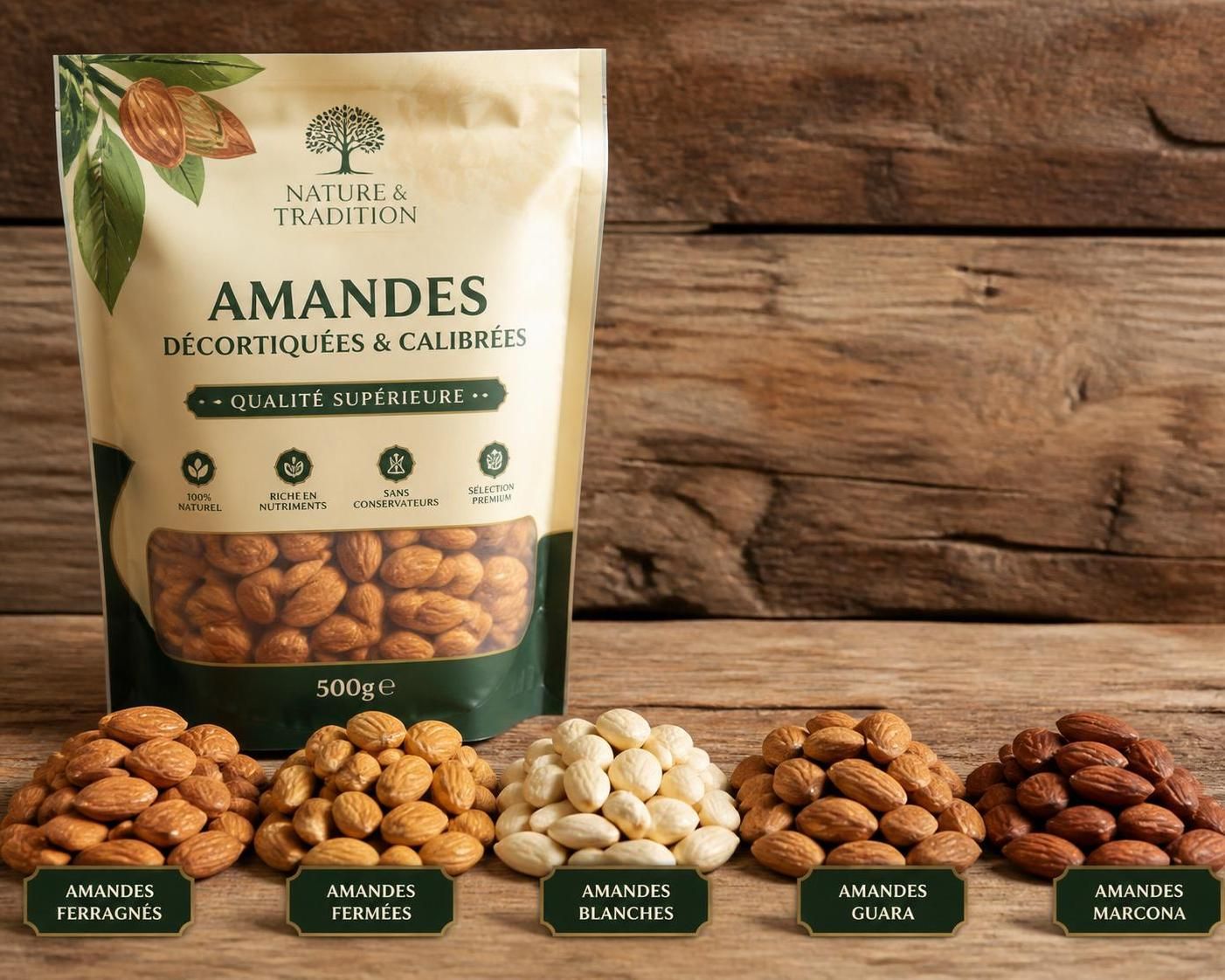
As for Provence, a French region where the sector is reviving, it offers varieties like Ferragnès, Aï, or Ferraduel, with a smaller production but certified. Despite a very limited volume – less than 500 tons per year – the Provence almond promotes a short supply chain and no post-harvest treatments, which raises its price between €50 and €80 per kilo, thus maintaining its image of heritage and gastronomic excellence.
Almond formats and their influence on cost and use
Beyond variety, the presentation of the almond plays a crucial role in the evolution of the price per kilo. The most common are the raw format, with skin, which has the longest shelf life (up to 24 months) and generally lower price (€13-20/kg). The blanched almond, freed of its skin by blanching, is an elegant ingredient favored for fine preparations such as macarons, nougats, or pralines, with prices ranging from €15 to €25 per kilo.
Sliced or stick almonds, thin slivers used for decoration and coating of pastries, fetch higher prices, around €18 to €28 per kilo, while almond powder, an essential base for frangipanes and financiers, is traded between €14 and €22 per kilo depending on fineness and packaging. For indulgent flavors, Marcona almonds roasted with olive oil and Guérande salt remain a specialty, offered from €28 to €45 per kilo.
Evolution and trends in the almond market in 2026
As of July 11, 2026, the average wholesale price per kilo of almonds recorded on Foodomarket is €2.61, representing the most economical commodity, especially for industrial volumes. This price experiences significant seasonal variations due to the Californian harvest, the main market driver between August and October. Competition, notably from Australia, the second largest producer globally, provides additional stock at the beginning of the year, stabilizing supplies.
On the qualitative level, the growing demand for organic and local almonds favors the expansion of certified Provence almonds. Despite their high price, this trend reflects a desire for authenticity and short supply chains, often favored by consumers concerned about their diet and environmental impact.
Practical advice for proper storage and choice of almonds
Optimal almond preservation requires storage in a dry place, at a temperature between 15 and 18 °C, protected from light and air to limit the rapid oxidation linked to their high content of unsaturated oils (about 50%). Almond powder should preferably be kept cool, between 0 and 5 °C, to preserve its aromas and avoid rancid taste signaling oxidized product.
For those who wish to enhance their almond powder used in pastry, an oven heating at 50 °C for 15 minutes before weighing can greatly improve the final result, especially for making macarons where a fine and dry texture is essential.
- Store hermetically to prevent oil oxidation.
- Prefer fresh and sifted powder for macarons and frangipane.
- Roast raw almonds 8-10 minutes at 160 °C to reveal aromas and detect hollow almonds.
- Avoid mixes containing added sugar in powder for precise recipes.
Overview of prices per kilo by origin and format
| Origin / Type | Variety / Format | Average price (€ / kg) | Common use |
|---|---|---|---|
| California | Raw Nonpareil | 13-20 | Pastry, industry, bulk |
| California | Blanched white | 15-25 | Nougat, praline, marzipan |
| Spain | Whole Marcona | 28-45 | Tapas, gourmet confectionery |
| France (Provence) | Ferragnès, Aï, Ferraduel | 50-80 | AOP Calissons, short supply chains |
| Australia | Nonpareil / Carmel | 12-22 | Seasonal stock supplement |
| California | Fine almond powder | 14-22 | Macarons, financiers, frangipane |
What is the average price per kilo of almonds in 2026?
The wholesale price recorded on Foodomarket is about €2.61/kg, but this price varies according to the variety, quality and origin of the almond. Provence almonds are the most expensive with prices up to €80/kg.
What is the difference between Marcona and Californian almond?
The Marcona is rounder, often fattier, with a sweet and buttery taste, ideal for tapas. The Californian is flat, sized and standardized, mainly used in pastry and industry.
How to properly store almonds to preserve their quality?
It is advised to store almonds in a dry, cool place (15-18 °C), away from light and air to avoid rapid oxidation linked to their unsaturated oil content.
Which almond forms to choose for pastry?
Blanched almonds are preferred for clear and fine preparations like macarons and nougat, while raw almonds suit rustic recipes like crunchy biscuits or pies with their skin.
Why avoid almond powders with added sugar in pastry?
Added sugar in pre-mixed powders can unbalance delicate recipes like macarons, leading to incorrect texture or excessive fermentation.


