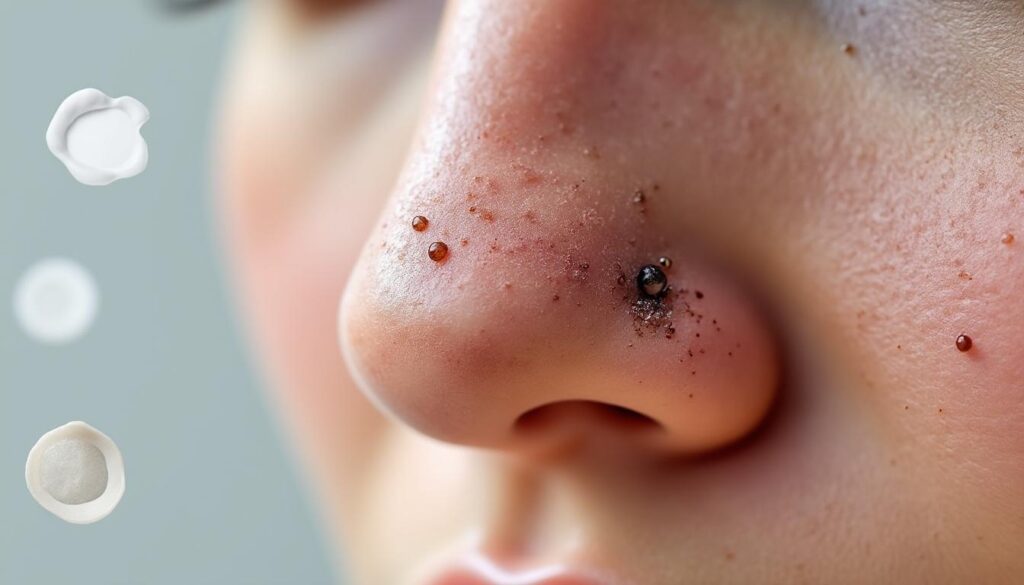
Blackheads on the nose are a common skin problem that affects a large number of people, regardless of their age. These small visible imperfections mainly result from pores clogged by excess sebum and dead skin cells, which promote the appearance of localized acne. Without good skin hygiene and appropriate practices, it can be difficult to get rid of them permanently. This article details in depth the causes of blackheads, effective prevention methods, and the available dermatological and natural treatments to regain a clear and balanced complexion.
🕒 The article in brief
Discover the mechanisms responsible for blackheads on the nose and the keys to prevent and treat them effectively with scientifically validated advice.
- ✅ Understanding the origin of blackheads: Pores clogged by sebum and dead skin cells
- ✅ Skin hygiene and prevention: Appropriate routines and essential daily gestures
- ✅ Natural and dermatological solutions: Targeted treatments against acne and blackheads
- ✅ Exfoliation and suitable care: Why and how to exfoliate your skin properly
📌 A comprehensive insight on blackheads for clear skin thanks to concrete and effective tips.
The fundamental causes of blackheads on the nose: understanding to better act
Blackheads, also called open comedones, appear when the pores of the skin, mainly concentrated on the nose, are clogged by a mixture of sebum, dead cells, and impurities. This plug oxidizes when exposed to air, hence their characteristic black color. The nose is particularly exposed to this phenomenon due to the high density of sebaceous glands in this area of the face.
The role of sebum is central: this natural oily substance ensures the protection and hydration of the skin, but in excess, it favors pore obstruction. This overproduction can be influenced by hormonal factors, such as during adolescence or menstrual cycles, but also by stress or a diet rich in fast sugars.
Besides sebum, the accumulation of dead cells on the skin surface worsens obstruction. Indeed, without regular exfoliation, these cells do not renew properly, which increases the risk of blackhead formation.
External factors can also play a role: urban pollution, use of comedogenic cosmetic products, or repeated rubbing of the nose (for example by wearing glasses) can worsen the situation. Some medications, based on corticosteroids or lithium, are also known to promote pore obstruction.
A striking example is a dermatology study conducted in Europe, which showed that adolescents in polluted urban environments had a significantly higher rate of comedones than those living in rural areas. This finding highlights the importance of the environment on skin quality.
Finally, insufficient or overly aggressive hygiene can destabilize the skin balance. Insufficient cleansing leaves pores clogged, while excessive cleaning can irritate the skin and increase sebum production in response. This is why it is essential to find a balanced middle ground adapted to each skin type.
Aggravating lifestyle factors
Smoking is a well-documented aggravating factor: it causes premature skin aging and alters sebaceous glands, which facilitates pore clogging. Moreover, body dehydration disrupting the hydrolipidic film can also intensify the appearance of blackheads.
In some cases, when blackheads multiply and are accompanied by inflammation, this indicates progression towards inflammatory acne requiring specialized treatment. Hence the importance of understanding the origin to prevent these comedones from becoming a source of more serious problems.
Skin hygiene and blackhead prevention: essential daily gestures
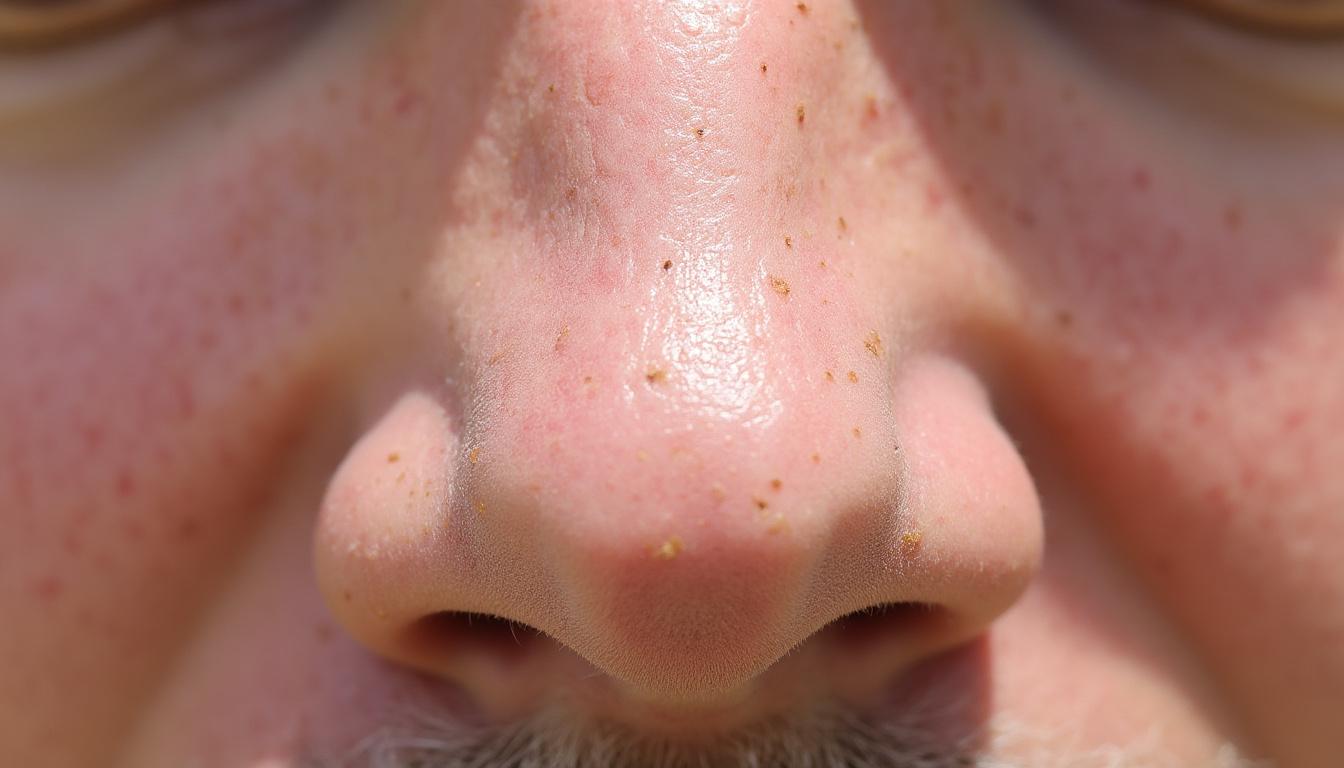
Proper hygiene is the first essential step to limit the appearance of blackheads. Cleansing must remove excess sebum, accumulated dirt, and dead cells without damaging the skin.
It is recommended to favor a gentle cleansing morning and evening with products specifically formulated for combination to oily skin. Avoid soaps that are too stripping, which can dry out the skin’s surface, causing a rebound effect of sebum.
Makeup removal is a key stage: leaving makeup residues favors pore blockage. For this, cleansing oils or alcohol-free micellar waters are preferable.
Beyond the products, techniques play a crucial role. For example, gentle circular massages during cleansing facilitate the removal of impurities. It is also important not to forget to rinse thoroughly with lukewarm water and gently dry the skin with a clean towel.
Another often overlooked prevention tip is the importance of skin hydration, even for oily skin types. Using a serum or a light non-comedogenic cream helps regulate sebum production by rebalancing the skin’s natural protective film.
Adopting a suitable routine is an art, and to deepen these essential gestures, it is very useful to refer to validated advice. For example, an article on Korean skincare highlights gentle but highly effective techniques to preserve the facial skin while reducing blackheads.
Eating habits also influence skin health. A diet rich in antioxidants, vitamins A, C, and E, as well as good hydration, promote resistant epidermis less prone to imperfections.
List: Daily gestures to prevent blackheads 😌🌿
- 🧼 Gently cleanse the face twice a day
- 💦 Use a micellar water or cleansing oil
- 🍃 Hydrate with non-comedogenic products
- 🍎 Adopt a balanced diet rich in fruits and vegetables
- 🚿 Avoid touching the face with dirty hands
- 🧴 Avoid heavy or greasy cosmetics
- 🧖♀️ Practice gentle exfoliation weekly
Exfoliation: a key gesture to eliminate clogged pores and smooth the skin
Exfoliation removes dead cells that accumulate on the surface and clog pores, which are responsible for blackheads. But beware, this should not be done carelessly! Too aggressive or too frequent exfoliation can irritate the skin and stimulate excessive sebum production, worsening the situation.
For this reason, it is advised to use gloves or gentle exfoliating products adapted to the face. A specialized article on the use of the soft skin exfoliation glove explains perfectly how to perform this step without damaging the epidermis.
Chemical exfoliants containing fruit acids (AHA), or salicylic acids (BHA) are particularly effective for skin prone to comedones. They work by dissolving dead cells and deeply unclogging pores, promoting cell renewal without excessive mechanical friction.
It is important not to exfoliate more than once or twice a week, and always after careful cleansing. Exfoliation also boosts the effectiveness of subsequent treatments, making acne or blackhead treatments much more efficient.
In practice, exfoliation fits into a routine where you make sure to protect the skin afterward with a moisturizer and sunscreen, as it is temporarily more sensitive to external aggressions, notably UV rays.
Quiz: Blackheads on the Nose
Effective solutions for treating blackheads: between dermatological innovation and natural remedies
Several treatments exist to eliminate blackheads, from simple home rituals to more targeted dermatological interventions. Among proven methods, decongestant care based on salicylic acid is very popular. This acid helps dissolve sebum plugs and reduces inflammation around the pores.
For more stubborn cases, products containing retinol or benzoyl peroxide treatments can be recommended by a dermatologist. These ingredients stimulate cell renewal, reduce excess sebum, and prevent the formation of new comedones.
However, it is vital to respect dosages and apply these products gradually to avoid irritation. A medical consultation is always preferable to adapt the treatment to each skin type and situation.
Certain natural remedies complement these treatments. For example, green clay or activated charcoal masks provide gentle absorption of impurities and visibly reduce the appearance of enlarged pores. Tea tree or lavender essential oils promote scar regeneration and possess interesting antibacterial properties.
However, caution is required with these natural treatments, as some people may have sensitivities or allergies. It is recommended to perform a patch test before any application.
Finally, perseverance is key: blackheads do not disappear in one day, but with a suitable and consistent routine, they quickly become much less visible and fewer in number.
Comparative table of blackhead treatments: advantages and disadvantages to know
| Treatment 🧴 | Advantages ⭐ | Disadvantages ⚠️ | Target audience 🎯 |
|---|---|---|---|
| Salicylic acid | Deeply exfoliates, reduces inflammation | Possible sensitization, gradual use | Combination to oily skin, simple blackheads |
| Retinol | Stimulates cell renewal | May irritate, photosensitizing | Adult skin, moderate acne |
| Benzoyl peroxide | Effective antibacterial, reduces sebum | Common dryness and redness | Inflammatory acne and blackheads |
| Green clay mask | Absorbs impurities, tightens pores | May dry out if overused | Sensitive oily skin |
| Essential oils (tea tree) | Natural antibacterial properties | Possible allergens, test recommended | Occasional complementary use |
What exactly is a blackhead?
A blackhead is an open comedone: a pore clogged by sebum and dead skin cells darkened when exposed to air.
How to avoid forming blackheads?
Adopt good hygiene, avoid comedogenic cosmetics, and exfoliate regularly without irritating the skin.
Can blackheads disappear on their own?
They can decrease with an adapted routine but often require regular cleansing and treatments to disappear completely.
Which exfoliants are recommended for these issues?
Exfoliants containing AHAs or BHAs are particularly effective at unclogging pores.
Is it useful to consult a dermatologist?
Yes, especially in case of persistent blackheads or inflammatory acne for personalized treatment.


