
When time is short, chicken tenderloins in the pan become a precious ally: quick, light, and able to turn into a gourmet dish in a few minutes. The real challenge, however, remains the same each time: achieving a beautiful browning without sacrificing tenderness. With a few well-chosen cooking tips, a subtle but effective chicken marinade, and simple control of medium heat, the result can be impressive, even on a weeknight.
The article in brief
Well-cooked tenderloins are a mix of common sense, timing, and precise gestures. A few adjustments are enough to go from dry meat to perfect chicken, tender and flavorful.
- Mastered quick cooking: 15 to 18 minutes from prep to plate
- Preserved textures: removing, patting dry, and resting prevents drying out
- Enhanced flavors: a 30-minute chicken marinade boosts taste
- Safe cooking: aiming for 74 °C at the core ensures a tender and safe result
With a few simple gestures, pan cooking becomes an easy, quick, and truly reliable recipe.
To visualize the final plate, imagine tenderloins just browned, still juicy on cutting, served with sautéed vegetables or fragrant rice. This is exactly the kind of dish that saves a Tuesday evening without ever giving the impression of an improvised meal. Provided, of course, the cooking time is respected and this fine poultry is not treated like a whole breast.
- Take the meat out of the refrigerator a few minutes before cooking to even out the temperature.
- Pat dry carefully to encourage browning and avoid steam.
- Sear over medium-high heat, without overcrowding the pan.
- Turn only once to keep the juices in the center of the meat.
- Let rest before serving for a moister texture.
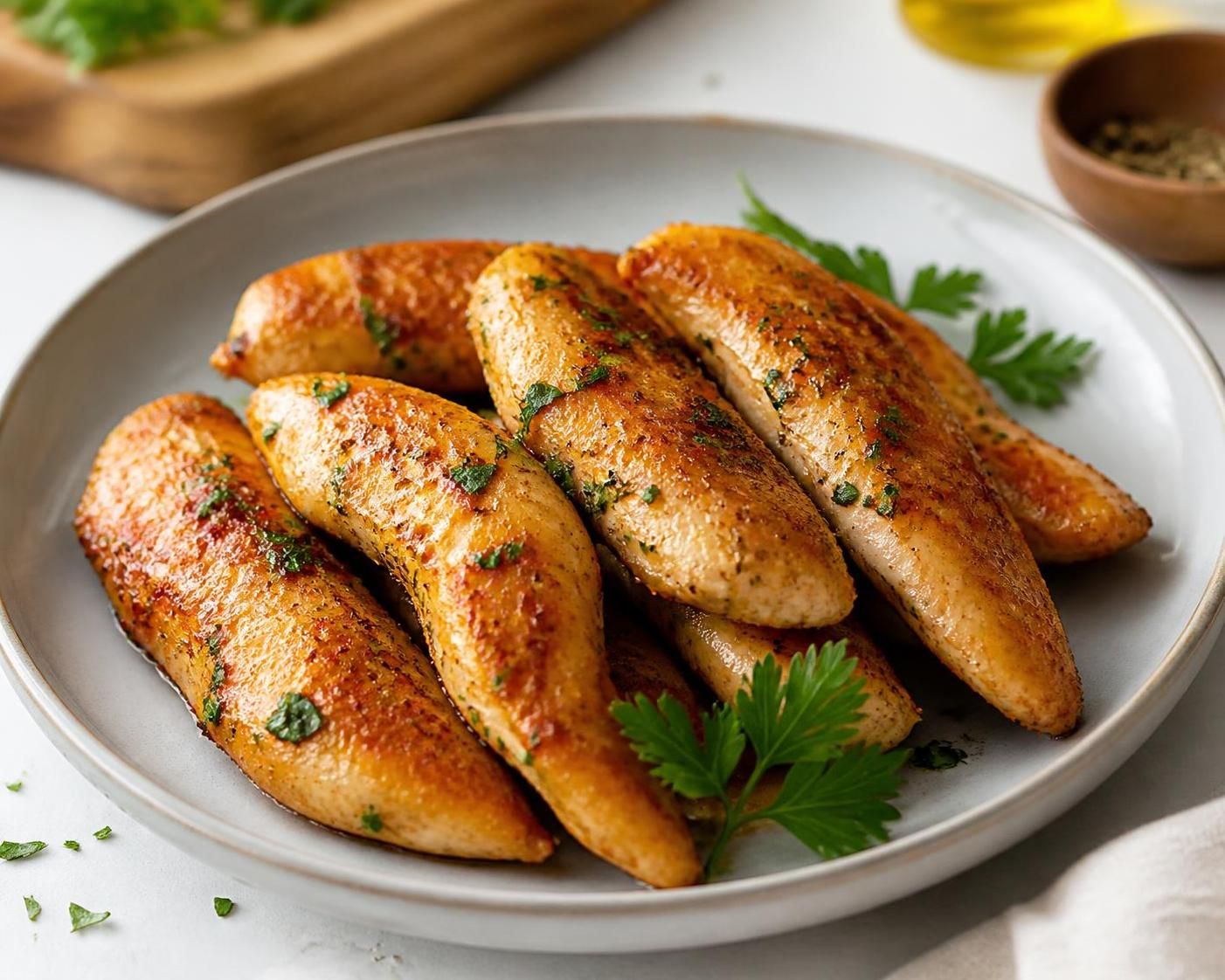
Chicken tenderloins in the pan: achieving quick cooking without drying them out
Chicken tenderloins are thin, uniform pieces very practical for an express dinner. Their thinness changes everything: where a thigh requires more patience, this cut allows quick and even cooking, provided heat and cooking time are carefully monitored.
In a family kitchen, this detail makes all the difference. A well-executed dish is based on a simple idea: the thinner the piece, the more precision it demands. It’s a bit like a short but technical hike: the path seems easy, but every move counts if the goal is to arrive without fatigue and with pleasure.
Why this cut deserves special attention
With a thickness of about 1 to 1.5 cm, tenderloins absorb flavors quickly and brown fast. They are therefore perfectly suited for pan cooking, especially when the schedule allows no margin.
By choosing good quality meat, ideally free-range or Label Rouge, the texture becomes firmer and the flavor clearer. The result is more straightforward, more indulgent, and especially more forgiving if the cooking is carefully monitored.
Key steps for tender and golden pan cooking
The secret to perfect chicken does not lie in a complicated recipe but three simple habits. First, take the pieces out of the cold a few minutes before the pan; second, dry them with absorbent paper; finally, let the meat rest after cooking.
These steps act as three safety locks against drying out. When the surface is dry, browning forms better; when the heat is consistent, the inside stays moist; when resting is respected, juices redistribute in the meat instead of running onto the plate.
The proper sequence in cooking
Start in a hot pan with a drizzle of olive oil, then a knob of butter can enrich the end of cooking. The important thing is not to move the meat too soon: a nice crust forms before flipping.
For four servings, generally count 3 to 4 minutes per side depending on thickness, with particular attention to reach 74 °C at the core. This temperature is the most reliable benchmark to combine food safety and tenderness.
| Step | Indicative time | Point of attention |
|---|---|---|
| Rest out of the refrigerator | 10 minutes | More even temperature |
| Drying the tenderloins | 2 to 3 minutes | Facilitates browning |
| First side | 3 to 4 minutes | Medium-high heat, without stirring |
| Second side with butter and garlic | 3 to 4 minutes | Smoother aromas, even cooking |
| Rest under foil | 3 to 4 minutes | Juices redistributed in the meat |
Chicken marinade and seasoning: adding depth without complicating the recipe
A short chicken marinade can transform an ordinary dish into a more expressive plate. Olive oil, lemon, grated garlic, mild paprika, thyme, or a splash of soy sauce form a simple, very effective pairing without weighing down the preparation.
The classic pitfall is leaving too much moisture on the meat before cooking. Yet, to get that slightly caramelized browning that makes all the charm of good pan cooking, the surface must be ready to sear, not to boil.
Variations according to current desires
For a quick dinner, a very simple version with olive oil and herbs de Provence is already enough to add depth. For a warmer note, curry or paprika bring a different personality, almost as if the same base mood changes according to seasoning.
In a household where everyone has their preferences, this flexibility is precious. A teenager will often appreciate a mild version, while an adult will seek more character; the same easy recipe can therefore satisfy several tables without extra effort.
Side dish ideas for a complete and balanced meal
Chicken tenderloins like simple and contrasting pairings. Basmati rice, fresh pasta, quinoa, or sautéed vegetables make balanced plates that leave room for the meat without overwhelming it.
On a weeknight, a zucchini-pepper duo brings freshness, while on a Sunday, a cream sauce with mushrooms and mustard can add a more comforting touch. The main point remains the same: keep the dish clear and let the poultry express its delicacy.
Pairings that really work
Roasted or sautéed vegetables work very well as they share the same logic of quick cooking with the meat. Grains, on the other hand, absorb juices and turn the dish into a more filling meal without making it heavy.
For a more convivial version, a small mushroom sauce made in the pan after cooking offers an excellent bridge between simplicity and indulgence. It’s often this kind of detail that turns an ordinary dinner into a dish you want to make again.
Cooking tips to remember to avoid drying out
Some gestures seem trivial, but they change everything at mealtime. An overcrowded pan lowers the temperature, meat turned too often loses its juices, and seasoning added too early can increase bitterness on the surface.
Conversely, steady cooking over medium heat, care during resting, and checking internal temperature make for a reliable method. The thermometer is not a gadget here: it’s a very useful safeguard to remain precise without stress.
- Do not fill the pan to preserve a good sear.
- Limit turning to a single clear gesture.
- Add butter rather at the end of cooking.
- Season just before serving to preserve flavors.
- Use a probe to monitor cooking if needed.
In practice, these details make the recipe much more consistent from one trial to another. And it’s often here that the difference lies between a simple quick meal and a true moment of pleasure.
How long does it take to cook chicken tenderloins in the pan?
Generally, 15 to 18 minutes are enough between preparation and serving. The cooking itself often takes 3 to 4 minutes per side depending on thickness.
What is the ideal temperature for properly cooked chicken?
The recommended core temperature is 74 °C. This benchmark ensures safe cooking while preserving tender and juicy meat.
How to prevent chicken tenderloins from becoming dry?
Remove the meat from the refrigerator before cooking, pat it dry well, cook over medium heat without overcrowding the pan, then let rest a few minutes.
Can frozen tenderloins be used?
Yes, provided cooking time is slightly adjusted and core temperature is checked to reach safety threshold.


