
Italian immortelle, nicknamed everlasting, attracts both phytotherapy enthusiasts and those curious about a miracle plant. Renowned for helping the skin, soothing minor ailments, and supporting circulation, it nonetheless deserves a careful look. Because behind its reassuring image lie unknown dangers, sometimes trivialized side effects, and contraindications best known before any use.
The article in brief
Highly regarded in phytotherapy, Italian immortelle is not without risk. Its uses must remain measured to avoid irritations, interactions, and unexpected toxicity.
- Skin risks to watch for: possible redness, itching, and sun sensitivity
- Populations to protect: pregnant women, children, and people on anticoagulants
- Essential usage precautions: skin test, strict dosage, and limited duration
- Supervised therapeutic use: professional advice recommended to limit interactions
Used properly, Italian immortelle remains a valuable ally, provided caution is kept foremost.
Italian immortelle: a miracle plant with little-known dangers
In a wellness routine, Italian immortelle often evokes restorative care, precious oils, and medicinal plants that seem to do it all at once. Yet this flattering reputation can obscure a more nuanced reality: poorly controlled therapeutic use can quickly turn a natural asset into a source of trouble. A local pharmacist recently reported that a client applied it on weakened skin after sun exposure, not imagining that this simple habit could worsen the irritation.
This gap between promise and caution is no coincidence. Like many products derived from phytotherapy, Italian immortelle requires precise precautions, as its effectiveness also depends on its concentration of active compounds. The miracle plant is therefore not a universal remedy: it is rather a fine tool, useful when well used, delicate when improvised.
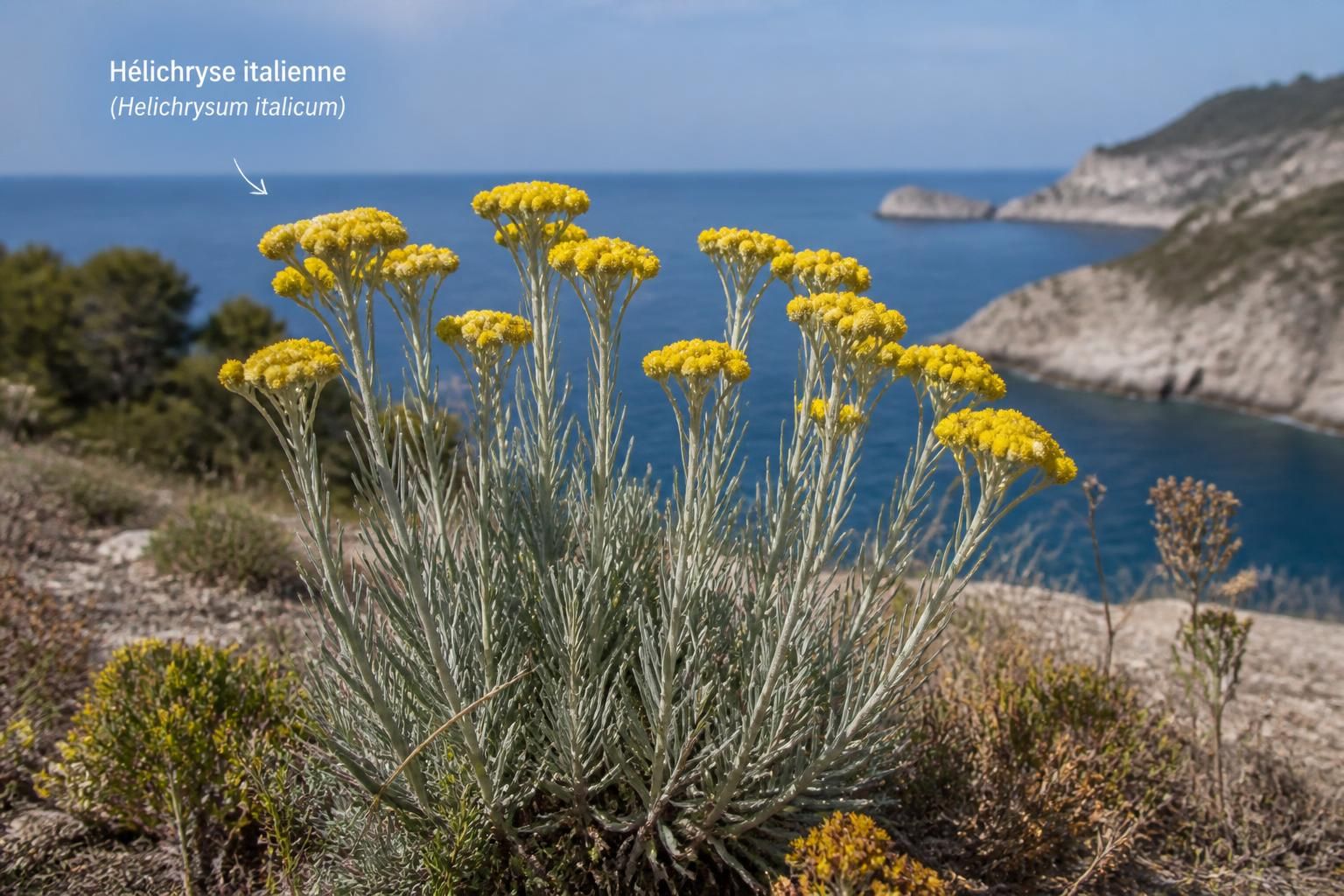
Side effects of Italian immortelle: what you really need to spot
The most frequent side effects concern the skin. In sensitive individuals, Italian immortelle may cause contact dermatitis, with redness, tingling, or burning sensation. Photosensitization also deserves attention: after application, the skin can become more reactive to the sun, like a window passing more heat than expected.
Digestive disorders mainly appear in case of excessive ingestion or poorly dosed preparation. Nausea, abdominal pain, and intestinal discomfort may then occur, reminding that an essential oil is not a simple home remedy. The warning signal is all the more important as certain drug interactions have been observed, notably with anticoagulants and treatments involving the liver.
In practice, it is better to observe the body as a dashboard: an unusual reaction is never a detail. The idea is not to scare, but to prevent small symptoms from becoming a real problem.
Signs not to trivialize during therapeutic use
The first signs are often easy to spot if attention is present. Skin that heats up, discomfort after application, or digestive upset should lead to stopping use. This reflex seems obvious, but is often neglected when a product is presented as natural and thus supposedly harmless.
- Skin irritations: redness, itching, localized burning
- Sensitivity to the sun: increased risk of sunburn after use
- Digestive discomfort: nausea, cramps, abdominal pain
- Possible interactions: disturbance of certain ongoing treatments
Contraindications of Italian immortelle: who should be extra cautious?
Contraindications are not technical details: they draw the line between thoughtful use and unnecessary risk-taking. Pregnant or breastfeeding women should avoid any use without medical advice, as well as young children, more vulnerable to essential oil toxicity. For people on anticoagulants, the matter is particularly sensitive, as an effect on blood clotting can complicate management.
A concrete example helps measure the issue: an adult accustomed to self-medication may multiply plant-based products without seeing the link between a persistent bruise and a drug interaction. Yet, in such a situation, the right reflex is to check each product as one would check the ingredients of a delicate recipe. This vigilance avoids many silent errors.
| Situation | Main risk | Recommended precaution |
|---|---|---|
| Pregnant and breastfeeding women | Potential side effects | No use without medical advice |
| Young children | Increased sensitivity and toxicity | Avoid pure essential oil |
| People on anticoagulants | Interaction with treatment | Seek professional advice |
| Sensitive or allergic skin | Local skin reaction | Perform a prior test |
Responsible phytotherapy: the precautions that make all the difference
The good news is that safer use is within reach. The first rule is to choose certified products, with clear origin and controlled quality, as poorly stored or dosed oil can increase risks. Then, the skin test on the forearm becomes a simple reflex: a small test area is better than a widespread reaction on the face or body.
The rhythm matters as much as the dose. A punctual, spaced, and monitored application is much more relevant than prolonged daily use, especially without guidance. In 2024, a clinical study showed that about 10% of patients who used the oil without medical supervision developed dermatological reactions, reminding that a popular product is not necessarily harmless.
To illustrate this logic, a hiker used to natural care can benefit from Italian immortelle on a small bruise, while avoiding continuous use after each outing. It is often in this sobriety that true effectiveness lies.
The right reflexes to adopt before any application
Some simple habits are enough to significantly reduce risks. They act like a seat belt in the world of medicinal plants: invisible when all goes well, essential as soon as an unexpected event occurs.
- Test tolerance on a small skin area before widespread use.
- Respect the doses indicated on the product or by a professional.
- Avoid sun exposure after local application.
- Limit duration of use to prevent accumulation.
- Seek advice in case of medication or sensitive conditions.
Can Italian immortelle cause skin allergy?
Yes, redness, itching or localized burning may appear in sensitive skin. A prior skin test is still recommended before wider use.
Who should avoid therapeutic use of Italian immortelle?
Pregnant women, young children, and people on anticoagulants should seek medical advice before use, as contraindications are real.
What are the most common side effects?
The main side effects concern skin irritations, photosensitization, and, in case of excessive ingestion, digestive disorders.
Can this miracle plant be used every day?
It is better to avoid prolonged daily use without supervision, to limit potential toxicity and undesirable reactions related to accumulation.


