
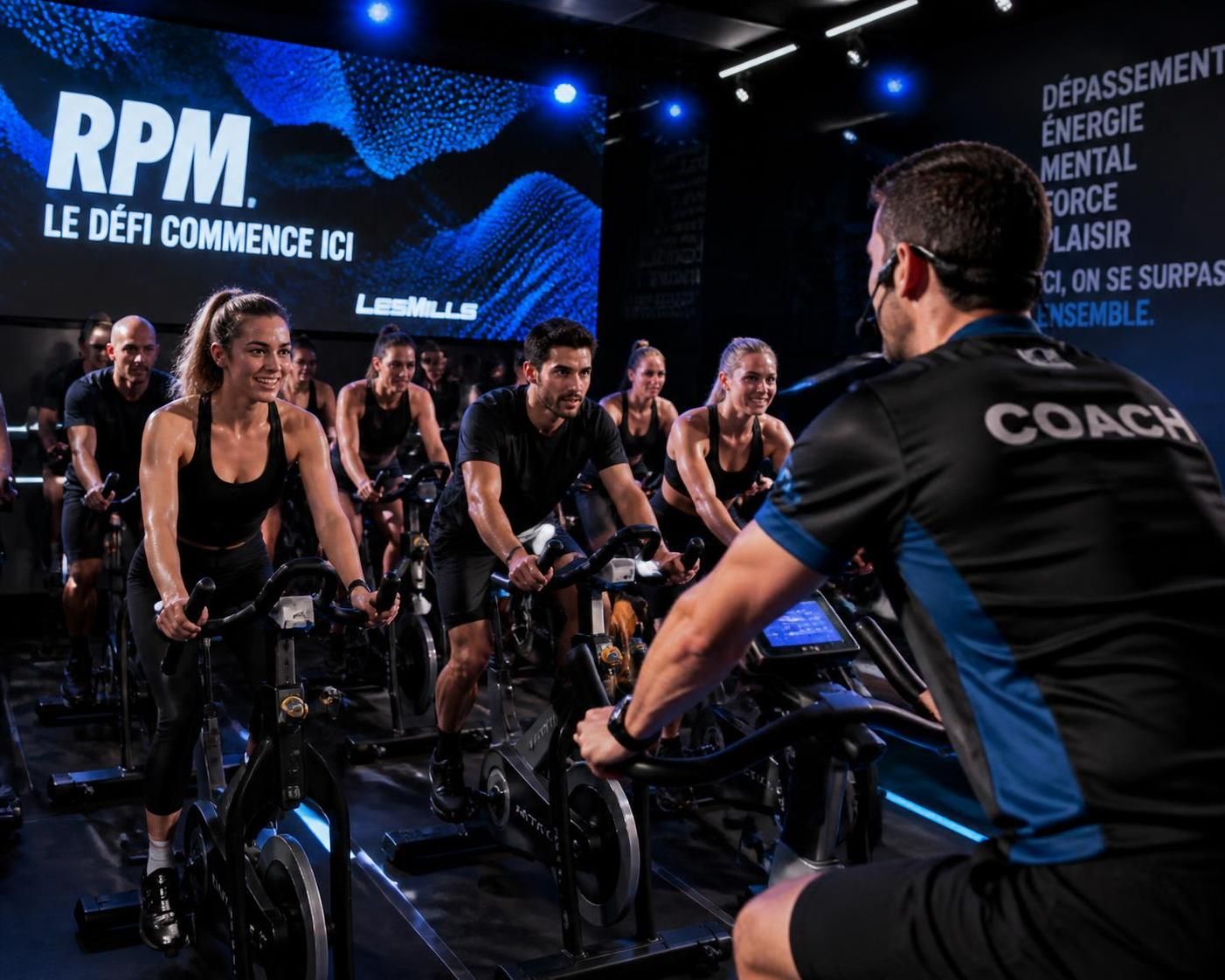
RPM establishes itself as one of the most convincing formats for those who want to combine intense fitness, efficiency, and enjoyment. On stationary bikes, sessions alternate accelerations, climbs, and recoveries, with a simple objective: to work the cardio, develop endurance, and strengthen the leg muscles without imposing the impact of other sports. This discipline attracts both busy individuals and regulars of cycling classes, as it offers clear progress, genuine collective motivation, and tangible results, notably in weight loss. This mix of rhythm, structure, and energy explains why RPM has enduring appeal.
The article in brief
RPM transforms an indoor cycling session into a rhythmic, guided, and highly effective experience. Between music, adjustable intensity, and group atmosphere, this format ticks many boxes for progressing without monotony.
- A reassuring framework: stable structure, progressive efforts, and clear landmarks
- Visible effects: cardio, endurance, and silhouette evolve quickly
- An accessible practice: everyone adjusts resistance and cadence to their level
- A complete training: legs, breathing, and motivation advance together
This format appeals because it makes effort clearer, more stimulating, and easier to maintain over time.
In gyms, RPM has found its place among a wide audience, far beyond just performance enthusiasts. Its secret lies in a simple idea: to reproduce the intensity of an outdoor bike ride, but in a secure, supervised, and predictable setting. For many, this changes everything, especially when days are busy and one is looking for a dynamic session that raises the breath without spending an hour hesitating. It’s a bit like following a marked road rather than cycling blindly: the effort remains demanding, but becomes clearer, therefore more motivating.
Why RPM Attracts So Many Intense Fitness Enthusiasts
RPM owes much to its very precise construction. Where some classes allow improvisation, this one offers a progression designed like a journey: warm-up, intensity peaks, active recoveries, then cooldown. This framework, popularized by Les Mills, gives participants clear landmarks and helps them measure their progress session after session. The playlists act as an emotional guiding thread: they support the effort when the legs start to weigh and turn sweat into an almost playful challenge.
This logic works especially well for those seeking concrete results without getting lost in overly complex programs. RPM offers a useful sense of control: resistance adjusts, cadence adapts, and everyone can raise or lower intensity according to their condition that day. In an era where people often want to reconcile everything, this is a major asset. The effort remains demanding, but it doesn’t crush progress, and that’s precisely what builds loyalty.
A Structure That Helps Maintain Effort
A typical session often lasts between 30 and 45 minutes, with a very codified sequence. This short format appeals to tight schedules, as it concentrates a lot of work in a reduced time. The warm-up gets the joints going, the central part multiplies climbs, sprints, and endurance phases, then the recovery gradually brings the body back to a comfortable rhythm.
This breakdown also reassures beginners, often more at ease when the effort is structured. A hypothetical participant, Nadia, resuming sport after a long break, can start with moderate resistance and progress without feeling overwhelmed. The implicit message is clear: it is not necessary to go fast to do well, above all it is essential to pedal with regularity and intelligence.
| Phase | Average Duration | Main Role | Perceived Intensity |
|---|---|---|---|
| Warm-up | 5 to 10 minutes | Prepare muscles and breathing | Low to moderate |
| Main block | 30 to 40 minutes | Work cardio and endurance | High but adjustable |
| Cooldown | 5 to 7 minutes | Lower the pace | Gentle |
This type of breakdown makes RPM a particularly readable training, almost like a musical score. And it is this readability that allows one to engage more fully in the effort, without feeling lost.
The Tangible Benefits on Body and Mind
The first noticeable effect often concerns cardio. Through repeated efforts and active recoveries, the heart learns to better handle intensity variations, which gradually improves the capacity to sustain intense activity. The legs work continuously: quadriceps, glutes, calves, and hips participate in the effort, which promotes genuine leg muscle building without heavy weights.
RPM also supports weight loss when integrated into a coherent routine. Depending on intensity, level, and body type, a session can mobilize significant energy expenditure, sometimes high, while providing an interesting post-effort effect for recovery. Additionally, there is a less visible but equally valuable benefit: the feeling of relaxation after the session, often enhanced by music and group work.
Why Results Come Quickly
Regular practitioners often notice more ease on the bike from the first weeks. Climbs seem shorter, sprints become more sustainable, and posture gains stability. It’s not magic: the body simply adapts to a repeatedly consistent signal, exactly like a hiker who finds their breath over successive outings.
Health professionals also remind that regular physical activity remains a major prevention lever. Official recommendations emphasize movement as a basis for well-being, just like appropriate dietary monitoring or sufficient sleep. This is also why readers interested in prevention, as seen in guidelines on interpreting certain health results, quickly understand that exercise is not just an aesthetic bonus: it contributes to overall balance.
Another point deserves attention: the mind. When a session is well led, the feeling of success can be very strong. RPM provides a framework to surpass oneself without constant comparison, which fosters lasting motivation. For a person coming out of a period of fatigue or demotivation, this effect often counts as much as caloric expenditure.
How to Succeed in Your First Session Without Tensing Up
The most common mistake during the first class is wanting to follow the group too quickly. However, RPM rewards accuracy more than ego. A properly adjusted saddle, handlebars at the right height, and steady breathing immediately change the experience. It’s better to start with reasonable resistance, observe your sensations, and let the body learn the mechanics of movement.
Material comfort also helps a lot: breathable clothing, a towel, and a water bottle are simple yet essential allies. This preparation may seem basic, but it avoids unnecessary distractions and allows focus on what matters: listening to the coach, adjusting intensity, and feeling your own rhythm. For some profiles, this approach resembles a return to basics, almost like mountain walking where every step counts more than speed.
- Adjust the bike correctly: saddle, handlebars, and posture must limit tension
- Start at moderate intensity: no need to copy the more experienced
- Drink regularly: hydration supports effort and recovery
- Observe your sensations: sustainable progression outweighs immediate performance
This logic of gradualness matches a simple rule: good training is the one you can repeat without exhausting yourself. That’s why RPM also appeals to people looking for a realistic routine compatible with an active life.
At What Pace to Practice to Progress Without Exhausting Yourself
For visible effects, regularity matters more than the number of sessions. Two to three appointments per week are often enough to improve endurance, refine silhouette, and strengthen leg tonicity. For those already complementing with yoga, brisk walking, or muscle strengthening, one or two sessions can already bring a real boost.
The appeal of RPM is precisely to fit into a simple weekly organization. A practitioner might, for example, reserve Monday for indoor cycling, keep Wednesday for active walking, and choose Saturday for a gentler class. This flexibility prevents the “all or nothing” effect, so often responsible for dropouts.
Combine Effort and Recovery
Nutrition plays a discreet yet crucial role. Before the session, a snack easy to digest, such as a banana or yogurt with oats, can help sustain effort. After the class, a source of protein combined with carbohydrates supports recovery, whether from a simple meal or a well-thought smoothie.
This attention given to the body’s fuel recalls a frequently forgotten idea: training is not limited to the session itself. Habits around sport count just as much. It’s a bit like preparing for a hike: without water, snacks, and rhythm, the outing quickly becomes arduous.
| Time | Goal | Simple Example |
|---|---|---|
| 1 to 2 hours before | Provide energy | Banana and almonds, or yogurt with oats |
| Within half an hour after | Support recovery | Protein smoothie, or meal with fish, rice, and vegetables |
Well nourished, well hydrated, and practiced with regularity, RPM becomes a lasting ally rather than a simple passing boost.
Group classes are not the only option. Some prefer training at home, with a home trainer, an appropriate playlist, and a serious video program. This formula offers more freedom, especially when schedules are tight. Conversely, the gym has a clear advantage: the group’s energy and the coach’s gaze often push one to go a bit further.
Choice therefore mainly depends on temperament. Those who enjoy social dynamics will feel carried by the collective atmosphere, while more autonomous profiles will appreciate the flexibility of home. In both cases, the guiding thread remains the same: precise work, measurable progress, and a practice that does not disrupt daily life.
To complement a cardio- and tonicity-oriented routine, some also combine with strengthening work like BodyPump or a very explosive cardio boxing class. The idea is not to pile up disciplines but to build a coherent balance, adapted to level, recovery, and current objectives. It is often here that activity becomes truly sustainable: when it integrates into life instead of complicating it.
Is RPM Suitable for Beginners?
Yes, because intensity is individually adjustable. A beginner can reduce resistance, slow the cadence, and progress session after session without difficulty.
How Many Calories Can Be Burned During a Class?
The expenditure varies depending on intensity, body type, and sporting habit, but a session can mobilize significant energy expenditure. RPM is often chosen for its effectiveness on weight loss.
Does RPM Damage the Joints?
No, the format is low impact, making it gentler on knees and hips than some running activities. However, bike adjustment and posture quality remain essential.
Should It Be Practiced Several Times a Week?
Two to three weekly sessions are often enough to see progress in endurance, tonicity, and breathing. Regularity matters more than the accumulation of classes.


