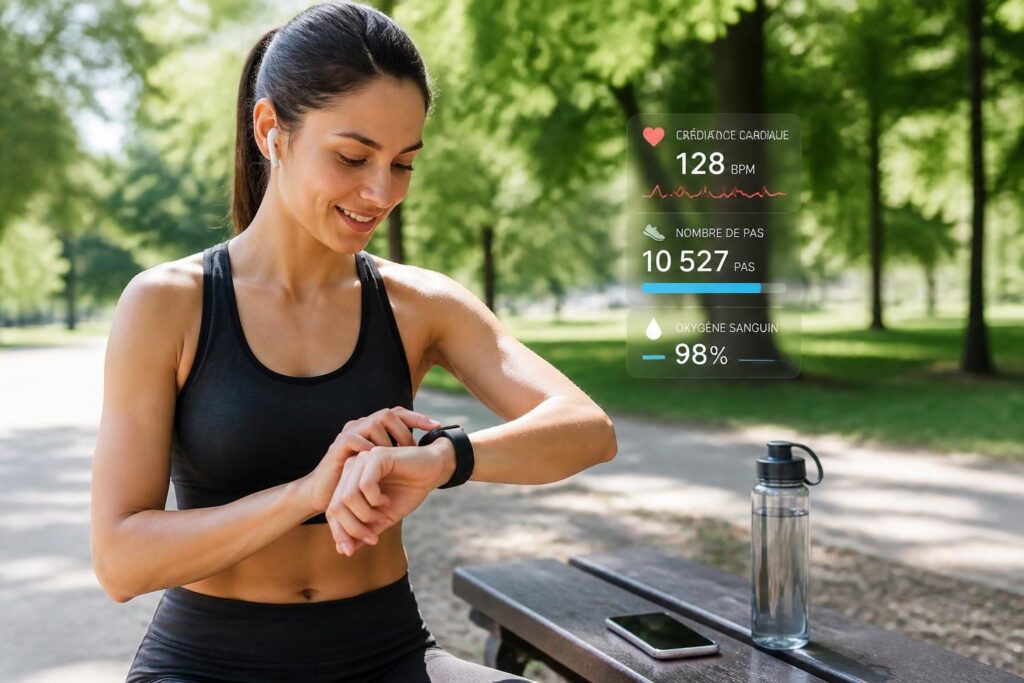
Measuring your fitness index is no longer just about stepping on a scale or counting your steps. In 2026, the challenge is broader: connecting physical health, energy, recovery, and quality of life to better manage your well-being daily. Between simple home tests, data from smartwatches, and validated benchmarks, health assessment becomes a true ally of daily fitness.
The article in brief
A good physical fitness benchmark is not limited to weight or appearance. It relies on several concrete, easy-to-observe signals to better understand one’s fitness level and adjust healthy habits.
- Read the right indicators: endurance, strength, flexibility, and recovery provide a complete picture
- Test without hesitation: a few simple tests are enough to track progress
- Use the right tools: watches, apps, and sensors refine health monitoring
- Move forward sustainably: regular routines support physical condition
By combining simple observations and reliable data, it becomes easier to assess physical health without getting lost in numbers.
The real question is not whether the body “looks fit,” but if it functions well daily. A person able to climb stairs without shortness of breath, recover after a brisk walk, and sleep properly already has very telling benchmarks. This is precisely the logic illustrated by the approach popularized by Peter Attia: thinking longevity as a sum of concrete capabilities, not just as a simple addition of years.
This vision resonates with many readers because it is realistic. A past experience in mutual insurance often reminded us: many confused prevention and curative care, whereas regular monitoring can avoid waiting for the alarm signal. At the daily level, the idea remains simple: observe, measure, adjust, then repeat. This is where physical activity becomes a lever for sustainable health, not a one-time constraint.
A guiding thread can help make all this concrete: let’s imagine Camille, 44 years old, who wants to better understand her recurring fatigue. She doesn’t need a laboratory to start. A few tests, a logbook, and paying attention to sleep are already enough to sketch a first portrait of her physical condition.
Reading your fitness index without misinterpreting the useful signals
The fitness index should not be confused with a single number. It is built from several complementary dimensions: cardiovascular endurance, muscular strength, flexibility, balance, body composition, and recovery quality. It’s a bit like a car dashboard: a single warning light is not enough to say if everything is working well.
Public health professionals regularly remind us that regular activity reduces the risk of many chronic diseases. In practice, this means looking beyond aesthetics. An increasing waist circumference, persistent fatigue, or unusual shortness of breath deserve as much attention as a lack of athletic performance. To go further on dietary balance, content such as lentils in a balanced diet or the role of fromage blanc during the day can also shed light on the relationship between energy and healthy habits.
Conversely, focusing only on weight can cloud the diagnosis. A muscular person may show a “too high” BMI without being unhealthy, while a slim profile may lack muscle mass or recovery. That’s why a good physical health benchmark must be multi-criteria and observe trends, not just a snapshot.
The dimensions that really tell the story of physical fitness
Four major markers often come up in health assessment: endurance, strength, flexibility, and body composition. They are not used to “rate” a person but to identify what needs to be maintained or strengthened. In a busy daily life, these often explain why climbing stairs seems easy one day and difficult the next.
- Cardiovascular endurance: ability to sustain moderate effort longer
- Muscular strength: ability to produce effort to carry, push, pull
- Flexibility: range of motion without unnecessary discomfort
- Body composition: balance between fat mass and lean mass
These markers also help better interpret sensations. When endurance decreases, the heart and lungs “work with a brake,” to use a simple image. When flexibility is lacking, the body compensates, and compensations open the door to pain. The good reflex is therefore to link symptoms to concrete capacities, not just appearance.
From this perspective, one useful fact to remember is that waist circumference remains a very telling marker of cardiometabolic risk. It often reflects abdominal fat load more than total weight. It is one of the simplest indices to monitor in a routine health tracking.
Practical tests to monitor your physical health at home
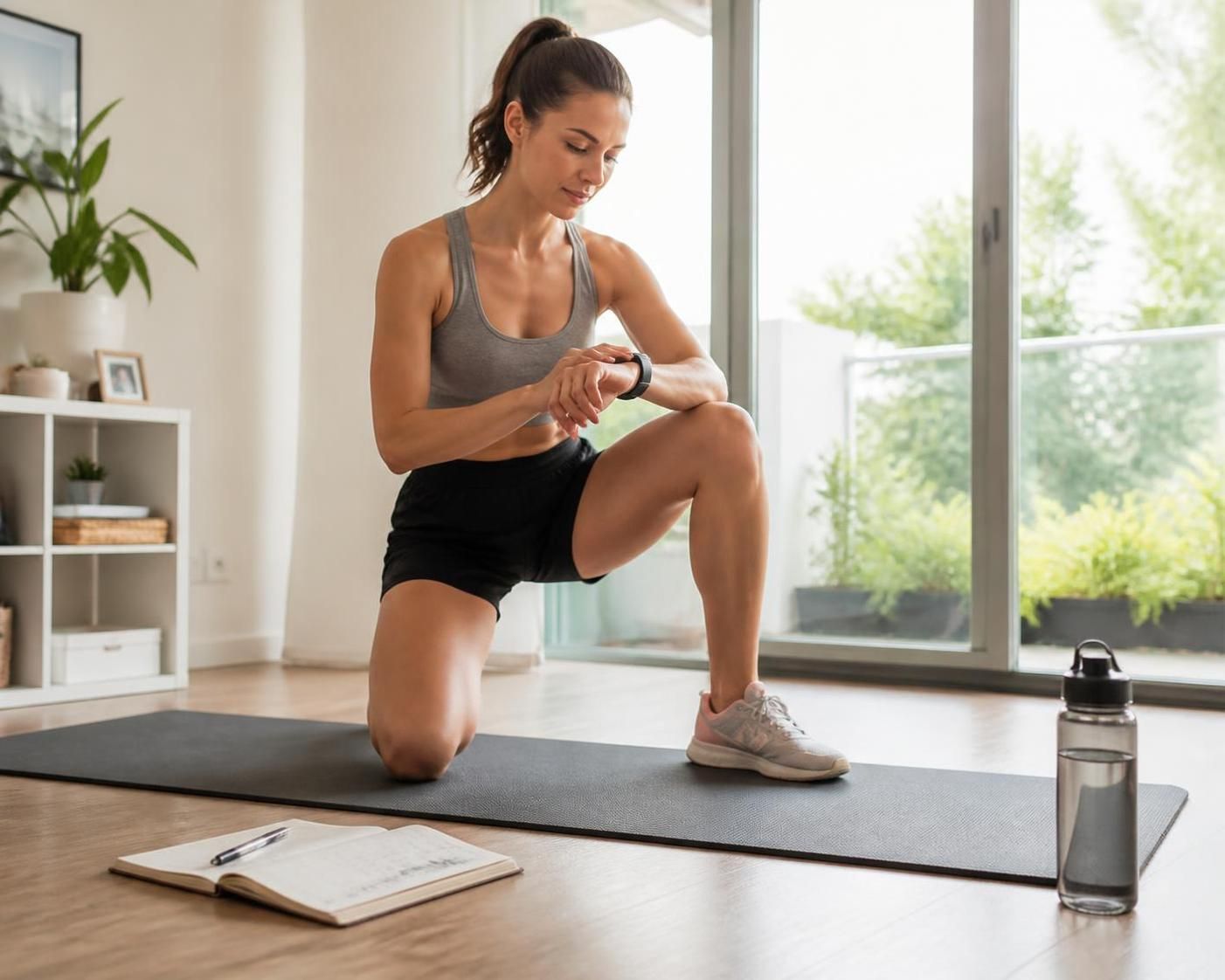
Simple tests have a decisive advantage: they make progress visible. No need for sophisticated equipment to start, especially when the goal is to obtain an honest snapshot of your starting level. Camille can, for example, choose a quiet moment, always similar, to compare results over time and avoid variations related to fatigue or stress.
Before testing, a few conditions make a difference: be hydrated, have slept well, avoid intense effort the day before, and record results in the same circumstances. This rigor changes everything. The same test performed after a bad night or after a heavy meal tells a different story. This is also why regularity matters more than perfection.
A simple table to compare useful benchmarks
Here is a clear overview of measurements often used to position your fitness. The goal is not to compare at any cost, but to understand where to focus effort.
| Benchmark | What it measures | What it can reveal |
|---|---|---|
| Resting heart rate | Heart efficiency during calm periods | General endurance and recovery |
| Plank test | Core strength | Stability, posture, pain prevention |
| 12-minute walking or running test | Aerobic capacity | Endurance level and breath |
| Seated flexibility test | Mobility of the posterior chain | Movement ease and risk of stiffness |
In real life, these benchmarks are telling. A resting heart rate that gradually lowers, better core endurance, or a longer distance in 12 minutes indicate positive adaptation. This kind of progress motivates because it is observable without complicated interpretation.
For those who want to refine their analysis, an annual health check-up complements this approach very well. And when sleep seems disturbed, an article on sleep apnea diagnosis can also help understand why recovery does not always follow the effort provided.
Connected tools that make health monitoring more accurate
Sports watch, connected bracelet, or smart scale: these tools do not replace sensations but illuminate them. In 2026, data on sleep, heart rate, or training load have become more accessible, making daily fitness smarter. Still, you have to know how to read them as trends, not as verdicts.
The most useful devices are often those you can forget on your wrist while still retrieving reliable indicators. Garmin helps a lot for effort, Oura for recovery, Fitbit for overall activity, while brands like Withings make monitoring weight, heart rate, and sleep very simple. What counts is not the object itself but the ability to link data to a concrete decision: lighten a session, walk more, or sleep earlier.
Combine data with feelings to avoid false good plans
A good follow-up does not push to always do more. It helps you do better. If one night of sleep is bad, the next day’s training can be lightened. If resting heart rate rises for several days, it is better to slow down than force. This logic prevents fatigue spirals that ruin progress.
Some readers also appreciate nutritional apps, especially when they cross-reference energy expenditure with meals of the day. Content on pasta calories and good benchmarks or on breakfasts adapted for diabetes can enrich this approach because physical fitness also depends on what the body receives to recover.
Data is useful only if it serves a lasting habit. Without this caution, technology can quickly become a source of pressure. When used well, it becomes, on the contrary, a discreet but effective compass.
When technology confirms what the body already tells
For some people, the numbers confirm an impression felt for weeks. Persistent fatigue, fragmented sleep, slow recovery: sensors sometimes highlight an imbalance before it becomes obvious. Conversely, when nights improve, resting heart rate lowers, and energy rises, the body validates the right choices.
This coherence between sensation and measurement is precious. It reminds us that physical health is not a battle against the body, but a daily collaboration. Connected tools never replace self-listening; they simply give it more depth.
Healthy habits and useful exercises to improve physical condition
A good assessment only serves if it leads to concrete actions. Ideally, build a balanced routine between cardio, strengthening, and mobility. Three sessions per week already constitute a solid base, especially if they remain realistic and compatible with family or professional life.
Camille can, for example, alternate a brisk walk, a circuit of squats and push-ups, then a yoga or stretching session. This mix avoids boredom and stimulates different capacities. It is also a smart way to progress without multiplying pain. Over time, consistency almost always beats irregular intensity.
A simple progression that respects the body
The body adapts better when effort increases in small steps. Starting with 30 minutes, then slightly lengthening duration or intensity, yields better results than an overly ambitious start. The key remains the same: listen to signals, especially joint pain, unusual fatigue, or too slow recovery.
To nurture this progression, the quality of diet counts as much as the session itself. Some simple benchmarks, like better dosing bread daily with tips on bread consumption or choosing easy-to-integrate vegetables like green beans, help support effort without unnecessary complexity.
This approach works because it is grounded in reality. It does not require a radical transformation, but a series of repeated choices. And it is precisely these small acts that, added together, change the trajectory of health.
The list of gestures that really make a difference
Some reflexes sustainably support physical fitness, even without a sophisticated program:
- Walk every day: maintains endurance without overloading the body
- Strengthen the core: improves posture and overall stability
- Preserve mobility: limits stiffness and compensations
- Sleep enough: promotes recovery and next-day energy
- Adapt effort: avoids injuries and discouragement
These gestures seem modest, but their cumulative effect is powerful. They lay the foundation for lasting well-being without unnecessary pressure. This is often where true progress begins.
Understand your results and adjust your pace without getting discouraged
Progress does not always follow a straight line. Some days, breath is better; others, sleep or stress blur benchmarks. That’s normal. The essential thing is to look at the general trend over several weeks, not the performance of a single morning.
The most useful results are those that allow action. Slow recovery can lead to lightening intensity. A decline in flexibility can steer toward more mobility. Marked shortness of breath can encourage returning to gentle endurance before considering a more sustained effort. This logic avoids confusing ambition with haste.
In real life, motivation often comes down to little things: seeing that you are progressing, even slightly. Better sleep, smoother walking, or less stiff posture already constitute very concrete victories. The body speaks, but you have to give it time to respond.
For some readers, linking activity to daily life also passes through diet and small domestic habits. Topics like cooked rice calories or kiwi benefits may seem far from training but help build overall coherence, essential for stable results.
How can I really know if my fitness level is progressing?
The most useful thing is to compare the same tests under similar conditions over several weeks: resting heart rate, endurance, core strength, or flexibility. The trend matters more than an isolated measurement.
Is it absolutely necessary to use a connected watch?
No, a tracking journal is enough to start. Connected devices provide more precision, but regular observation and feelings are already very effective.
What signs should alert about physical health?
Unusual shortness of breath, persistent fatigue, disturbed sleep, or very slow recovery deserve to be taken seriously. These signals often indicate that an adjustment is necessary.
How many sessions per week to maintain physical condition?
Three weekly sessions constitute a solid base if they mix cardio, strengthening, and mobility. Regularity is more important than the toughness of sessions.
Can physical fitness be improved at any age?
Yes, provided that efforts are adapted to the starting level and progress gradually. The body often responds very well to healthy habits repeated over time.


