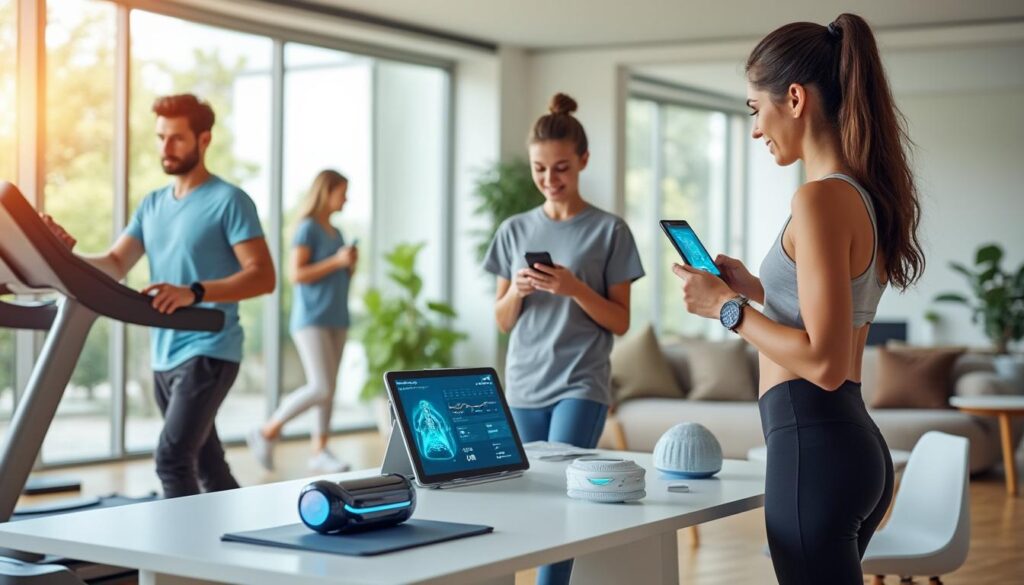
Health innovations are radically transforming our daily lives by offering ever more integrated and personalized solutions. From telemedicine to connected devices and artificial intelligence, these advances facilitate access to care, improve prevention, and optimize quality of life. At the same time, the rise of digital health invites patients and professionals to rethink together the relationship to well-being, better understand tomorrow’s challenges, and seize the opportunities offered. Let’s explore the new trends shaping this silent revolution.
🕒 The article in brief
Dive into the world of health innovations that reinvent well-being through innovative medical technologies.
- ✅ Digital revolution in health: connected health improves access and personalization of care
- ✅ Innovative medical technologies: telemedicine and AI facilitate diagnosis and treatments
- ✅ Enhanced prevention: connected devices monitor health in real time
- ✅ Everyday quality of life: micro-habits and digital solutions simplify best practices
📌 These new solutions outline a future where technology and humanity converge for sustainable well-being.
Digital health: an open door to personalized and accessible care
The concept of digital health has established itself as a true silent revolution in the transformation of care. It is not just about adopting new technologies, but about completely rethinking the way patients interact with the healthcare system. The digitization of consultations via telemedicine, the intelligent use of health data, and wearable connected devices come to redefine the medical experience by making it smoother, faster, and adapted to each profile.
With the increase in chronic diseases and the aging population, traditional medicine alone proves insufficient. Digital health meets this need by facilitating continuous monitoring, proactive prevention, and providing equitable access to care, even for residents of rural or isolated areas. For example, thanks to specialized mobile applications, it is possible to share health data in real time with one’s doctor, thus allowing quick adjustment of treatments long before symptoms worsen.
This change is all the more crucial in France, where the acceleration strategy « Santé numérique » as part of France 2030 aims to financially and logistically support the development of these innovations to strengthen the performance of the healthcare system. Indeed, 65 winning projects concretely demonstrate the collective ambition to promote more connected and participatory medicine. This movement goes beyond a mere clinical benefit: it also improves patient autonomy by involving them more in their care journey.
By combining the integration of new technologies and individual responsibility, digital health is poised to address two major challenges: reducing inequalities in access to care and finely personalizing treatments. This progress relies on powerful tools, notably artificial intelligence algorithms capable of detecting medical anomalies with remarkable precision, as in some medical imaging diagnostics.
Medical technologies redefining prevention and disease management
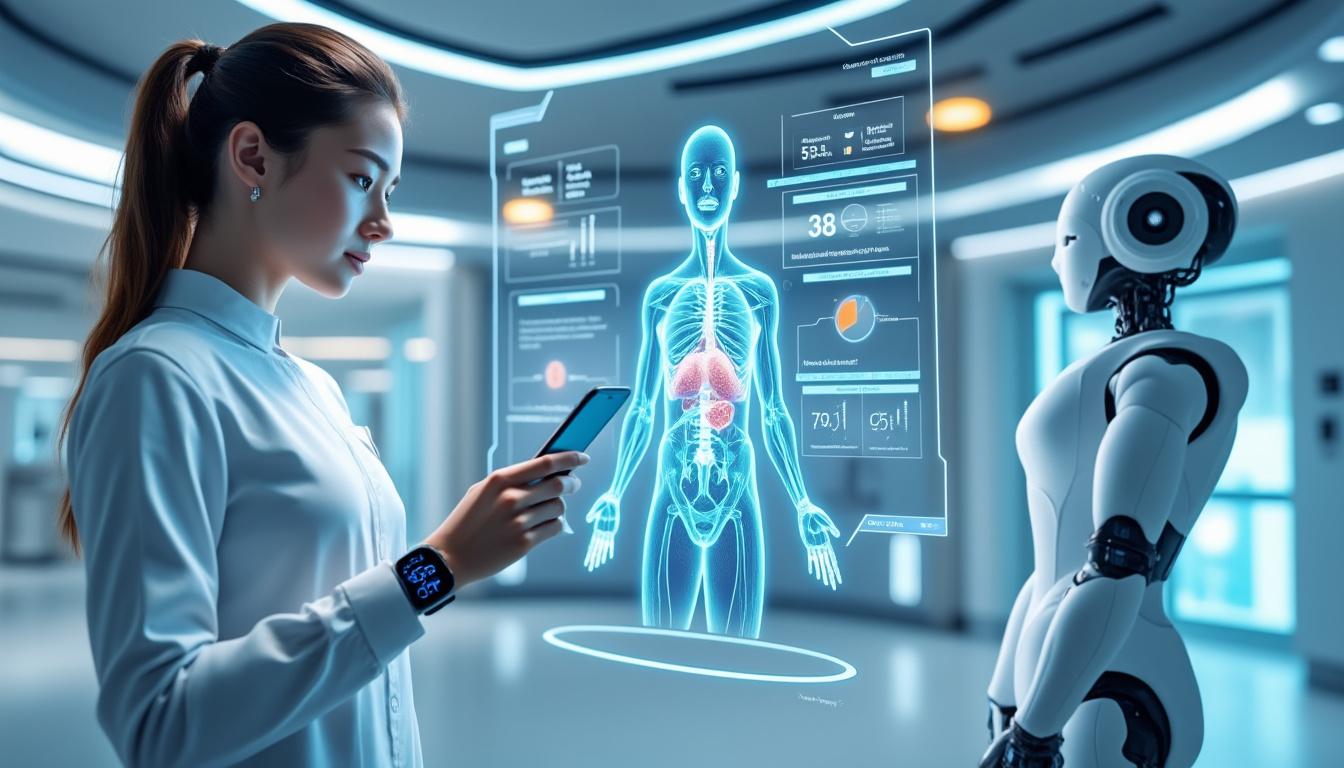
Among the remarkable health innovations, the rise of connected devices and artificial intelligence is significantly transforming the prevention and monitoring of diseases. These technologies ensure continuous monitoring of vital parameters, making rapid intervention possible in case of detected anomalies, which can save lives or limit severe complications.
Telemedicine, for its part, democratizes access to consultations. In 2024, the demand for these remote consultations exploded, notably thanks to the facilitated communication between patients and specialists at a distance. This effect is particularly beneficial in rural areas, where travel often hinders the quality and regularity of care.
Connected watches, health bracelets, or implantable sensors collect a multitude of data such as heart rate, sleep quality, or even glucose levels. This passive collection allows personalized monitoring, helping to prevent complications, especially for chronic diseases such as diabetes or cardiovascular disorders.
A summary table of the main technologies and their benefits highlights their direct contribution to daily health management:
| Technology 🛠️ | Key functionality 📋 | Health impact ⚕️ | Usage example 💡 |
|---|---|---|---|
| Artificial Intelligence | Fast and precise diagnosis | Reduction of medical errors | Image analysis for cancer screening |
| Telemedicine | Remote consultations | Increased accessibility to care | Specialized consultation in rural areas |
| Connected objects | Continuous monitoring of vital parameters | Prevention of complications | Smartwatches monitoring heart rate |
| Medical robotics | Operative and logistic assistance | Improvement in quality of care | Surgical robots in the operating room |
The deployment of these solutions has a major objective: encouraging more active prevention and promoting more rigorous monitoring. For example, integrating data collected by devices into an electronic medical record allows precise and continuous monitoring, giving healthcare professionals the tools to better anticipate therapeutic needs.
Initiatives like those detailed on health technological advances describe the importance of this alliance between technology and medicine, highlighting its central role in the sustainable improvement of public health.
The growing role of telemedicine in improving daily well-being
Telemedicine has become an essential pillar of new solutions for daily well-being. By removing geographical constraints, it facilitates regular monitoring and quick consultations, while lightening traditional healthcare systems. This phenomenon makes perfect sense in a context where travel can be difficult for elderly or mobility-impaired individuals.
Beyond mere consultation, telemedicine now integrates into a global care pathway via secure digital platforms. These tools offer a user-friendly interface where patients can view their results, schedule appointments, or communicate directly with their medical team. The proliferation of these uses encourages better health management, prevents complications, and greatly increases quality of life.
To go further, innovative solutions combine telemedicine with augmented reality to enhance diagnostic precision. For example, some practitioners use visual devices to remotely guide simple exams or interventions, thus extending the reach of care provided without travel.
The social dimension is also important: patient groups can meet virtually around their pathologies, sharing advice and support, aided by professionals. This digital ecosystem promotes a participatory dynamic where mental and physical well-being progress hand in hand.
Patients thereby gain confidence and autonomy, contributing to better adherence to treatments and a proactive attitude toward their own health. This support model fits perfectly with France’s desire to move toward a more human, inclusive, and technological medicine.
Micro-habits and nutritional innovations: boosting health within everyone’s reach
The digital transformation of well-being is not limited to medical care. Recent studies highlight the importance of micro-habits to strengthen the immune system and improve quality of life. These simple, repeatable daily actions can play a major role in preventing some diseases and maintaining lasting balance.
Among the most effective micro-habits, we notably retain:
- 🧘♀️ Breathe deeply through five full cycles before each stressful task
- 💧 Drink a glass of water upon waking to rehydrate the body and activate metabolism
- ☀️ Expose yourself to natural light for ten minutes in the morning to regulate your biological rhythm
- 🚶♂️ Take a 1-minute mobility break every hour during sedentary periods
These routines, based on brain plasticity, facilitate the sustainable adoption of a healthier lifestyle. They limit excessive cortisol production, a hormone that can weaken immune defenses, while stimulating lymphatic circulation essential for protection against infections.
At the same time, nutritional innovations are increasingly integrating artificial intelligence to tailor dietary advice to each profile. The NutriAI application developed by the MIT Media Lab is a remarkable example: it analyzes a photo of your meal to recommend personalized probiotics, positively influencing the gut microbiome, a key player in overall health.
Moreover, local experiments, such as those conducted by INRAE in Dijon, show that foods enriched with prebiotic fibers, like certain yogurts, contribute to weight loss and improved glucose metabolism. The development of these solutions available in major retail promises to democratize targeted nutrition serving well-being.
Consulting advances around health insurance and innovations also allows understanding the forthcoming integration of these practices into a global framework of personalized prevention and follow-up.
Health innovations: how new solutions transform daily well-being
Explore how micro-habits, artificial intelligence in nutrition, connected objects, and active breaks improve your health every day.
Micro-habits for daily health
- Small repeated gestures: take 3 deep breaths several times a day.
- Progressive reinforcement: add 2 minutes of stretching after each waking.
- Simple rewards: note a success in a daily logbook.
These easy-to-integrate habits promote lasting well-being without overloading your schedule.
Innovations in nutrition with artificial intelligence
AI now allows personalized nutrition by analyzing your precise habits and needs. Examples of free applications without API key:
- Adaptive menu recommendations according to health goals.
- Instant nutritional analysis by food photo.
The benefits of wearable technologies
- Continuous monitoring: measurement of heart rate, sleep quality, stress.
- Motivation: personalized reminders to move and drink water.
- Analysis: correlation of physical activities and overall health.
These smart devices encourage a more active and conscious lifestyle.
The benefits of hydration and active breaks
Staying adequately hydrated and integrating short movement breaks increase concentration and reduce fatigue:
- Drink 1 glass of water every hour.
- Get up and walk for 5 minutes every 45 minutes.
- Do simple stretches to counteract sedentary behavior.
Innovations serving better mental hygiene and enhanced quality of life
Mental well-being now takes a central place in health innovations. The health crisis highlighted the weaknesses of traditional care systems and boosted the development of digital solutions in mental health. Immersive technologies such as virtual reality now offer relaxation spaces and innovative therapies to manage stress, anxiety, or depression.
For example, Dreamquark collaborates with the Institut Pasteur to develop anti-stress sessions in virtual reality, promoting deep relaxation. At the same time, the immersive sound therapy method tested at the Philharmonie de Paris uses the vibrations of Tibetan bowls diffused in 360° for a calming and beneficial experience on the nervous system.
Specialized mobile applications integrate heart rate variability (HRV) tracking techniques, revealing psychological and physiological states. This measurement helps users better manage their emotions and adopt behaviors conducive to better quality of life.
These digital tools, when combined with ancient practices like cardiac coherence or meditation, create a bridge between traditional knowledge and modern innovations. This synergy sustainably enhances resilience to stress, a factor known to negatively affect physical health.
The observed benefits are tangible: reduced sleep onset time, improved sleep quality, and increased daily productivity. The global approach to well-being must thus incorporate mental health as much as the physical aspect, with digital technologies as privileged allies.
What are the main advantages of telemedicine?
Telemedicine facilitates access to care, reduces travel, and allows regular follow-up, particularly beneficial for isolated people or those with reduced mobility.
How do connected devices improve prevention?
Connected objects enable continuous monitoring of health parameters, promoting early detection of anomalies and rapid intervention.
What micro-habits should one adopt to strengthen immunity?
Deep breathing, hydrating in the morning, exposure to natural light, and taking mobility breaks are simple gestures to naturally boost the immune system.
Is artificial intelligence reliable in the medical field?
AI used in health is based on large validated datasets, improving diagnosis accuracy and treatment personalization, but they always complement human expertise.
How to ensure the security of digital health data?
The protection of personal data is paramount, with strict regulations and advanced encryption technologies to prevent any unauthorized use.


