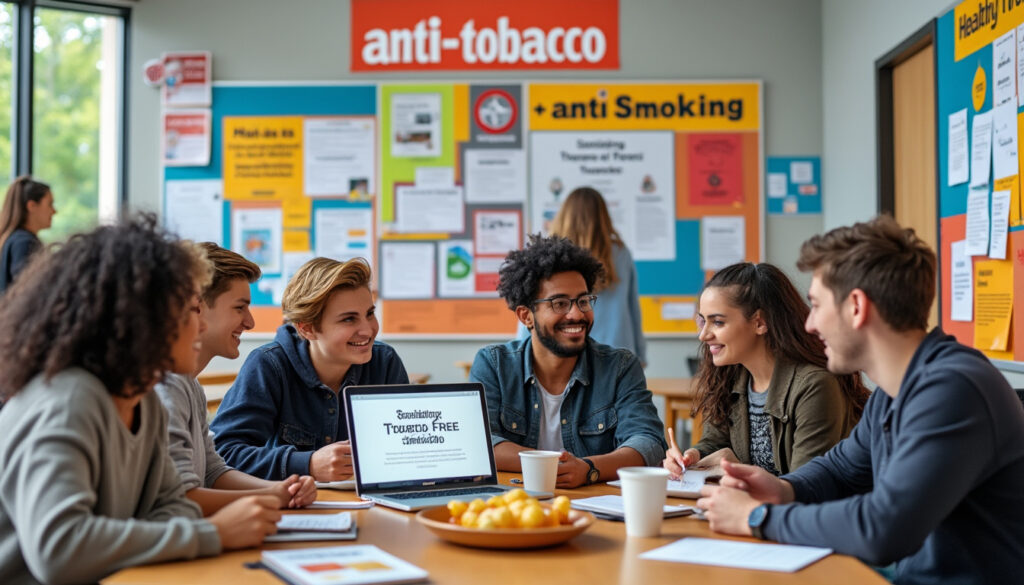
Against the backdrop of a national fight against tobacco aiming for a “tobacco-free generation” by 2032, French students are energetically mobilizing in their institutions. Faced with stagnation, or even a slight increase, in smoking among 15-24-year-olds, collectives such as “Students Working Against Tobacco” are innovating to create campuses where public health is a priority. Through dynamic anti-tobacco campaigns, original prevention actions, and strong partnerships, these young people are building a concrete commitment movement to reduce tobacco addiction within universities and schools.
🕒 The article in brief
A vibrant overview of student initiatives committed to fighting tobacco, combining scientific rigor and creativity to change health habits on campuses.
- ✅ Dynamic student mobilization: diverse groups and actions to raise awareness and take action
- ✅ Specific risks: impact of tobacco on young people’s brains and hearts
- ✅ Concrete measures: workshops, podcasts, tobacco-free spaces in universities
- ✅ Essential partnerships: collaboration between associations and public institutions
📌 A student commitment illustrating the power of the collective to sustainably change tobacco prevention.
Evolution of smoking among young people: the crucial role of engaged students
In 2026, nearly 24% of young people aged 18 to 24 smoke regularly, a proportion that remains worrying despite prevention efforts deployed over several years. Smoking among 15-17-year-olds is slightly increasing, rising from 19% in 2021 to about 21%, confirming that this age group is particularly vulnerable. This observation is not just a number: it reflects a complex reality influenced by academic stress, social pressure, and easy access to nicotine products, now available in diverse forms, including electronic inhalers or nicotine pouches without combustion. In this context, more and more students are mobilizing to reverse the trend in their institutions.
The group Students Working Against Tobacco, created in 2023, embodies this new will. By combining scientific data from Santé publique France and expert analyses, this collective adapts its messages and actions to realities experienced on the ground. Their approach is not limited to simply denouncing tobacco: it also includes a caring approach, based on understanding addiction mechanisms and the challenges of student life.
Various factors amplify risks for young smokers. Exam stress acts as a trigger for addiction, as nicotine provides a temporary sensation of calm and concentration. Moreover, peer influence and the normalization of tobacco in certain circles hinder quitting attempts. In some institutions, urban anonymity also facilitates discreet consumption. These elements explain why it is essential to encourage active student involvement in prevention actions integrated into school and social rhythms.
A concrete example: writing and forum theater workshops stage the experiences of students affected by tobacco. These formats allow open dialogue about tobacco’s effects, difficulties encountered in quitting, and the collective construction of alternatives. They also help build social resistance against the tobacco industry and its marketing strategies. This type of mobilization demonstrates that change happens better through shared action than through adult or health authority prescription alone.
Student initiatives and innovations: transforming campuses into tobacco-free spaces
On French campuses, the growing establishment of “tobacco-free campuses” relies heavily on student initiative. In these spaces, smoking and vaping are strictly prohibited, whether inside buildings or in outdoor areas. This ban aims to provide users with a healthy environment while encouraging smokers to reduce or stop their consumption. Since 2023, this measure has been integrated into the National Tobacco Control Program, recognizing its impact on public health.
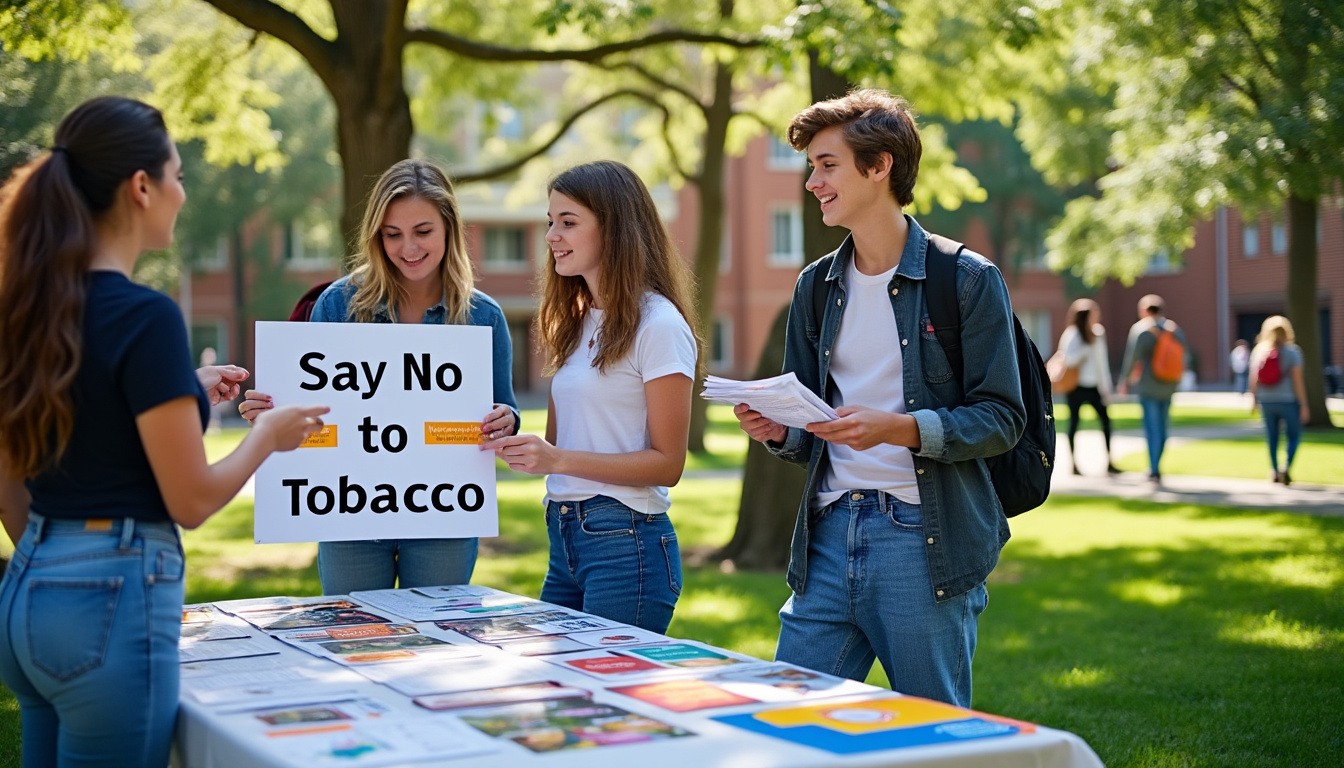
Students, particularly through collectives like Students Working Against Tobacco, actively participate in setting up and promoting these spaces. Notable actions include:
- 🎭 Forum theater workshops: These interactive sessions help explore motivations and obstacles around tobacco.
- 🎙️ Podcast creation: Testimonials from young people undergoing cessation journeys are broadcast on university networks, enhancing peer identification.
- 🧘 Stress management workshops (yoga, sophrology) to provide alternatives to cigarettes as a means of relaxation.
- 📚 Awareness stands and educational resources: in collaboration with Tabac Info Service, INPES, and CNCT.
These actions are not merely symbolic: they record significant results. For example, nicotine-free sports challenges attract more and more participants, marking a renewed focus on a healthy lifestyle. In Bordeaux, a 35% increase in registrations for these events has been noted, a sign of genuine collective awareness.
Another important lever is the “collaborative wall” conceived in Lyon, where each student displays their personal commitment against tobacco. This emotional approach is part of a broader relational medicine strategy, promoting listening, mutual support, and young people’s responsibility towards their health. This model facilitates the transition from the traditional prescriptive message to a co-constructed message carried and disseminated by peers themselves.
| 🏫 Student Initiative | 📍 Campus | 📊 Impact Indicator |
|---|---|---|
| Interactive forum theater | University of Lyon | 82% satisfaction |
| Cessation podcasts | University of Strasbourg | 6,000 listeners in 1 month |
| Nicotine-free sports challenges | University of Bordeaux | +35% registrations |
Impact of tobacco on young people’s health: neurology and cardiovascular system at risk
Beyond the image often associated with tobacco, its physiological effects on the brains and hearts of young people are alarming. Nicotine disrupts the development of the prefrontal cortex, a brain region involved in emotion regulation, decision-making, and impulse control. In adolescents, this aggression on the central nervous system leads to increased vulnerability to addiction and a negative impact on concentration and memory.
Regarding the heart, recent studies confirm a direct link between early smoking and cardiovascular disorders. Young smokers see their resting heart rate increase by 9 to 13 beats per minute on average. This phenomenon favors the occurrence of arrhythmias and increases the risks of high blood pressure and atherosclerosis from early adulthood. Tragic cases of heart attacks at 25 years old, documented by the French Federation of Cardiology, illustrate the severity of these effects.
Immediate symptoms in young smokers notably include tachycardia, dizziness, and nausea. In the longer term, cognitive deficits, reduced respiratory capacity, and a general weakening of the immune system are observed. These multiple consequences reflect the need for early and appropriate action.
| ⚠️ Type of Effect | 📝 Description | 👥 Affected Groups |
|---|---|---|
| Tachycardia | Resting heart rate > 100 bpm | 15-19 years |
| Cognitive deficits | Decreased attention and memory disorders | 18-24 years |
| Reduced VO₂ max | Decreased lung performance | 20-30 years |
Understanding these effects helps to more precisely guide anti-tobacco campaigns intended for young people. For example, incorporating workshops on emotion management and cardiovascular risk prevention proves essential in public health programs. Collaboration with health professionals, such as addiction nurses available in consultations, enriches these initiatives with appropriate and personalized advice.
Major partnerships for effective prevention in educational institutions
The success of actions led by students relies on a solid network of partnerships between public institutions, specialized associations, and university actors. Key contributors include Tabac Info Service, La Ligue contre le cancer, the Foundation against Tobacco, the Alliance Against Tobacco, the French Red Cross, and youth prevention programs such as Prévention Tabac Jeunes.
Each actor plays a complementary role:
- 📞 Tabac Info Service: provides a free support platform accessible 24/7.
- 💉 La Ligue contre le cancer: psychological support, funding studies, and organizing roundtables.
- 📚 INPES (Santé publique France): offers educational kits and guides adapted to student audiences.
- 🩺 French Red Cross: first aid training and stress management workshops.
- 🤝 Prévention Tabac Jeunes: conducts field campaigns and mobile information stands.
These collaborations increase message visibility, pool resources, and ensure support tailored to students’ actual needs. For example, the Student Mutual funds the training of student ambassadors who relay the message and assist their peers in the quitting process.
The table below summarizes the main actors and their resources:
| 🏢 Organization | 🎯 Role | 📦 Available Resources |
|---|---|---|
| Tabac Info Service | Personalized support | Phone & web platform 24/7 |
| La Ligue contre le cancer | Psychological support & funding | Funding, studies, events |
| Foundation against Tobacco | Calls for prevention projects | Dedicated grants |
| French Red Cross | First aid training | Stroke alert modules, stress workshops |
| INPES (Santé publique France) | Educational resources | Guides, toolkits |
How students engage against tobacco in their institution
Explore the key steps of a tobacco-free campus, where students, staff, and institutions collaborate for a healthy environment.
1. Consultation
Involve students, staff, and institutions to discuss and prepare the process.
- Organization of meetings and surveys
- Collection of ideas and stakeholder needs
- Development of the initial action plan
2. Communication
Inform all campus members about the objectives and planned actions.
- Creation of posters and flyers
- Social media campaigns
- Information sessions and debates
3. Support
Offer concrete support to those wishing to stop smoking.
- Smoking cessation workshops led by professionals
- Support groups and individual coaching
- Available resources and educational materials
4. Evaluation
Measure the effectiveness of actions and adjust strategies.
- Anonymous questionnaires among students
- Analysis of behaviors and smoking rates
- Quarterly reports and recommendations
Feedback: success and testimonials from a tobacco-free campus
Several institutions are now reference points regarding the positive impact of a tobacco-free environment. The University of Clermont-Auvergne conducted a survey among 200 students revealing that 67% consider that smoke-free spaces improve their concentration. This result is corroborated by the University of Lille where, thanks to similar measures, a 17% reduction in consumption was observed in six months. The establishment of prevention-dedicated areas and support groups led by volunteer students are major assets.
In other cities like Grenoble, forums gather several thousand young people around information stands offered by ANPES (National Agency for Health Promotion) and Tabac Info Service. These gatherings promote peer sharing, experience exchange, and strengthen the collective dynamic. In Toulouse, a partnership with the Red Cross trained 850 students in best first aid practices, especially in cases of tobacco-related accidents.
These initiatives demonstrate two essential dimensions: pedagogy adapted to young people’s expectations and the value of active listening in the success of prevention. Student engagement, with a high satisfaction rate, reinforces the relevance of a model where information is co-created with those to whom it is addressed.
| 🎓 Campus | 👥 Participants | 📈 Key Results |
|---|---|---|
| Clermont-Auvergne | 200 students | 67% adherence to tobacco-free spaces |
| Lille | 150 participants | −17% consumption in 6 months |
| Grenoble | 1,600 visitors | Successful prevention forum |
| Toulouse | 850 trained in first aid | Better management of tobacco-related accidents |
How to join the collective Students Working Against Tobacco?
Students can register through university life offices or online on the Tabac Info Service website. Personalized support is offered by the Student Mutual.
What help is available to quit smoking?
Free interviews with specialized advisors, support groups led by the Red Cross, as well as apps validated by Santé publique France are accessible.
Are nicotine substitutes covered?
Yes, under medical conditions, these products are reimbursed by Social Security and the Student Mutual.
Where to find educational resources for workshops?
The sites Prévention Tabac Jeunes, INPES, and the French Federation of Cardiology provide downloadable kits adapted for young people.
How to measure the impact of an anti-tobacco action on a campus?
Pre- and post-intervention surveys, anonymous questionnaires, and monitoring health indicators such as heart rate or antioxidant capacity allow reliable evaluation.


